In a small, dimly lit café in Istanbul, a city that sits on the literal seam of East and West, a Turkish merchant watches three different news feeds on a single cracked television screen. He doesn't need a degree in international relations to understand the tension. He feels it in the price of the saffron he imports, the jittery fluctuations of the lira, and the way the tourists from the Gulf or the West walk with a little more haste than they did a year ago. This is the pulse of the Middle East, a rhythm dictated by the three-way heartbeat of Washington, Tehran, and Jerusalem.
When we talk about the US-Iran-Israel crisis, we often treat it like a digital map with blinking lights and moving icons. We see it as a series of cold, geopolitical moves. But maps don't bleed. Maps don't have memories of ancestors or the anxiety of a father wondering if his son will be drafted into a war that neither of them started. To understand why this region sits on a hair-trigger, we have to stop looking at the map and start looking at the people who hold the compass.
The Architect of the Long Game
In the halls of Tehran, there is a specific kind of patience. It is the patience of a carpet weaver who spends decades on a single piece of art, knowing that every knot matters. For the Iranian leadership, the struggle isn't just about territory or even religion. It is about a deep-seated, historic desire for sovereignty and regional dominance.
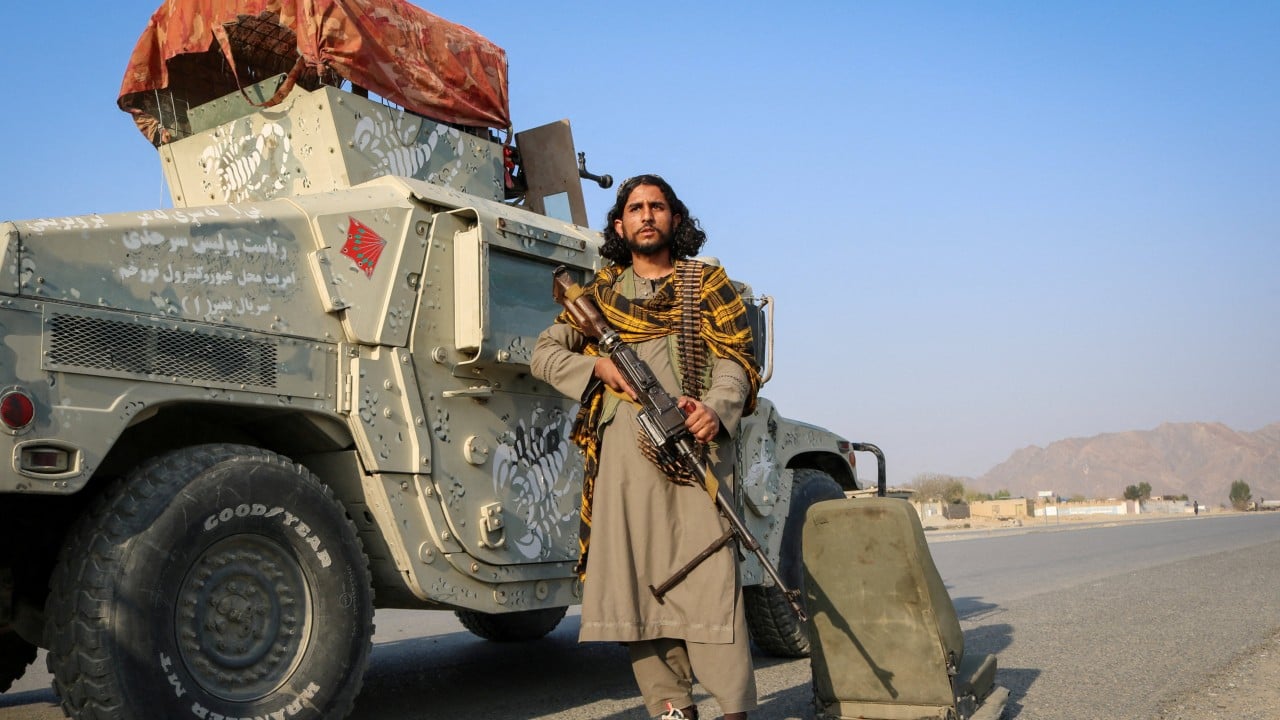
Since the 1979 Revolution, Iran has operated under a strategy of "forward defense." They don’t wait for the fire to reach their porch; they build firebreaks in other people’s yards. This is why you hear names like Hezbollah in Lebanon, the Houthis in Yemen, and various militias in Iraq. These are not just "proxies" in a clinical sense. They are the extensions of Iranian reach. For a young man in a Tehran suburb, these groups represent a shield. To him, the world—specifically the United States and Israel—has been trying to corner his country for forty years. He sees the sanctions not as a tool of diplomacy, but as a slow-motion siege on his family's dinner table.
The Fortress of Certainty
Eight hundred miles to the west, in the bustling tech hubs of Tel Aviv or the ancient, stone-quiet streets of Jerusalem, the perspective shifts entirely. In Israel, the threat is not theoretical. It is existential.
Imagine living in a house where the neighbor has spent decades publicly stating that your house shouldn't exist. You don’t just buy a better lock; you build a bunker. Israel’s security doctrine is built on the "Begin Doctrine," the idea that Israel will never allow an enemy in the region to acquire weapons of mass destruction. When Israeli officials look at Iran’s nuclear program, they don’t see a "peaceful energy initiative." They see a countdown clock.
The Israeli perspective is forged in the fire of 1948, 1967, and 1973. It is a psychology of "Never Again" translated into the most sophisticated missile defense systems on the planet. For an Israeli mother, the threat of an Iranian-backed drone from Lebanon is as real as the morning commute. She trusts the Iron Dome, but she knows that technology is just a thin veil. The stakes are everything.
The Reluctant Leviathan
Then there is the United States. If Iran is the weaver and Israel is the fortress, the US is the giant trying to walk through a glass shop without breaking anything—while simultaneously trying to find the exit.
Washington’s involvement is a complicated legacy of the Cold War, oil interests, and ironclad alliances. But the American public is tired. The wars in Iraq and Afghanistan left deep scars on the national psyche. Today, the US finds itself in a paradoxical position: it wants to "pivot" its attention toward the Pacific and China, yet it is tethered to the Middle East by the sheer gravity of its obligations.
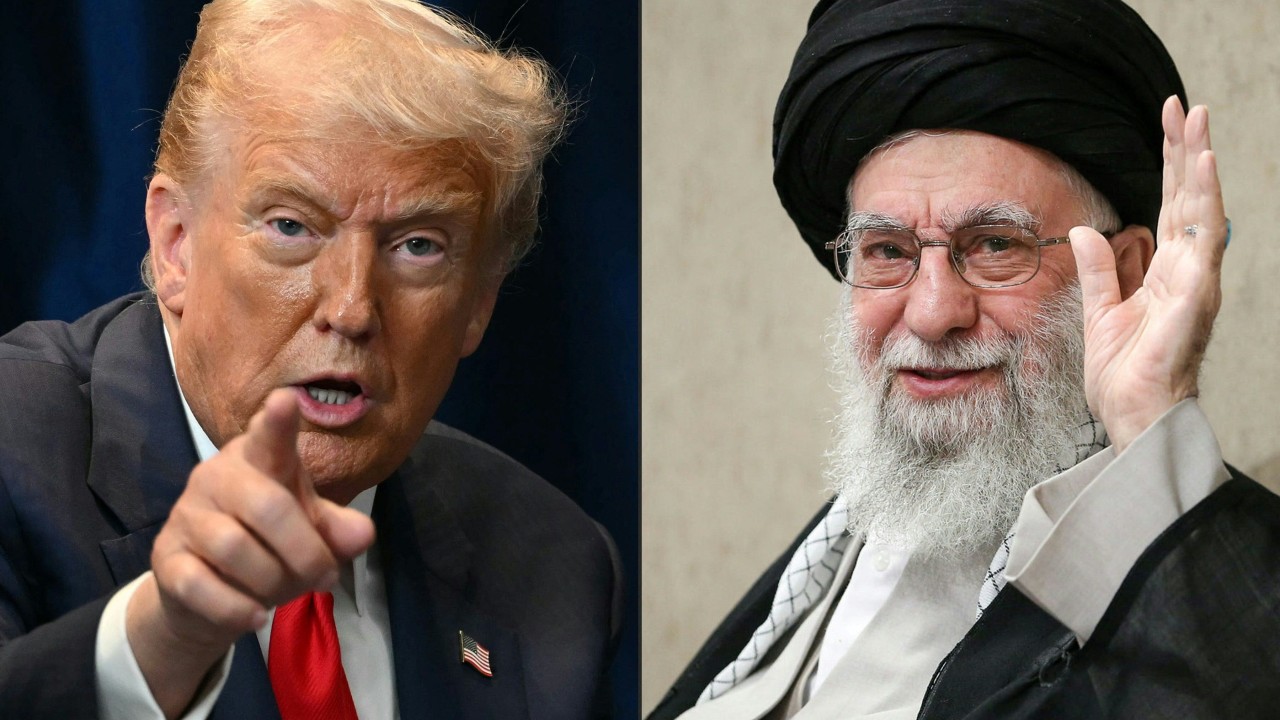
When a US President makes a statement about "ironclad support" for Israel or "maximum pressure" on Iran, it isn't just rhetoric. It is a balancing act. One wrong word could send global oil prices skyrocketing, potentially crippling an election cycle or a domestic economy. One military misstep could drag another generation of American soldiers into a desert conflict with no clear end.
The Invisible Threads
How did these three become so inextricably linked? It began with the fall of the Shah in 1979, which turned a key US ally into a primary adversary overnight. But the tension escalated significantly in the early 2000s when the "Axis of Evil" speech and the subsequent invasion of Iraq removed Iran’s primary regional rival, Saddam Hussein. Ironically, by removing an enemy of the West, the US opened the door for Iran to expand its influence across the "Shiite Crescent."
Israel watched this expansion with growing dread. As Iran-backed forces moved closer to Israel’s borders in Syria and Lebanon, the "Shadow War" began. This is a war of assassinations, cyberattacks, and mysterious explosions at industrial sites. It is a war fought in the dark, where no one claims responsibility, but everyone knows who sent the message.
Consider the Stuxnet virus. It was a piece of code, a digital ghost that physically destroyed Iranian centrifuges. It was a masterpiece of engineering that didn't fire a single bullet but caused more damage than a squadron of bombers. This is the modern face of the crisis: silent, precise, and terrifyingly effective.
The Human Cost of the Stalemate
While the generals and diplomats play their three-dimensional chess, the ordinary people live in the gaps.
In Shiraz, a student who wants to be an architect finds his dreams stalled because the cost of construction materials has tripled under sanctions. In Haifa, a grandmother looks at her smartphone for the latest "red alert" notification, wondering if the next one will be the big one. In a small town in Ohio, a family watches the news, hoping their daughter, a drone operator stationed in the Gulf, gets to come home for Christmas.
The tragedy of the US-Iran-Israel triangle is that it is a conflict of logic. Every player is acting logically within their own framework. Iran acts to ensure its survival and influence. Israel acts to ensure its existence. The US acts to maintain global stability and support its allies.
But when three different "logics" collide, the result is often chaos.
The Brink of the Unthinkable
The danger of this specific moment in history is the loss of the "off-ramp." In traditional diplomacy, there is usually a way for both sides to back down without losing face. But the rhetoric has become so polarized, and the internal political pressures in all three countries so intense, that backing down is often seen as political suicide.
In Iran, the hardliners use the threat of the "Great Satan" (the US) and the "Zionist Entity" (Israel) to justify domestic crackdowns. In Israel, the threat from Tehran is a unifying force in a fractured political landscape. In the US, the "Iran question" is a political football, with each administration reversing the previous one’s policies, creating a whiplash effect that makes long-term stability impossible.
This is the "security dilemma." When one country takes a step to make itself feel safer, it inherently makes its neighbor feel less safe. The neighbor then takes a step to catch up, and the cycle continues until someone trips.
The Weight of History
We are not just dealing with modern politics; we are dealing with thousands of years of memory. The Persian Empire, the Jewish Diaspora, the American sense of exceptionalism—these are the ghosts that sit at the negotiating table.
If you ask a resident of Tehran about the crisis, they might point to the 1953 coup where the CIA helped overthrow their democratically elected leader. If you ask an Israeli, they will point to the Holocaust and the subsequent wars where they fought for their lives against overwhelming odds. If you ask an American, they might point to the 1979 hostage crisis or the 1983 Beirut barracks bombing.
These aren't just entries in a history book. They are open wounds.
The Pulse in the Café
Back in that Istanbul café, the Turkish merchant finishes his tea. He sees the news ticker scrolling across the bottom of the screen. A new set of sanctions. A new drone strike. A new threat of retaliation.
He knows that if the shadow war ever becomes a hot war, the borders will close, the prices will scream, and the world will become a much darker place. He isn't interested in the "who is right" or "who is wrong" of the grand strategy. He is interested in whether his children can grow up in a world where the sky doesn't fall.
The US-Iran-Israel crisis is often described as a chess match, but that is a lie. In chess, the pieces don't have families. In chess, when the game is over, the board is simply reset. In the real world, there is no reset button. There is only the long, hard work of trying to find a common language before the silence of the guns takes over.
The stakes are not just oil, or nukes, or regional hegemony. The stakes are the lives of millions of people who are currently holding their breath, waiting to see which of the three cities will blink first.
The sun sets over the Bosphorus, casting long, dark shadows that stretch across continents. The television screen flickers, the merchant sighs, and the world continues to spin on its axis, teetering between the hope for a deal and the gravity of a disaster.