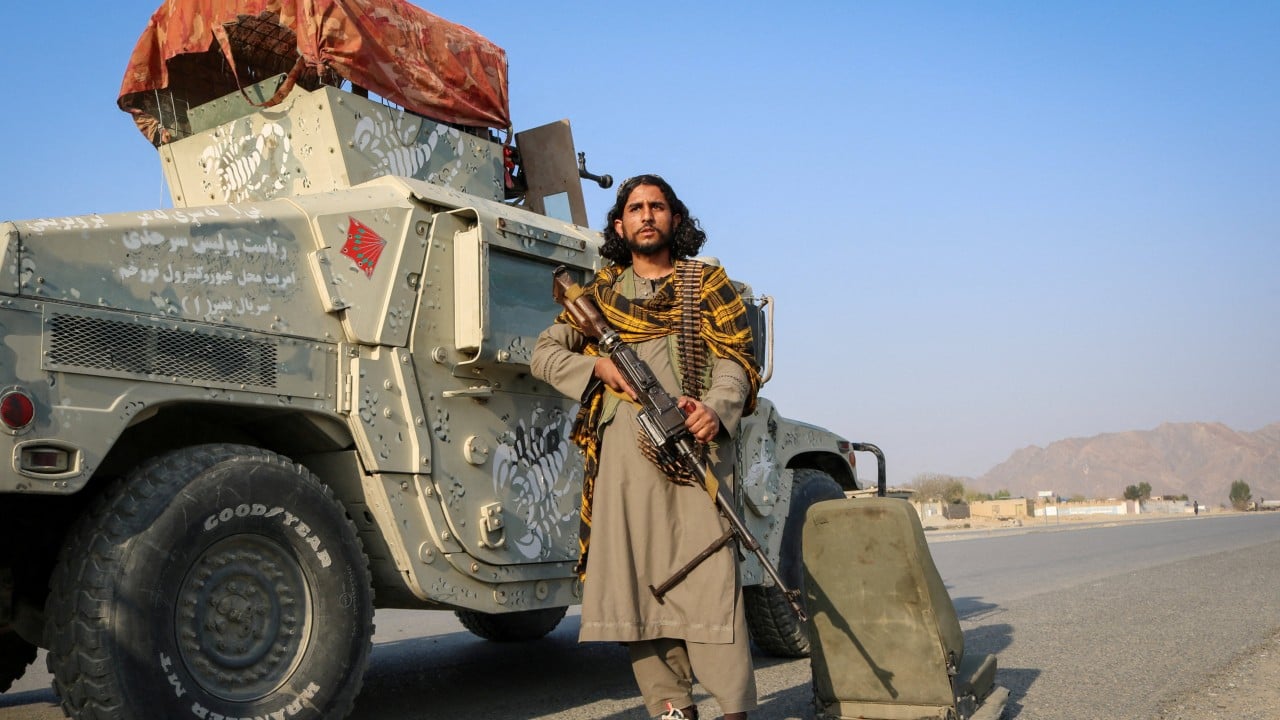
The foreign policy establishment is wringing its hands over a "protracted war of attrition" between Islamabad and Kabul. They see a disaster. I see a long-overdue accounting. For twenty years, the Pakistani security apparatus played a double game that would make Machiavelli blush, treating the Afghan Taliban as a strategic asset to be kept in a box. Now, that box has burst open, and the "strategic depth" Pakistan craved has turned into a shallow grave for its internal security.
Stop calling this a "breakdown of relations." It is the inevitable collision of two entities that finally have to live with the consequences of their own rhetoric. The consensus view—that this conflict is a regional tragedy—misses the point entirely. This is a brutal, necessary clarification of power.
The Myth of the Puppet Master
The most tired trope in South Asian geopolitics is that the Taliban are a Pakistani proxy. I have sat in rooms with analysts who genuinely believe Islamabad can just "turn off" the insurgency like a faucet. They couldn't be more wrong.
The relationship was never one of master and servant; it was a marriage of convenience between two parties who shared an enemy but possessed diametrically opposed visions for the region. Now that the common enemy—the U.S.-led coalition—is gone, the ideological friction is generating real heat.
Pakistan’s military expected a grateful client state. Instead, they got a sovereign neighbor that views the Durand Line with the same legitimacy as a crayon drawing on a map. The Taliban’s refusal to recognize the border isn't a "failure of diplomacy." It is a fundamental tenet of their identity. They are a pashtun-centric movement that does not recognize the colonial boundaries of 1893. Expecting them to suddenly respect border fencing because of "brotherly ties" is peak geopolitical naivety.
The TTP is Pakistan's Own Ghost
Everyone asks: "Why won't the Taliban stop the Tehrik-i-Taliban Pakistan (TTP)?"
The premise of the question is flawed. It assumes the Afghan Taliban can or wants to crack down on their ideological brothers-in-arms. During the insurgency, the TTP provided the Afghan Taliban with recruits, safe havens, and resources. In the tribal code of Pashtunwali, you do not betray the person who bled with you in the trenches just because a guy in a suit in Islamabad asks you to.
Islamabad is currently learning a lesson that every empire learns eventually: You cannot outsource your security to a group whose core philosophy is the subversion of the nation-state.
The surge in attacks in Khyber Pakhtunkhwa and Balochistan isn't a "spillover." It is the chickens coming home to roost. For years, the Pakistani state nurtured a culture of "good" vs "bad" militants. The "good" ones fought in Kabul; the "bad" ones fought in Peshawar. The problem is that the "good" and "bad" militants share the same WhatsApp groups, the same mosques, and the same explosives suppliers.
The Economic Leverage Fallacy
Western analysts love to talk about "leverage." They claim Pakistan can starve the Taliban into submission by closing border crossings like Torkham or Chaman.
Let’s look at the data. Afghanistan’s economy is already a crater. When you are living at the bottom of a hole, you aren't afraid of falling. The Taliban have proven they can govern on a shoestring budget fueled by coal exports, customs duties, and a burgeoning trade with Central Asia.
Moreover, every time Pakistan closes a border, it hurts its own struggling economy. Traders in Peshawar and Quetta lose millions. The leverage is a two-edged sword, and right now, Pakistan’s edge is duller. The Taliban have the luxury of time and a population conditioned for hardship. Pakistan, facing an IMF-mandated austerity nightmare and a crumbling currency, does not.
Border Fencing: The $500 Million Security Theater
Pakistan spent half a billion dollars fencing the 2,600-kilometer border. It was touted as the ultimate solution to cross-border terrorism.
In reality, it’s a high-priced psychological security blanket.
Fences don't stop ideologues. They don't stop tunnels. And they certainly don't stop a group that views the fence itself as an act of aggression. The Taliban’s foot soldiers have been filmed dismantling sections of the fence with glee. This isn't just vandalism; it’s a statement of intent. They are telling Islamabad: Your sovereignty ends where our rifles begin.
The Blowback of the Repatriation Gambit
Pakistan’s recent decision to deport over half a million undocumented Afghans was framed as a security measure. "Illegal immigrants are responsible for crime and terrorism," the official line goes.
This is a desperate, short-sighted play. Mass deportations don't make you safer; they create a generational grievance. You are sending thousands of young men—many of whom have never lived in Afghanistan—back to a country with no jobs and a ruling class that hates your government.
You aren't removing a threat. You are exporting a recruitment pool for the TTP.
I’ve seen this script before. Forced displacement leads to radicalization. By treating every Afghan refugee as a potential insurgent, Pakistan is ensuring that the next generation of fighters won't need an ideological reason to hate Islamabad—they’ll have a personal one.
The Shift from Hybrid War to Conventional Friction
We are witnessing the death of "hybrid warfare" in the region. For decades, the conflict was defined by shadows, proxies, and deniability. That era is over.
When Pakistani jets strike targets inside Khost and Kunar, and Taliban artillery fires back at border posts, the masks are off. This is a conventional state-to-state friction.
The "lazy consensus" says this leads to a full-scale war. I disagree. Neither side can afford a full-scale war. What we are entering is a Permanent State of Managed Hostility.
- Pakistan will continue surgical strikes and economic pressure to signal domestic strength.
- The Taliban will continue to provide "strategic space" to the TTP to keep Pakistan off-balance.
- The Border will remain a volatile, semi-permeable membrane rather than a line of control.
Stop Asking for Stability
The international community keeps asking how to "stabilize" the Pakistan-Afghanistan border. They are asking the wrong question.
Stability in this region has always been an illusion maintained by foreign cash and a common enemy. Without those two factors, the natural state of the border is chaos. This "war of attrition" isn't a breakdown of the system—it is the system.
The current violence is the market correcting itself after twenty years of artificial intervention. Pakistan is finally being forced to deal with the monster it helped create, and the Taliban are being forced to realize that being a government is much harder than being an insurgency.
There is no "peace process" coming. There is no grand bargain. There is only the slow, bloody realization that the Durand Line is a wound that refuses to heal.
If you want to understand the future of this conflict, stop looking at maps and start looking at the math. Pakistan is broke. The Taliban are stubborn. The TTP is patient.
This isn't a war to be won or lost. It’s a bill that has finally come due. Pay up or get out of the way.