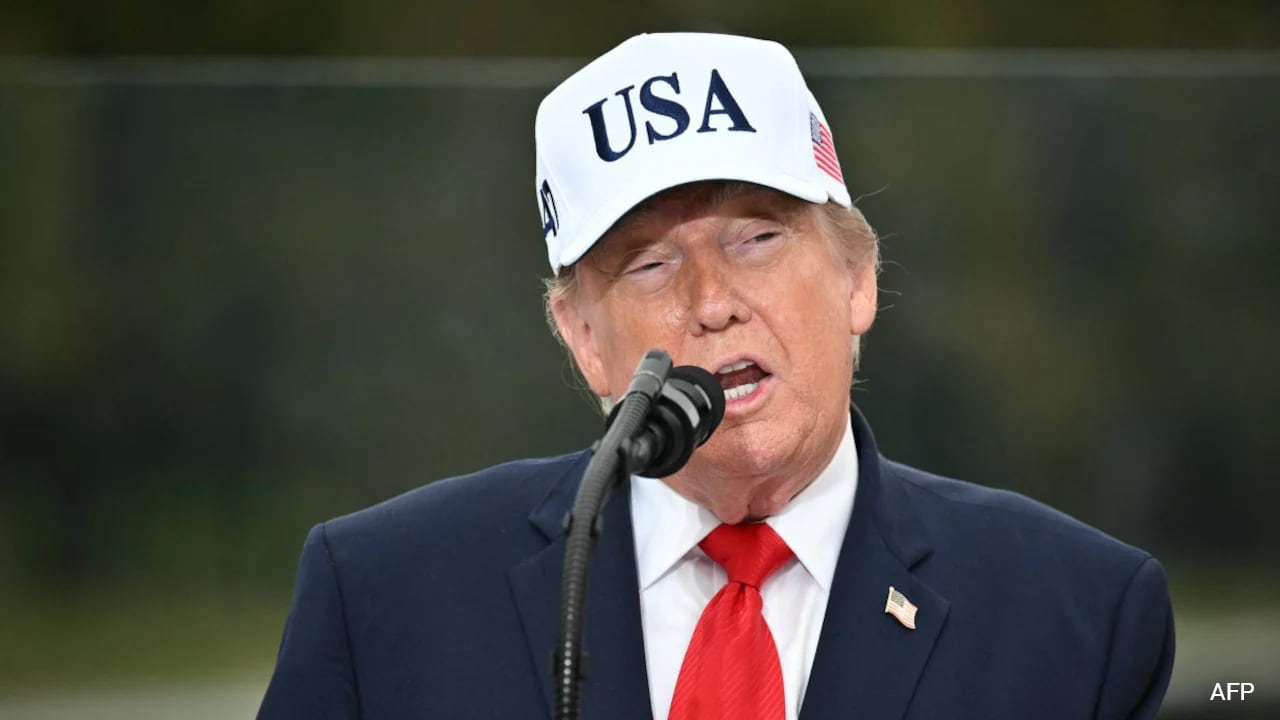
Donald Trump’s sudden suggestion that a diplomatic agreement with Iran "could happen" is not a spontaneous change of heart. It is a calculated electoral maneuver designed to neutralize a major foreign policy vulnerability before voters head to the polls. By dangling the prospect of a breakthrough, the White House aims to project strength, soothe jittery energy markets, and blunt Democratic attacks that years of "maximum pressure" have only pushed Tehran closer to a nuclear weapon. Yet beneath the surface of this pre-election rhetoric lies a complex web of domestic political constraints, regional resistance, and cold hard math that makes an actual signature on a treaty nearly impossible before Election Day.
To understand why this rhetoric is surfacing now, you have to look at the intersection of ballot-box anxiety and geopolitical reality. For years, the administration’s playbook relied on crippling economic sanctions, diplomatic isolation, and military deterrence. That strategy certainly battered the Iranian economy. It drove inflation sky-high and choked off legitimate banking channels. What it failed to do was force Tehran to capitulate on its nuclear enrichment program or its regional proxy network.
Now, with midterm elections looming, the political calculus has shifted. Voters rarely cast ballots solely on Middle Eastern diplomacy, yet they vote aggressively on the downstream effects of foreign instability. High gas prices and the specter of another drawn-out foreign entanglement are toxic for any incumbent party facing a midterm referendum.
The Domestic Math Behind the Diplomatic Pivot
Political campaigns run on narrative control. When a president faces an electorate weary of global crises, signaling openness to a deal serves a dual purpose. First, it undercuts the opposition’s argument that the administration is reckless or marching the country toward an avoidable war. Second, it allows Trump to frame himself as the ultimate dealmaker who can resolve intractable conflicts without firing a shot.
Consider the timing. Midterm elections historically punish the party in power, often resulting in the loss of congressional seats and committee gavels. If Republicans lose control of the House or Senate, the administration’s legislative agenda stalls, and oversight investigations multiply. Preventing that outcome requires shoring up independent and swing-district voters who favor economic stability over ideological purity.
A diplomatic opening with Tehran acts as a pressure release valve. Even the rumor of negotiations can temporarily cool speculative oil prices, offering relief at the pump during peak campaign season. Markets react to sentiment long before ink hits paper. By simply saying a deal "could happen," the White House buys itself breathing room in the news cycle without actually conceding a single barrel of sanctions relief.
The Republican Hawk Dilemma
This pivot carries significant internal risk. The Republican foreign policy establishment, alongside key evangelical and pro-Israel donor networks, views any compromise with the Islamic Republic as heresy. These factions cheered the 2018 withdrawal from the Joint Comprehensive Plan of Action (JCPOA), arguing the Obama-era accord was fatally flawed because it contained sunset clauses and failed to address ballistic missiles.
For Trump to sell a new deal to his own base, it cannot look anything like the 2015 agreement. It must be branded as tougher, permanent, and comprehensive. Yet the very demands required to satisfy Senate hawks—zero domestic uranium enrichment, total dismantlement of missile programs, and an immediate halt to funding groups like Hezbollah and the Houthis—are absolute non-starters for Tehran.
This creates a classic political trap. Say too little about diplomacy, and swing voters worry about war and inflation. Promise too much on a deal, and core conservative donors revolt. Floating the vague possibility of an agreement walks this tightrope, offering hope to moderates while maintaining enough ambiguity to keep hawks from bolting before November.
What Tehran Actually Wants From Washington
Diplomacy is a two-player game, and Iran’s leadership reads American electoral calendars as closely as any Washington strategist. In Tehran, officials view pre-election overtures from the White House with deep institutional skepticism. Having watched Washington unilaterally abandon a multilateral accord once before, Iranian decision-makers demand ironclad guarantees that a future administration—or even the current one after the midterms—will not simply tear up a new agreement.
Iran’s economic leverage has also evolved. Despite sweeping secondary sanctions, Tehran has built a resilient shadow economy. Through dark-fleet tankers, shell companies, and intermediaries, Iranian crude continues to flow to buyers in Asia, most notably China. While this discounted oil trade generates less revenue than open-market sales, it provides enough hard currency to keep the state apparatus functioning and fund regional allies.
Consequently, Tehran is no longer negotiating from a position of imminent collapse. Iranian leaders know that an American president facing an election is often more eager for a quick diplomatic win than a regime that thinks in decades rather than two-year election cycles.
The Core Sticking Points
If negotiators were to sit down tomorrow, they would immediately collide with three structural barriers that have defied resolution for years.
- Sanctions Relief and Verification: Tehran demands the immediate lifting of primary and secondary banking sanctions, alongside verifiable proof that international corporations can actually do business in Iran without fear of U.S. Treasury penalties. Washington insists on phased relief tied to strict, intrusive inspections.
- Nuclear Breakout Time: Iran’s nuclear infrastructure has advanced significantly since 2018. With modern centrifuges enriching uranium to high levels, the technical knowledge gained cannot be unlearned. Any new deal would require dismantling advanced machinery that Tehran views as its ultimate insurance policy against regime change.
- Regional Security Architecture: Washington wants Iranian behavior in Iraq, Syria, Lebanon, and Yemen on the table. Tehran refuses to negotiate away its regional deterrence network, arguing those alliances are sovereign national security matters separate from nuclear technology.
Without a breakthrough on at least two of these fronts, any talk of an imminent agreement remains purely rhetorical.
The Oil Market and Inflation Factor
To understand why the White House cares about oil prices right now, look at a gas station marquee in Pennsylvania or Michigan. Energy costs act as a direct tax on working-class households, bleeding into grocery prices, shipping costs, and voter sentiment.
Geopolitical tension in the Persian Gulf carries an automatic risk premium. Every time naval vessels clash in the Strait of Hormuz or sanctions tighten on Iranian exports, crude futures tick upward. Even a modest spike in oil prices can erase months of messaging on inflation and economic growth.
By signaling a willingness to talk, the administration injects uncertainty into the bearish side of the oil market. Traders who might otherwise bet on supply disruptions suddenly have to price in the possibility—however slim—that hundreds of thousands of barrels of Iranian oil could legally return to global markets. That psychological shift helps cap price spikes at a moment when the administration desperately needs stable consumer costs.
Hypothetical Market Dynamics
To see how this plays out in practice, consider a hypothetical scenario involving crude futures. Suppose Brent crude is trading at $85 a barrel due to heightened military posturing in the Middle East. If the White House maintains a strictly hawkish posture, traders factor in a high probability of a supply shock, pushing prices toward $95. However, if the president publicly states that diplomatic backchannels are open and a deal is possible, algorithmic trading desks and hedge funds immediately hedge against a sudden influx of supply. Even if zero diplomats actually meet, that single statement can shave $4 to $6 off the price per barrel for weeks, translating to noticeable relief at American gas pumps right before early voting begins.
Regional Pushback From Allies
Washington does not operate in a vacuum. Any hint of a bilateral deal between the United States and Iran sends immediate shockwaves through Jerusalem, Riyadh, and Abu Dhabi.
For Israel, a diplomatic agreement that leaves Iran’s nuclear threshold intact—or floods Tehran’s coffers with billions in unfrozen assets—is viewed as an existential threat. Israeli leadership has consistently argued that only a credible military threat, backed by crushing economic pressure, can stop Iran’s nuclear ambitions. When Washington floats peace talks, Israeli officials inevitably ramp up lobbying efforts on Capitol Hill to remind lawmakers of the risks.
Gulf Arab states occupy a more nuanced position. While Saudi Arabia and the United Arab Emirates deeply distrust Tehran, both nations have spent recent years pursuing pragmatic de-escalation with Iran to protect their own economic diversification plans. Riyadh does not want a regional war that invites drone strikes on its oil infrastructure. At the same time, Gulf leaders fear a rushed American deal that ignores Iranian ballistic missiles and drone proliferation, leaving them exposed while Washington claims a diplomatic victory and pivots elsewhere.
Managing these competing alliances requires immense diplomatic bandwidth. Launching a genuine, multi-party negotiation while simultaneously campaigning across swing states stretches the National Security Council to its absolute limit.
The Anatomy of a "Phantom Deal"
In modern political journalism, it is vital to distinguish between active diplomacy and strategic messaging. A real diplomatic breakthrough leaves a distinct trail. It involves quiet, sustained meetings in neutral capitals like Muscat, Doha, or Vienna. It requires technical working groups hammering out hundreds of pages of annex agreements on centrifuge cascades, heavy water reactors, and banking compliance mechanisms.
Right now, that infrastructure is largely absent. What we are witnessing instead is a classic "phantom deal"—a diplomatic trial balloon floated for domestic consumption.
Phantom deals serve the political needs of the moment without binding the speaker to specific outcomes. If critics attack the idea, the administration can dismiss the remarks as casual speculation. If markets rally and swing voters respond positively, the rhetoric can be dialed up. And if the election passes without a single meeting taking place, the issue quietly fades from the stump speech, blamed on Iranian intransigence.
Historical Precedents in Election Years
This tactic is hardly unique to the current White House. American political history is littered with late-cycle foreign policy pivots designed to shape domestic elections.
In the final months before the 1972 presidential election, Henry Kissinger famously declared that "peace is at hand" in Vietnam, giving Richard Nixon a massive boost at the polls even though the Paris Peace Accords would not be signed until January 1973, after intense bombing campaigns and further diplomatic breakdowns. Similarly, administrations of both parties have frequently announced sudden Middle East peace summits, trade framework agreements, or troop withdrawal timelines in September and October of even-numbered years.
Voters generally reward the effort toward peace and stability, rarely penalizing leaders when complex international negotiations inevitably drag past November.
What Actually Happens After the Ballots Are Counted
The true test of this diplomatic rhetoric will arrive the Wednesday after Election Day. Once the immediate pressure of the midterms vanishes, the underlying geopolitical reality will reassert itself with full force.
If the administration’s party suffers heavy losses in Congress, the White House may actually feel more inclined to pursue foreign policy legacy deals, knowing domestic legislation is dead on arrival. Conversely, a strong electoral showing could embolden hawks within the administration to abandon diplomatic pretenses entirely and return to an aggressive confrontation posture.
Meanwhile, Iran’s nuclear centrifuges continue to spin. Every month that passes without a verifiable inspection regime reduces the visibility international monitors have into Tehran’s program. Technical milestones crossed today cannot be easily reversed tomorrow, regardless of who controls the House of Representatives.
Ultimately, saying a deal "could happen" costs nothing on the campaign trail. Delivering one requires political capital, painful compromises, and bipartisan backing that simply do not exist in Washington right now. Until concrete, verifiable steps replace campaign-trail soundbites, any talk of an imminent U.S.-Iran breakthrough should be treated for what it truly is—campaign strategy masquerading as statecraft.


