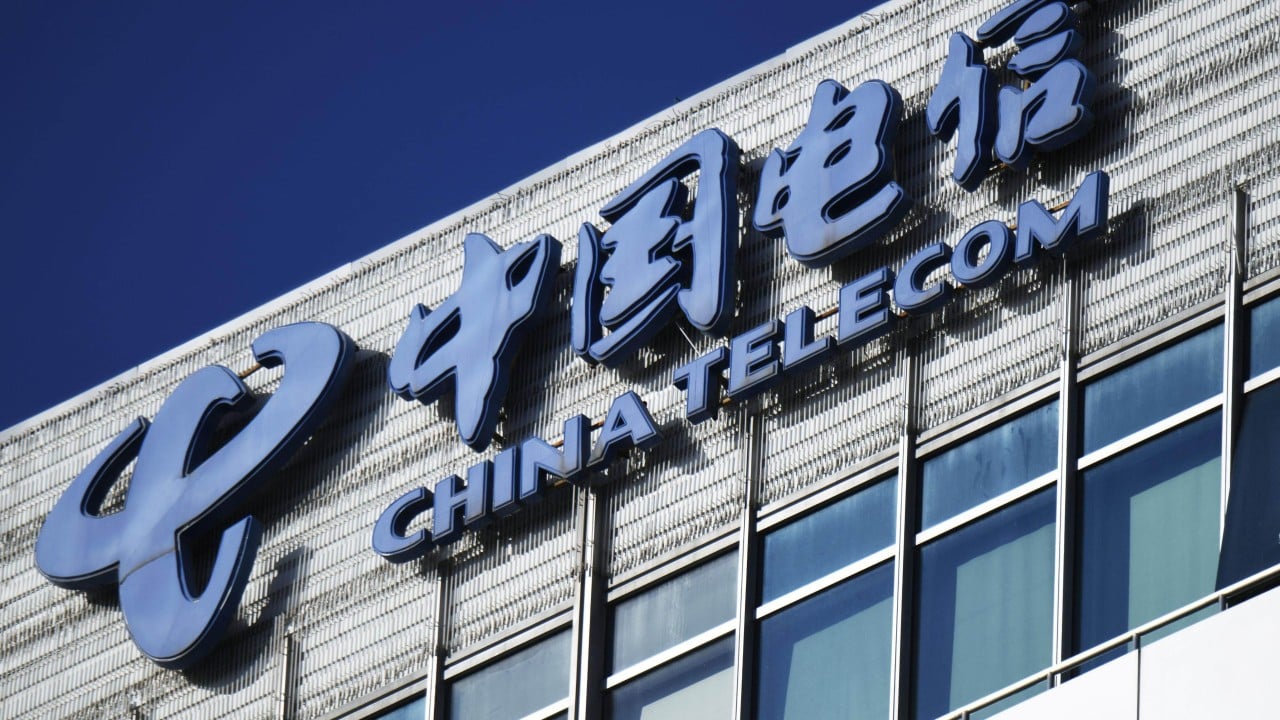
You probably think Washington already kicked Chinese telecoms companies out of the United States years ago. That's what the headlines made it sound like back in 2019 and 2022 when the Federal Communications Commission slapped Huawei and ZTE onto its Covered List and revoked operating licenses for China Telecom Americas and China Unicom.
It didn't happen that cleanly. Not even close.
Right now, the FCC is weighing fresh curbs because those earlier bans left massive backdoors wide open across U.S. networks, data centers, and submarine cables. If you run enterprise IT, manage supply chain risk, or just care about where your data actually travels before it hits a server, the current wave of regulatory action matters way more than the splashy hardware bans from a few years back.
The Loopholes That Kept Chinese Telecoms Giants Operating in the US
When the FCC revokes a Section 214 authorization—the license a carrier needs to provide international or domestic telecommunications services in the U.S.—most observers assume the company packs up and leaves the country. In reality, Section 214 only governs common carrier voice and basic telecom services. It doesn't touch cloud computing, data center hosting, enterprise broadband, or content delivery networks.
That distinction is huge.
After losing their common carrier status between 2021 and 2022, entities like China Telecom Americas, China Unicom (Americas) Operations, and China Mobile International USA didn't vanish. They pivoted. They kept operating dozens of Points of Presence (PoPs) inside major U.S. carrier hotels—places like 60 Hudson Street in New York or Equinix facilities in Ashburn, Virginia—where internet service providers physically plug into one another to exchange traffic.
I've walked through plenty of tier-three and tier-four colocation facilities across North America over the last decade, and the physical reality of internet peering surprises almost everyone outside network engineering. A company doesn't need an FCC voice license to lease a cage, rack up routers, and peer with American backbone providers via Border Gateway Protocol (BGP).
And BGP routing has a nasty quirk. It optimizes for the shortest path or cheapest transit agreement, not geopolitical boundaries. Because of how autonomous systems announce routes, domestic U.S. internet traffic can still get routed through PoPs controlled by state-linked Chinese carriers, even when both the sender and receiver are sitting inside the United States. The FCC's latest push targets these exact blind spots—going after peering arrangements, broadband infrastructure, and cloud interconnects that slipped right past the original Section 214 revocations.
Why the FCC Covered List Hasn't Finished the Job
If you look at the FCC's Covered List, established under the Secure and Trusted Communications Networks Act of 2019, the roster looks pretty straightforward. You've got Huawei, ZTE, Hytera Communications, Hikvision, and Dahua Technology sitting right at the top, joined later by Pacific Network, ComNet, and China Unicom.
Listing a company blocks federal Universal Service Fund money from buying their gear and stops the FCC from issuing new equipment authorizations. Sounds airtight on paper.
Here's where it falls apart in the real world.
First, equipment authorization bans stop new devices from getting certified for sale in the U.S., while leaving millions of legacy devices humming along in live networks. The FCC's "Rip and Replace" program—formally the Secure and Trusted Communications Networks Reimbursement Program—was supposed to pay small rural carriers to tear out Huawei and ZTE base stations. Congress originally allocated $1.9 billion for the effort. The actual cost came in closer to $4.98 billion. For years, rural wireless carriers across Montana, Wyoming, and the Midwest were stuck running unpatched, unsupported Chinese radio equipment simply because Washington hadn't funded the remaining $3 billion shortfall to rip it out.
Second, white-label hardware makes enforcement a nightmare. A mid-sized telecom component doesn't always arrive in a box stamped with a banned brand name. Sub-assemblies, optical transceivers, and cellular modules made by subsidiaries or contract manufacturers regularly make their way into products sold under entirely different corporate badges. When the FCC weighs fresh curbs, a big chunk of the behind-the-scenes work involves closing subsidiary loopholes so blacklisted firms can't just spin up a shell entity or route hardware through a third-party integrator.
Submarine Cables and the Physical Layer of Internet Traffic
People love talking about satellites and 5G towers, mostly because you can point at them. Nobody talks enough about the wet plant—the fiber-optic submarine cables lying on the ocean floor that carry roughly 95% to 99% of intercontinental internet traffic.
Washington's scrutiny of Chinese telecoms giants has zeroed in on subsea infrastructure, and for good reason. Companies like HMN Technologies (formerly Huawei Marine Networks) have built or upgraded a massive share of the world's undersea cable systems over the past fifteen years. Meanwhile, state-owned carriers like China Telecom and China Unicom hold ownership stakes in major trans-Pacific consortium cables—including systems like FASTER, Unity, and Trans-Pacific Express—that land directly on the U.S. West Coast.
Think about what happens at a cable landing station. That's the onshore facility where a submarine cable comes out of the ocean and connects to terrestrial fiber networks. Whoever controls the landing station equipment—specifically the Submarine Line Terminating Equipment (SLTE)—manages the optical wavelengths carrying terabits of data per second.
For the past few years, the inter-agency body known as Team Telecom (formally the Committee for the Assessment of Foreign Participation in the United States Telecommunications Services Sector) has systematically blocked new cable projects with direct links to Hong Kong or mainland China. Projects like the Pacific Light Cable Network (backed by Google and Meta) had to abandon their Hong Kong spurs and terminate only in Taiwan and the Philippines just to get landing licenses.
The fresh curbs the FCC is weighing go a step further. Instead of just blocking new cables, regulators are looking at retroactive conditions, stricter reporting on subsea maintenance ships—particularly vessels operated by state-linked firms like S.B. Submarine Systems—and tighter restrictions on who can supply optical gear for cable upgrades. If a foreign repair ship pulls a cable off the seabed in the South China Sea to splice a broken fiber, nobody on the U.S. side has real-time visibility into what happens during that maintenance window.
The IoT Module Problem Nobody Wants to Audit
If you want to see where the next big regulatory hammer is going to drop, stop looking at cell towers and start looking at cellular IoT modules.
Every connected vehicle, smart electric meter, industrial sensor, fleet tracker, and medical monitor needs a tiny cellular modem chip or module to talk to a mobile network. Right now, Chinese manufacturers—led by Quectel Wireless Solutions and Fibocom—dominate the global cellular IoT module market. According to Counterpoint Research data, Chinese vendors account for well over half of global cellular IoT module shipments.
U.S. lawmakers on the House Select Committee on the Chinese Communist Party have been pressing the FCC to add Quectel and Fibocom to the Covered List. Why? Because an IoT module isn't just a dumb radio antenna. It contains its own processor, memory, and firmware, and it regularly phones home to manufacturer servers for over-the-air updates.
Let's be real about what adding IoT module makers to the Covered List would mean for American businesses. Unlike Huawei 5G base stations—which only a few dozen rural carriers bought—Quectel modules sit inside millions of American-made products. We're talking about John Deere tractors, municipal water meters, point-of-sale payment terminals, and telematics boxes inside commercial delivery trucks.
If the FCC pulls the trigger on fresh curbs targeting IoT modules, device makers won't be able to get new FCC equipment authorizations for any product containing those chips. Redesigning a hardware board to swap out a cellular module isn't a weekend software patch. It requires new RF testing, carrier certifications with Verizon or AT&T, and a six-to-twelve-month engineering cycle. Most hardware startups haven't budgeted a dime for that kind of supply chain overhaul.
What Critics and Industry Insiders Push Back On
It's easy to cheer for aggressive national security rules until you're the one paying the invoice. And honestly, there are valid criticisms of how Washington handles these crackdowns.
Telecom industry groups and rural broadband advocates point out a recurring pattern: the federal government mandates the removal of cheap, functional hardware without providing timely funding or viable alternatives. Huawei and ZTE gained massive market share in rural America during the 2010s because Nokia and Ericsson largely ignored small carriers buying ten base stations at a time, or priced their gear way out of reach. Even today, ripping out legacy gear slows down rural 5G deployment and widens the connectivity gap between urban and rural counties.
There's also the geopolitical blowback. Beijing doesn't just sit quietly when the FCC tightens the screws. China's Ministry of Industry and Information Technology has steadily pushed domestic telecom operators—China Mobile, China Telecom, and China Unicom—to phase out foreign processors from Intel and AMD in their core networks by 2027. Every new FCC restriction accelerates the splintering of global tech standards into two incompatible ecosystems.
Some cybersecurity researchers also argue that focusing exclusively on the country of origin creates a false sense of security. Banning Chinese routers doesn't magically make a network safe if your engineers leave default credentials on an American-made firewall or fail to segment your internal VLANs. Supply chain provenance is one layer of defense, not a substitute for basic security hygiene.
How to Audit Your Own Infrastructure Before New Rules Hit
Whether you run IT for a mid-sized logistics company or manage vendor compliance for an enterprise, waiting for the FCC to publish a final order in the Federal Register is a terrible strategy. By the time a new rule takes effect, lead times on alternative hardware spike overnight.
Start with a bill-of-materials audit on your connected hardware. Don't just check the brand name on the outside of your routers, security cameras, or cellular gateways. Ask your hardware vendors for the exact FCC ID numbers of the internal radio modules inside their equipment. You can plug any FCC ID directly into the FCC's public Equipment Authorization database in thirty seconds to see who actually manufactured and certified the underlying RF module.
Next, check your data center and cloud interconnects. If your company uses colocation facilities or third-party managed network providers for international transit, ask for an updated BGP routing policy and a list of upstream transit partners. Make sure your enterprise traffic isn't transiting through autonomous system numbers (ASNs) tied to entities that have already lost Section 214 authorizations.
Finally, build dual-sourcing into any new hardware procurement contracts you sign this year. Require suppliers to certify that their devices contain zero components from entities on the FCC Covered List—and include a contractual exit clause if a component supplier gets added to the list mid-contract. Washington's regulatory trajectory on Chinese telecoms isn't reversing anytime soon, and the companies that survive the transition without emergency fire drills are the ones treating FCC rulemakings as an early warning system rather than morning news.