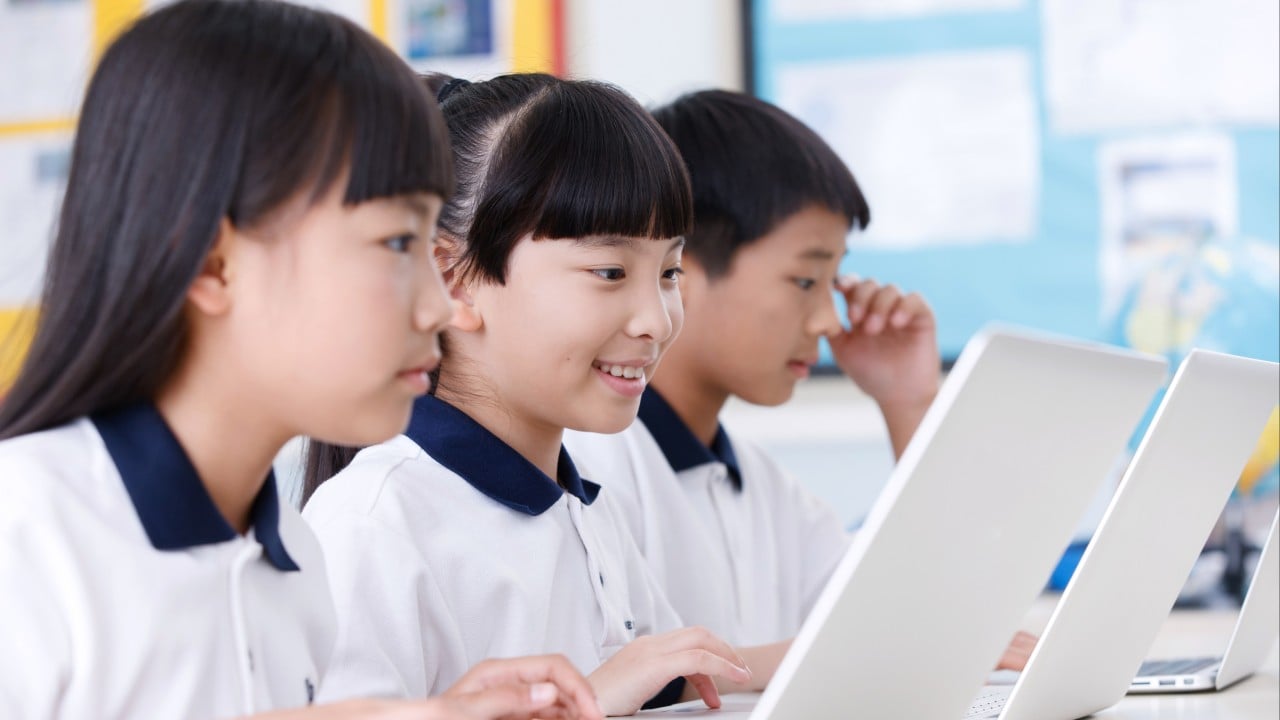
Hong Kong is making artificial intelligence a mandatory part of its primary school curriculum, replacing outdated General Studies classes with a revamped science and technology track that introduces machine learning concepts to children as young as seven. Announced by the Education Bureau as part of a broader push to modernize local schooling, the initiative aims to build foundational digital literacy early, ensuring students understand how automated systems work before they reach secondary school. Yet behind the ambitious policy rollout lies a fierce debate over teacher preparedness, screen fatigue, and whether a rigid exam-driven education system can genuinely teach creative problem-solving.
For decades, Hong Kong's primary education system relied on General Studies, a catch-all subject that blended basic science, social studies, and health education into a single textbook-heavy block. It was a relic of an earlier era. While neighboring tech hubs in Shenzhen, Singapore, and Seoul aggressively overhauled their classrooms to prioritize coding, robotics, and computational thinking, Hong Kong's primary classrooms largely remained anchored to rote memorization and standardized testing. If you found value in this piece, you might want to check out: this related article.
The new curriculum splits that old General Studies block into two distinct subjects, Humanities and Science, with artificial intelligence and information technology woven directly into the latter. Under the updated framework, primary pupils will not be writing complex neural network code from scratch. Instead, the syllabus focuses on applied AI literacy, pattern recognition, basic data logic, and the ethical boundaries of automated tools.
The Architecture of the New Curriculum
Understanding what actually happens inside a Primary Three or Primary Five classroom under these rules requires stripping away the political buzzwords. Education officials have structured the rollout to scale gradually across different grade levels, moving from basic logical sequencing in lower primary to hands-on interaction with machine learning models in upper primary. For another angle on this development, see the recent update from MIT Technology Review.
In the early years, around ages six to eight, the focus is entirely foundational. Children learn how computers follow instructions, how sensors gather information from the physical world, and how simple categorization works. A teacher might use a sorting exercise to explain how an algorithm distinguishes between different types of objects based on specific attributes like color, shape, or size.
By the time students reach Primary Four through Primary Six, the curriculum introduces actual software tools and block-based programming environments. Here, pupils interact with pre-trained models to see how image recognition or voice-to-text systems operate in real time.
Consider a hypothetical classroom exercise designed around this framework. A Primary Five class might be tasked with building a simple waste-sorting classifier using a webcam and a beginner-friendly machine learning interface. Students hold up plastic bottles, aluminum cans, and paper scraps to train the system. When the software inevitably misidentifies a crushed can as a piece of paper, the lesson shifts from mere coding to data bias and training quality. The pupils learn firsthand that an artificial intelligence system is only as reliable as the examples humans feed into it.
This practical approach marks a sharp departure from traditional computer classes, which historically wasted valuable hours teaching children how to format spreadsheets or navigate word processors—skills that become obsolete almost as fast as textbooks are printed.
Why Beijing and Hong Kong Are Rushing the Timeline
Educational reform rarely happens in a vacuum, and Hong Kong's sudden urgency around primary school technology reflects intense geopolitical and economic pressure. Over the past five years, the city has struggled to diversify its economy beyond finance, real estate, and logistics. Attracting global technology firms and venture capital requires a domestic talent pipeline that currently does not exist at the necessary scale.
At the same time, national development plans from Beijing have explicitly designated Hong Kong as an emerging international innovation and technology hub. Local policymakers know that waiting until university—or even secondary school—to introduce computational thinking puts their workforce at a severe disadvantage compared to mainland cities like Shenzhen, where private tech giants regularly partner with public schools to fund robotics labs and coding academies.
There is also a defensive element to the strategy. Generative AI tools have already flooded secondary schools and universities, upending traditional homework and essay-writing assignments. By introducing AI ethics and critical evaluation at the primary level, the Education Bureau hopes to inoculate younger students against blind reliance on automated answers. Teaching an eight-year-old that a chatbot can confidently invent false information is now viewed as a basic survival skill, much like teaching them how to cross a busy street safely.
The Teacher Training Bottleneck
Policies look clean on government white papers, but they collide with messy reality the moment they hit the staff room. Hong Kong's primary school teaching workforce is already stretched thin, grappling with heavy administrative burdens, declining student enrollment numbers, and an ongoing wave of emigration that has drained experienced educators from the city over the last several years.
Asking a veteran General Studies teacher—whose background might be in history, Chinese literature, or physical education—to suddenly teach machine learning principles is a massive operational gamble. You cannot simply hand a teacher a new textbook and expect them to troubleshoot sensor hardware or explain algorithmic bias to thirty restless nine-year-olds.
The Education Bureau has rolled out professional development workshops and partnered with local universities to upskill existing staff. Yet industry observers and union representatives point out a glaring gap between a weekend training seminar and true subject mastery. Without dedicated IT specialists stationed inside every primary school, much of the technical instruction risks falling back on superficial, step-by-step worksheet exercises that strip away the experimental spirit the curriculum is supposed to encourage.
Funding disparities between schools compound the problem. Well-resourced schools with strong alumni networks and sponsor bodies can easily outfit dedicated innovation labs with tablets, microcontrollers, and high-speed wireless networks. Meanwhile, smaller, subsidized schools in lower-income districts often struggle to maintain basic computer rooms, creating a quiet digital divide right inside a city known for its wealth.
Screen Time and Developmental Trade-Offs
Beyond logistics, the push to digitize primary education runs headlong into growing parental anxiety over screen addiction and cognitive development. Pediatricians and child psychologists have spent the last decade warning about the effects of excessive screen exposure on young brains, linking early device heavy-use to shorter attention spans, disrupted sleep, and weaker interpersonal skills.
Hong Kong's children already spend significant amounts of time on digital devices, both for online tutoring and recreational gaming. Adding mandatory technology modules to the primary timetable raises legitimate questions about what gets pushed out to make room.
Every hour spent learning how to train an image-recognition model is an hour not spent practicing handwriting, reading physical books, playing unstructured sports, or engaging in face-to-face debate. Critics argue that children under ten benefit far more from tactile, physical exploration of the natural world than from mediating their curiosity through a glowing screen.
Supporters of the curriculum counter that modern AI education does not have to mean staring passively at a monitor. Many of the best computational thinking exercises happen "unplugged," using physical cards, board games, and group movement to teach logic, loops, and conditional statements. Whether overworked teachers in Hong Kong's high-pressure classrooms will actually adopt these slower, physical teaching methods—or simply default to pre-packaged software modules—remains an open question.
The Exam Culture Trap
The single greatest threat to Hong Kong's artificial intelligence curriculum has nothing to do with technology and everything to do with culture. Hong Kong's education system is notoriously exam-obsessed. From the moment children enter primary school, parents, tutors, and school administrators obsess over assessment scores that determine entry into elite secondary institutions.
Artificial intelligence, by its very nature, rewards experimentation, failure, and open-ended inquiry. When you build a machine learning model, it fails repeatedly until you adjust the variables, clean the data, and test new hypotheses. That iterative process is the exact opposite of how Hong Kong students are trained to succeed.
If schools attempt to assess this new subject using traditional multiple-choice tests or memorized definitions of technical terms, the entire initiative will collapse into performative busywork. Students will dutifully memorize the difference between supervised and unsupervised learning to pass a mid-term exam, while gaining zero intuition for how to actually build, question, or improve a real system.
True technological fluency requires giving children permission to break things, make wrong predictions, and figure out why an experiment failed without being penalized on a report card. Changing the syllabus takes a stroke of a bureaucrat's pen; changing a deeply ingrained assessment culture takes a generation.
Lessons From Global Precedents
Hong Kong is hardly the first jurisdiction to experiment with early-childhood tech education, and the track record elsewhere offers sobering lessons. When the United Kingdom overhauled its national curriculum in 2014 to replace basic ICT classes with mandatory computing and coding from age five, policymakers hailed it as a watershed moment.
A decade later, independent reviews of the UK rollout revealed mixed results. While top-performing schools produced impressive student projects, thousands of primary schools struggled with severe shortages of qualified computing teachers, leading to inconsistent instruction and declining enrollment in advanced computer science qualifications later on.
Singapore took a more measured, heavily subsidized approach through its Code for Fun enrichment programs, embedding external tech vendors alongside classroom teachers to ensure technical competence while gradually building internal faculty capacity. Even then, Singaporean officials emphasized foundational math and reading comprehension as the true bedrock of future tech talent, recognizing that a child who struggles with basic numeracy and logic will never grasp advanced algorithmic concepts.
Hong Kong's policymakers appear to be borrowing elements from both models, pairing mandatory curriculum hours with external university partnerships. Success will depend entirely on whether the Education Bureau prioritizes deep teacher support and low-stakes, hands-on experimentation over flashy press releases and standardized testing metrics.
Put an iPad in front of a seven-year-old and they will learn how to swipe within seconds, but teaching them to question the invisible algorithms shaping what appears on that screen is a far harder task—and Hong Kong is about to find out if its classrooms are up to the job.