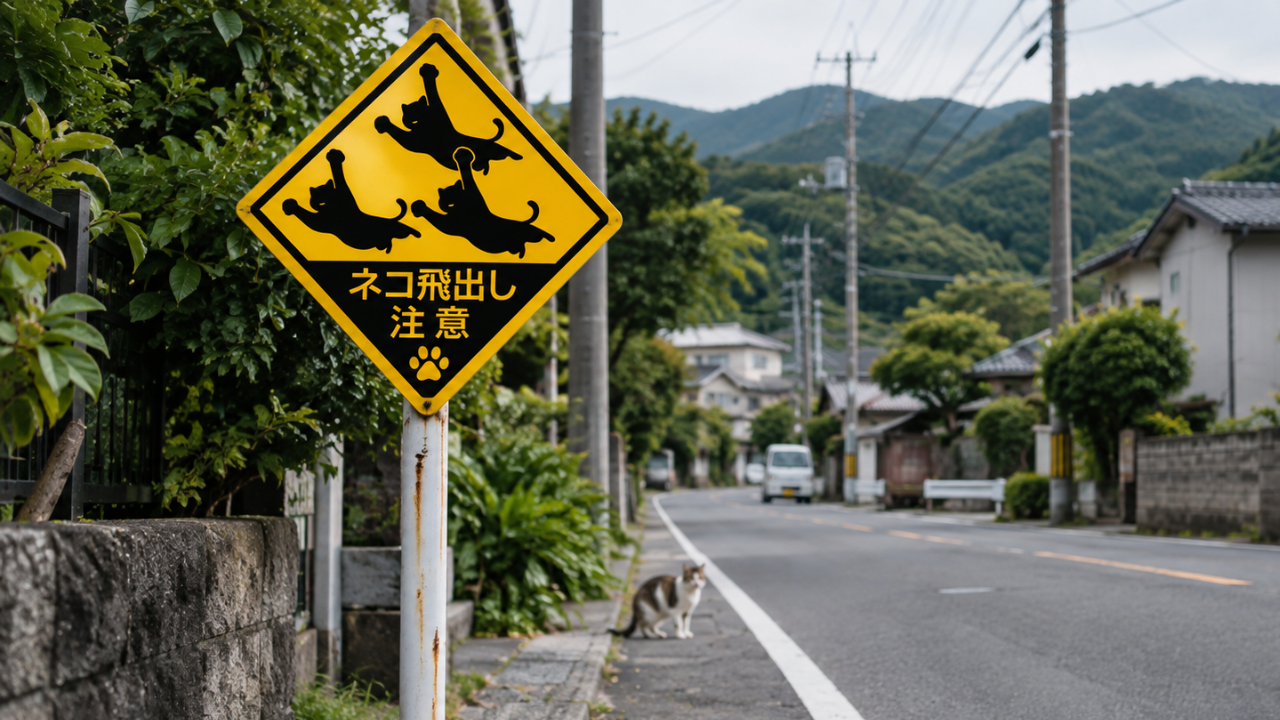
You are driving down a narrow residential lane in Japan, surrounded by wooden fences and neatly trimmed garden hedges, when a bright yellow road sign catches your eye. It features a feline silhouette captured mid-air, completely launched as if gravity is optional.
These playful street signs warn motorists about a very specific local hazard: tobidashi, or animals dashing out suddenly into traffic. While standard traffic boards stick to rigid triangles and boring deer symbols, these neighborhood cat warnings mix practical safety with a distinct dose of local charm.
The Serious Traffic Problem Behind the Cute Silhouettes
Behind the viral photos and internet amusement lies a genuine road safety issue. Outdoor cats and neighborhood strays regularly dart across asphalt while chasing insects, birds, or other animals.
Felines possess a unique behavioral quirk when confronted by oncoming headlights or loud engine noise. Instead of bolting to safety, they frequently freeze in place. That split-second hesitation creates a dangerous scenario for both the animal and the driver.
Major automotive retailers like Yellow Hat have even launched targeted campaigns alongside animal psychology researchers from Kyoto University to study these patterns. They designed specialized signs mimicking the exact tense posture of a cat ready to spring, aiming to force drivers to ease off the gas pedal in high-risk zones.
Who Actually Installs These Signs
You won't find these flying cat markers mapped out in official national highway manuals. Many of them are grassroots projects.
Local neighborhood associations and individual residents commission or put up the signs themselves to protect community animals. Tired of seeing pets harmed by speeding commuters cutting through residential shortcuts, locals take traffic management into their own hands.
The strategy works because of human psychology. Standard red-and-white warning signs blend into the visual background after years of driving. A bright yellow sign depicting a cartoonish, airborne cat breaks that mental autopilot mode instantly. You look twice, you smile, and most importantly, you slow down.
Protecting Rare Wildlife Across Japan
This localized focus on felines extends far beyond domestic neighborhood pets. In southwestern Japan, the remote island of Tsushima utilizes heavy-duty warning systems for a much rarer resident: the critically endangered Tsushima leopard cat.
Japan's Environment Ministry treats vehicle collisions as a primary threat to this dwindling wild population, which hovers around roughly 100 individuals. Authorities install reflective roadside boards, lower speed limits, construct under-road animal passages, and set up special lighting to keep drivers alert.
Whether it is a handmade neighborhood plaque in Tokyo or an official wildlife conservation board on a rural island, the message remains identical. Roads are shared spaces. When you travel through Japanese neighborhoods, keep your eyes open for sudden movement, respect local speed limits, and stay mindful of the animals sharing the route.