The plastic bin smells faintly of the ten thousand damp sneakers that preceded yours.
If you travel often enough, you develop a choreography. Belt off, watch in the tray, laptop freed from its leather sleeve, jacket tossed aside like skin shedding before an operation. You do this on autopilot, staring at the grey linoleum of terminal three while a plastic-cased guard mutters instructions about liquids and gels. We treat it as an annoyance. A tax paid in time and dignity for the privilege of moving across continents at six hundred miles per hour.
Few of us pause to look at the machinery humming behind the mirrored glass. Fewer still remember why the bin is even there.
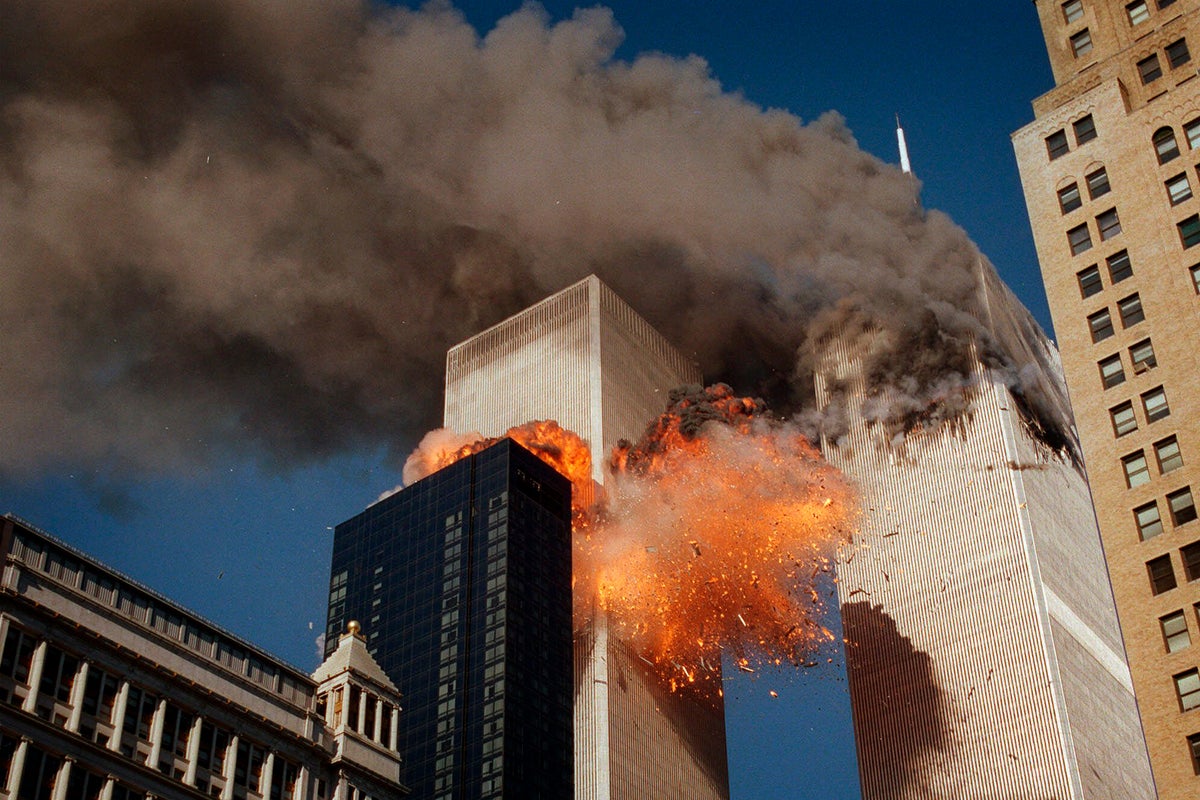
Thirty years ago, you could walk your lover all the way to the gate. You could carry a pocketknife through a metal detector that chimed happily and let you pass with a nod. The sky felt open. It felt weightless. Then came the steady, cruel drumbeat of history: Lockerbie, the unspooling wire of a timer hidden inside a cassette player over Scotland. The twin towers collapsing like wet cardboard into the Manhattan pavement. The shoe bombs, the liquid plots, the underground tunnels where men practiced with box cutters.
Every single rule governing our modern passage through the clouds was written in blood.
We forget this because our brains are built to normalize the absurd. Walk through a modern millimeter-wave scanner, hands raised over your head like a surrender, and your nervous system categorizes it as standard procedure. But beneath the institutional beige and the polite corporate signage lies a quarter-century of terror, failure, forensic science, and desperate engineering.
Consider what happens when a system fails.
In December 2001, a thirty-one-year-old man named Richard Reid boarded American Airlines Flight 63 from Paris to Miami. Inside the thick rubber soles of his sneakers, he carried C4 plastic explosive and a makeshift fuse. He was shivering, sweating, mumbling to himself. When he tried to strike a match beneath his heel, the damp explosive refused to cooperate. Passengers smelled sulfur. A flight attendant named Hermis Moutardier smelled something burning—something organic and chemical, like charred hair mixed with fireworks.
They tackled him in the aisle. They tied him down with plastic drink cart straps and leather belts.
When that plane touched down, the geography of human travel shifted forever. It was not a policy memo that changed the world; it was the raw, terrifying muscle of terrified strangers throwing themselves onto a madman three miles above the Atlantic. The next morning, millions of people took their shoes off at airport security checkpoints for the very first time. They stood in their socks on cold tile, shivering slightly, wondering when the world had gotten so heavy.
That is how modern security was built. Not through brilliant foresight, but through the desperate, agonizing autopsy of what went wrong.
For decades, aviation security was reactive. A bomb went off; a hole was blown in a fuselage; investigators crawled through miles of swamp or desert debris to find a single scorched circuit board; and then a new rule was born. It is an exhausting way to govern safety. It means the bad actors always hold the initiative. They are the authors; we are the editors trying to fix the grammar after the disaster has already occurred.
Look closer at the checkpoint today. The old x-ray machines that required you to empty every liquid container into a quart-sized bag are slowly disappearing, replaced by computed tomography scanners. These are the same massive, whirring CAT scan machines found in hospital trauma bays. They slice through your luggage digitally, rendering three-dimensional, rotatable color maps of your belongings.
To an engineer, it is a marvel. To a terrorist, it is a nightmare.
You no longer have to pull your laptop out of its bag because the machine can see right through the dense battery stacks to distinguish a circuit board from a detonator. The algorithm doesn't blink, it doesn't get tired at 4:00 PM on a Friday, and it doesn't care how tired you are. It searches for density, for atomic signatures, for the hidden geometry of destruction.
Yet technology remains blind to the most dangerous variable in the entire system: the human heart.
A machine can detect a pound of pentaerythritol tetranitrate hidden in the lining of a suitcase, but it cannot read the micro-expression of panic on the face of a man carrying it. That is why behind every glowing monitor sits a human being—a screwer, a checker, an officer who has spent twelve hours standing on anti-fatigue mats, listening to alarms chime, confiscating half-eaten jars of artisanal honey from weeping grandmothers.
We often view these workers as obstacles. We sigh when they pull our bags aside because of an unidentifiable wire that turns out to be an electric toothbrush charger. We roll our eyes at the redundancy of it all.
Think about what they are keeping away from you.
Every single day, thousands of prohibited items are intercepted at checkpoints worldwide. Not just guns and knives, though those appear with depressing regularity, but improvised components, timing devices, chemical precursors. Most passengers never know how close they came to catastrophe. The system is designed to be invisible when it works. Success looks like nothing happening. Success is a boring flight where you read a cheap paperback, drink lukewarm coffee, and land safely in the rain.
There is a profound psychological weight to living inside a fortress designed by paranoia.
We have traded a portion of our freedom for survival. Every time we step into a full-body scanner or empty our water bottles into a steel drum, we are acknowledging a dark truth about our species: we are capable of turning our greatest triumphs of engineering into weapons of mass destruction.
The airplane was invented to bring us closer together. To shrink oceans, to render borders permeable, to make the globe feel small and manageable. The terrorists understood this vulnerability. They looked at the open sky and saw a highway for fear.
By hardening the terminals, we preserved the sky.
If you walk through Charles de Gaulle or Heathrow or O'Hare today, watch the people around you. Watch the businessman typing frantically on his phone while his belt is being x-rayed. Watch the young mother trying to fold a stroller while a security guard holds her toddler's favorite stuffed animal out of the metal detector's path with a gentle smile.
We are battered, tired, inconvenienced, and safe.
The shoes we leave behind in those plastic bins are monuments to our fragility. They are proof that we are willing to endure indignity, delay, and friction if it means we get to see the people we love on the other side of the cloud layer.
The machines will keep evolving. The algorithms will grow sharper, the scanners more transparent, the threats more abstract. Someday, perhaps, we will walk through checkpoints that require no stopping, no stripping away of clothes or electronics, no friction at all.
Until then, take off your shoes. Drop your laptop in the tray. Step into the circle, raise your hands, and look out the terminal window at the silver birds waiting on the tarmac, fueled and ready to defy gravity once more.