A standard flight from Dubai to Delhi used to be a predictable four-hour hop across the Arabian Sea. That era of aviation certainty has vanished. While budget carriers like IndiGo have officially resumed operations following recent escalations in the Iran-Israel conflict, the "resumption" of flights is a misnomer for a return to normalcy. Passengers are stepping onto planes, but the industry is operating in a state of high-stakes improvisation.
The primary reason for the current volatility is the sudden loss of reliable airspace. When the skies over Iran or Iraq close, or become too risky for commercial insurance to cover, the entire air corridor between the UAE and India—one of the world's busiest travel segments—collapses into a bottleneck. Airlines are not just "back on track." They are navigating a logistical minefield where a single missile launch can add three hours of fuel burn and thousands of dollars in operational costs to a single flight.
The High Cost of Avoiding a War Zone
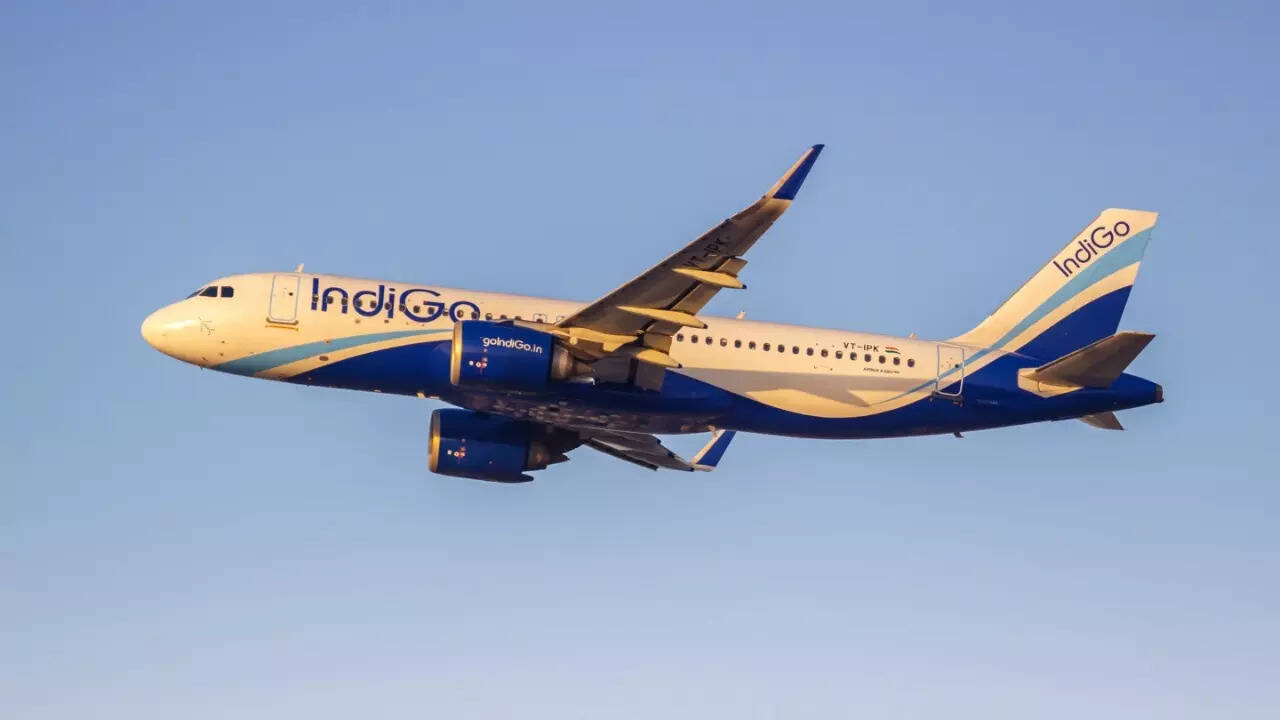
Aviation is a business of straight lines. Every curve in a flight path costs money. When tensions spiked between Iran and Israel, the traditional "Great Circle" routes became unusable for safety-conscious operators. For an airline like IndiGo, which operates on razor-thin margins and utilizes a fleet of narrow-body Airbus A320s, these detours are more than an inconvenience. They are a threat to the business model.
To bypass Iranian airspace, flights must often swing far south over the Gulf of Oman and then hook back up toward the Indian subcontinent, or navigate the crowded corridors over Saudi Arabia. This isn't as simple as changing lanes on a highway. Air traffic control (ATC) sectors in the neighboring regions become instantly overwhelmed.
When hundreds of flights from various international carriers all try to squeeze into the same narrow "safe" corridor simultaneously, the result is "flow control" delays. You might see your flight listed as "on time" on the departure board in Dubai, only to sit on the tarmac for ninety minutes because there isn't a vacant slot in the sky over Muscat.
The Fuel Math That Dictates Your Ticket Price
Fuel is the single largest expense for any carrier, often accounting for 30% to 50% of operating costs. A detour that adds 45 minutes to a flight isn't just a delay; it is a massive consumption of extra kerosene.
Consider the mechanics of a loaded A320.
If a flight is forced to carry "contingency fuel" for a longer, more circuitous route, the plane becomes heavier. A heavier plane burns more fuel just to carry the extra fuel. It is a punishing cycle of physics. For the passenger, this manifests in two ways: higher surcharges and weight restrictions.
On certain long-range narrow-body routes, airlines may be forced to leave seats empty or offload cargo to stay within safe takeoff weights if the required fuel load is too high. We are seeing a shift where the "low-cost" in low-cost carrier applies only to the service level, not the underlying operational reality.
The Insurance Paradox
Why do some airlines fly over conflict zones while others go around? The answer lies in the dark art of aviation insurance.
Each airline has a "War Risk" clause in its insurance policy. When a region is flagged by international safety bodies or private intelligence firms, insurance premiums for flying through that specific coordinates spike instantly. For some legacy carriers, the cost of the premium outweighs the profit of the flight.
Indian carriers face a unique pressure. The UAE-India corridor is a lifeline for millions of expatriate workers. Canceling these flights causes a diplomatic and humanitarian ripple effect. Consequently, carriers like IndiGo and Air India Express often push to resume operations faster than Western counterparts, taking on the burden of navigating these "gray zone" corridors. They are betting that their rapid response systems and real-time intelligence feeds can keep them ahead of any kinetic military action.
The Problem with "Resumed" Operations
When an airline announces it has resumed operations, it rarely mentions the "secondary delays."
- Crew Duty Limits: Pilots and flight attendants are governed by strict legal limits on how many hours they can be on duty. If a four-hour flight becomes a six-hour flight due to rerouting, and then sits on the tarmac for two hours, the crew might "time out."
- Aircraft Rotation: Most budget planes fly five or six "legs" a day. A two-hour delay in the morning in Dubai cascades through the entire system, leading to a cancellation in Chennai twelve hours later.
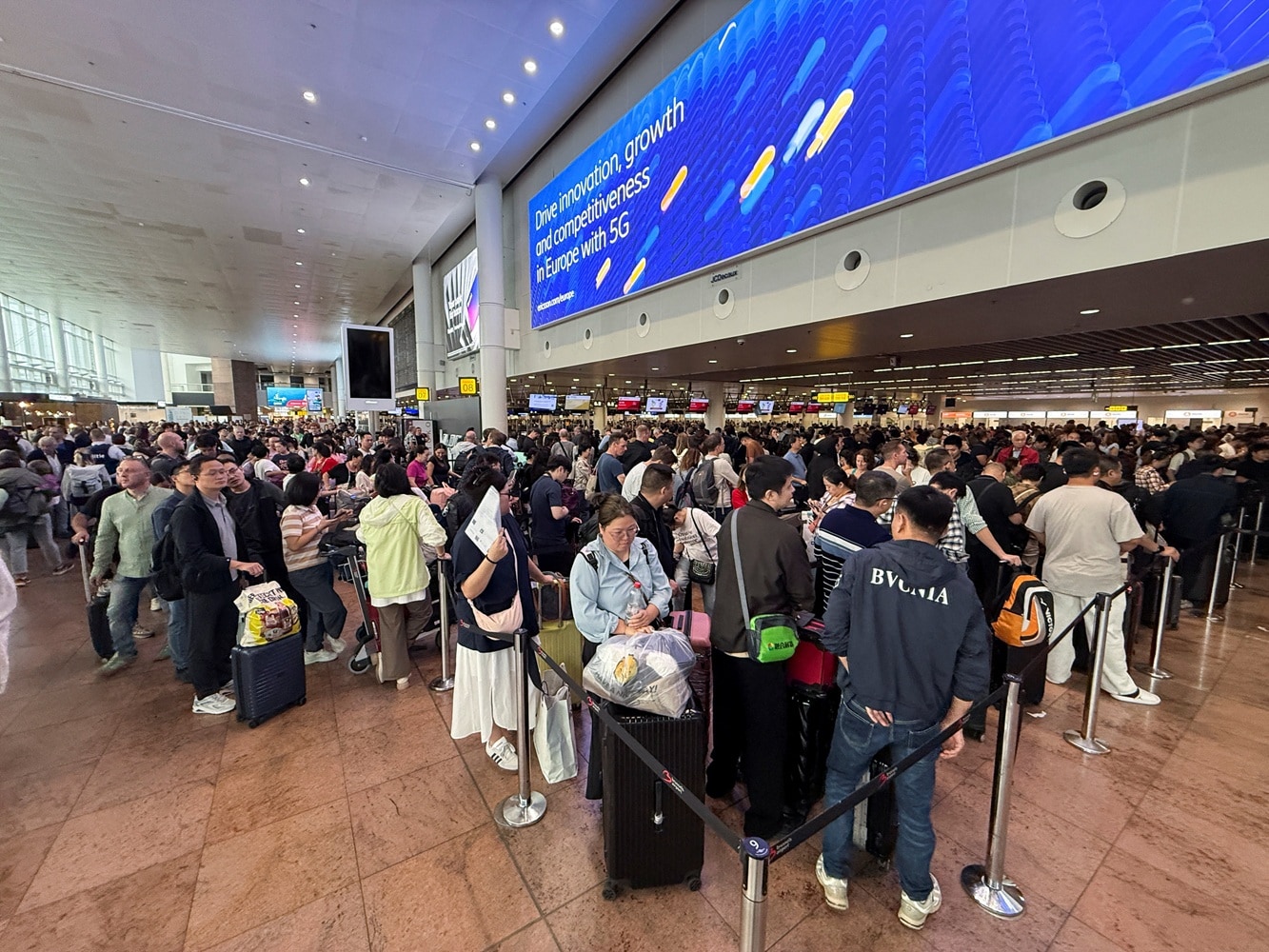
- Ground Handling Bottlenecks: Airports in the UAE are operating at near-capacity. A disruption in the flight schedule leads to gate congestion, leaving arriving passengers stuck on the taxiway because their gate is still occupied by a delayed departure.
The Geopolitical Choke Point
The geography of the Middle East offers very few "back doors." To the north is the ongoing conflict in Ukraine and the restricted Russian airspace. To the west is the volatility of the Levant. To the south is the vastness of the Indian Ocean, which requires specialized "Extended-range Twin-engine Operational Performance Standards" (ETOPS) certification for aircraft to fly long distances from an emergency landing site.
The UAE-India route is caught in a geographic vise. As long as the "War of the Shadows" continues between regional powers, the sky is no longer a neutral space. It is a contested resource.
What the Passenger Needs to Know
Reliability is currently an illusion. If you are booking travel between the UAE and India, you must look beyond the departure time.
Check the flight history of your specific flight number on tracking websites. If the flight has consistently taken a southern detour over the last three days, expect your arrival to be at least an hour later than scheduled, regardless of what your boarding pass says.
Furthermore, the "re-protection" process is failing. When a flight is canceled due to "extraordinary circumstances" like a closed airspace, airlines are often not legally required to provide hotel accommodation or compensation in the same way they would for a mechanical failure. You are essentially on your own in a geopolitical standoff.
The Shift in Cargo Dynamics
It isn't just people. A huge volume of high-value goods—pharmaceuticals, electronics, and perishables—moves in the bellies of these passenger planes. When routes become erratic, supply chains stutter.
Freight forwarders are already looking at shifting back to sea-air combinations, where goods are shipped by boat to a stable port and then flown the rest of the way. This shift further reduces the ancillary revenue for airlines, putting more pressure on the individual passenger's ticket price to make up the shortfall.
The Technical Reality of Modern Routing
Modern flight management systems (FMS) allow dispatchers to upload new routes to a cockpit in seconds. However, these systems are only as good as the data they receive. In the current climate, GPS spoofing and electronic interference have been reported by pilots flying near the borders of conflict zones.
This isn't just about "missing a turn." It involves "waypoint confusion," where the plane's instruments might give false readings about its position. While commercial pilots are trained to handle this using traditional inertial navigation, it adds a layer of cognitive load to the cockpit during an already stressful rerouting.
The Future of the Corridor
The era of cheap, reliable transit between the Gulf and South Asia is being rewritten by regional instability. We are moving toward a tiered system of aviation. Those who can afford the premium of legacy carriers may find more robust rerouting options, while budget travelers will bear the brunt of cancellations and "operational adjustments."
The next time you see a headline stating that flights are "back on track," understand that the track has been moved, lengthened, and made significantly more expensive. The planes are flying, but the stability of the sector remains grounded.
Check your airline's app for "Estimated Elapsed Time" rather than just the arrival time, as this often reveals the true path the aircraft intends to take through the invisible maze.