The rumors of a brief ceasefire for the Orthodox Easter holiday are once again circulating through the diplomatic backchannels of Europe. To the casual observer, an Easter truce represents a glimmer of humanity in a conflict that has ground into a stagnant, bloody war of attrition. To the commanders on the front lines in the Donbas and Zaporizhzhia, however, these pauses are rarely about piety or peace. They are tactical maneuvers designed to provide breathing room for exhausted units, time to reposition heavy armor, and a chance to solidify logistical chains that have been battered by drone strikes.
While the international community often pushes for these symbolic gestures, the reality on the ground is that neither Moscow nor Kyiv views a holiday ceasefire as a step toward a settlement. Instead, the "Easter truce" has become a recurring piece of psychological warfare. It is a tool used to paint the opposition as godless or intransigent when they inevitably refuse the terms or when the first mortar shell falls minutes after the clock strikes midnight.
The Logistics of a Failed Promise
History shows that religious holidays in this conflict do not stop the bleeding. They merely change the tempo. Since the initial invasion in 2022, multiple calls for "silent periods" during Christmas and Easter have resulted in little more than a temporary dip in artillery volume, often followed by an intensified barrage once the "truce" expires.
The primary reason these agreements fail is a total lack of trust. For a ceasefire to hold, both sides must believe that the other won't use the quiet to dig new trenches or rotate fresh battalions into the zero line. In the current environment, where overhead surveillance via Orlan and Mavic drones is constant, any movement is interpreted as a threat. If a Russian unit sees Ukrainian engineers fixing a bridge during a truce, they will fire. If Ukrainian spotters see a Russian fuel convoy moving under the cover of a religious holiday, they will strike.
Commanders are not willing to gamble the lives of their men on the hope that the enemy is feeling sentimental about the liturgy. The war has reached a stage where the operational tempo is dictated by mud, ammunition supplies, and battery life, not by the liturgical calendar.
The Kremlin Political Calculus
For Vladimir Putin, proposing a truce is a low-risk, high-reward move. It allows the Kremlin to signal to the Global South and domestic audiences that Russia is the "moral" actor, respecting the shared Orthodox heritage of the two nations. When Kyiv rejects the proposal—arguing correctly that Russia uses such pauses to regroup—Moscow’s propaganda machine frames the Ukrainian leadership as puppets of a secular West who have no respect for the faith.
Inside Russia, the church is an arm of the state. Patriarch Kirill has framed the war in metaphysical terms, making any talk of a "holy truce" look like a directive from the top rather than a genuine call for peace. The strategic goal here is not to stop the fighting, but to manage the optics of the occupation. By calling for a pause, Russia can also attempt to slow down the arrival of Western munitions, hoping that a temporary dip in intensity will lessen the urgency felt by Kyiv’s allies in Washington and Brussels.
Ukraine Strategic Necessity for Continuity
Kyiv views these proposals with a cynicism earned through a decade of broken agreements, stretching back to the original Minsk protocols. From the Ukrainian perspective, any pause in the fighting is a gift to the Russian military. Russia currently holds the initiative in several sectors of the front, particularly near Avdiivka and Chasiv Yar. Stopping for 48 hours allows the Russian military to clear mines, repair damaged T-90 tanks, and rest the "Storm-Z" units that are used in human-wave style assaults.
The Ukrainian High Command knows that their best defense is keeping the Russian logistics under constant pressure. If the guns go silent, the pressure eases. This is why Ukraine often sets conditions for a truce that Russia will never meet, such as the total withdrawal of troops to 1991 borders. It is a diplomatic way of saying "no" while maintaining their own moral standing.
There is also the matter of the "active defense" strategy. Ukraine relies heavily on precise, long-range strikes against Russian oil refineries and supply depots. A truce would theoretically require these operations to stop, giving the Russian economy a moment to catch its breath. For a nation fighting an existential war, there is no such thing as a day off.
The Intelligence Gap and the Front Line Reality
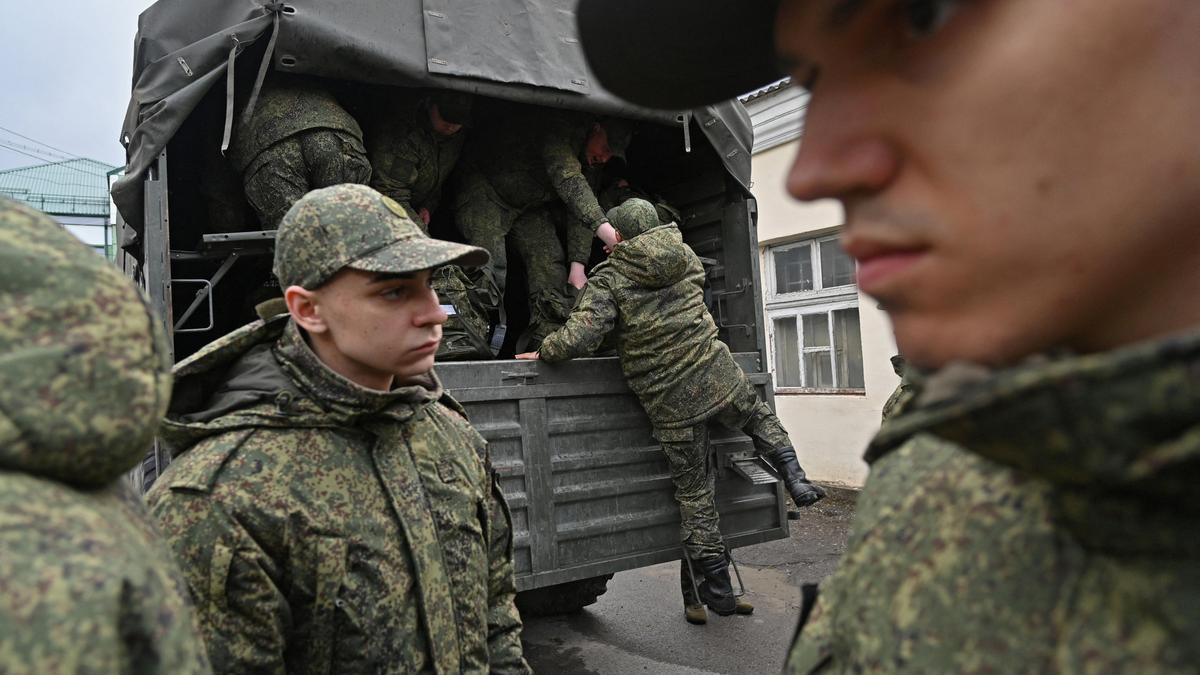
Soldiers in the trenches have a different view of these high-level diplomatic games. To a private in a frozen dugout, a truce is often the most dangerous time of the campaign. During active combat, you know where the enemy is and what they are doing. During a truce, the uncertainty spikes.
Sniper Activity During Ceasefires
- Static Targets: Soldiers are more likely to let their guard down, move above the trench line, or smoke in the open during a declared truce.
- Target Acquisition: Snipers use the "quiet" to find new nests and range their targets without the distraction of incoming artillery.
- Zeroing In: Forward observers use the lack of smoke and dust to get clearer coordinates on enemy bunkers.
The statistics from previous "quiet" periods in the Donbas (2014-2021) show that while heavy artillery usage drops, small arms fire and sniper engagements often remain steady or even increase. It is a "cold" war within a hot one.
The Role of the Orthodox Church
The split within the Orthodox world has stripped the Easter holiday of its unifying power. The Ukrainian Orthodox Church has largely severed ties with the Moscow Patriarchate, viewing it as a tool of Russian intelligence. This religious schism means that an "Orthodox Easter" no longer exists as a singular cultural event that can bridge the gap between the two sides.
When the religious leadership in Moscow blesses weapons of war, their calls for a truce ring hollow in the ears of Ukrainian believers. The pulpit has become a platform for mobilization, and the cross has been co-opted by the state. This destruction of shared cultural ground is perhaps the most permanent damage the war has inflicted, ensuring that even symbols of peace are now seen as weapons of deception.
International Pressure and the Peace Industry
There is a growing "peace industry" in neutral capitals—places like Istanbul, Riyadh, and various European hubs—that thrives on the hope of these small gestures. Diplomats need something to show for their efforts, and a 24-hour truce is a tangible, if meaningless, metric of success. However, these third-party actors often fail to understand that this is not a conflict of misunderstanding that can be solved with a handshake. It is a war of attrition where one side's survival depends on the other's exhaustion.
Western allies are also in a difficult position. If they push Kyiv too hard to accept a truce, they risk being seen as undermining Ukraine’s sovereignty. If they ignore the calls for peace, they lose the narrative battle in the "Middle Powers" of the world who are tired of the economic fallout from the war.
The Weapons that Don't Sleep
Even if the infantry stops charging, the war of technology continues. Electronic warfare (EW) units do not turn off their jammers during a truce. In fact, they use the decreased noise on the radio spectrum to more effectively hunt for enemy signals. The "invisible war" for control of the electromagnetic spectrum is a 24/7 operation that cannot be paused without ceding a massive advantage.
Furthermore, the production lines in Uralvagonzavod and the drone assembly plants in Kyiv do not stop for Easter. A two-day truce on the front line does not mean a two-day pause in the manufacturing of the missiles that will fall on Day Three. If anything, these pauses allow for a buildup of ordnance, making the resumption of hostilities even more violent than the period preceding the truce.
The Failure of Symbolic Diplomacy
The obsession with holiday ceasefires highlights a deeper failure in modern diplomacy. It prioritizes the symbol over the substance. If the goal is truly to save lives, the focus should be on humanitarian corridors for civilians or the exchange of all prisoners of war, not a temporary stop in shooting that everyone knows will end.
The "Easter Truce" is a relic of a different era of warfare, one where armies retired to winter quarters and followed chivalric codes. In the age of satellite guidance and thermobaric weapons, the concept of a "holy day" of rest is an anachronism. The war in Ukraine has shown that the only thing that stops the fighting is the exhaustion of resources or the achievement of an objective.
The Grind Continues
As Easter Sunday approaches, the shells will likely continue to fall. Some units might see a brief reprieve, but it will be a nervous quiet. The soldiers will stay in their bunkers, their fingers on the triggers, watching the thermal feeds of their drones. They know that a truce isn't peace; it's just a reload.
Those looking for a breakthrough in the conflict will not find it in the hollowed-out language of a seasonal ceasefire. True shifts in the war’s trajectory come from the arrival of new weapon systems, changes in mobilization laws, or the collapse of a specific front. A truce is a comma in a very long, very dark sentence. It doesn't change the meaning of the story; it only delays the ending.
The military reality is that as long as the strategic objectives of both nations remain mutually exclusive, no amount of religious or cultural pressure will silence the guns for long. The front line is 1,200 kilometers of scarred earth that cares nothing for the calendar.
Forget the headlines about a coming peace. Watch the rail lines. Watch the ammunition depots. Watch the troop rotations. That is where the truth of the war is found, not in the press releases of the Kremlin or the hopeful tweets of European diplomats. The war is a machine that requires constant fuel, and a holiday is just a moment to check the oil.
Maintain the defensive lines. Keep the drones in the air. Trust no one.