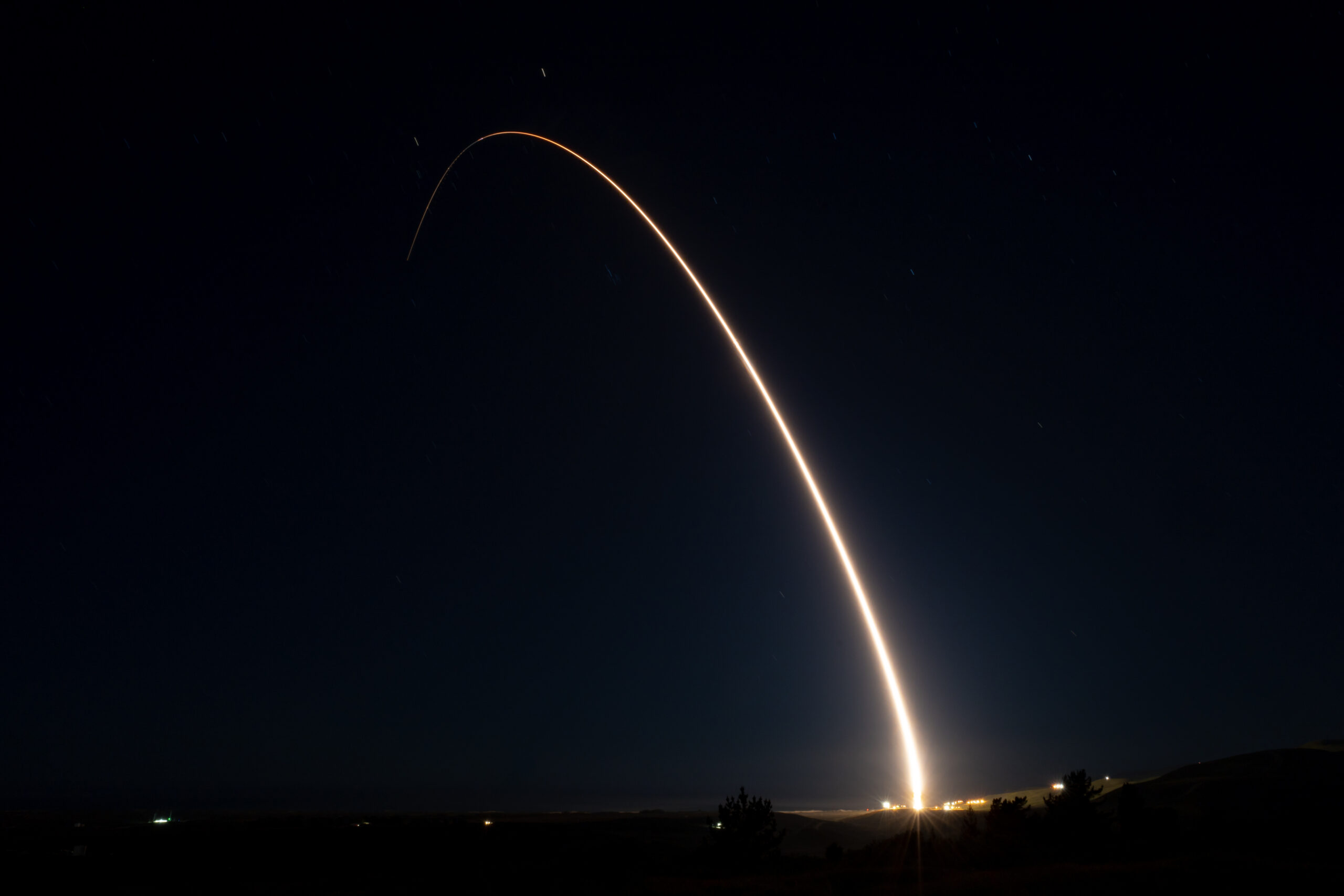
Air strikes are the ultimate placebo of modern warfare. When seven fighters are neutralized in the desert of Anbar, the headlines scream about "decisive action" and "heinous crimes." The media treats these kinetic events like a final score in a sports match. They aren't. They are symptoms of a profound strategic failure. We are witnessing the exhaustion of a military doctrine that believes you can bomb your way to a political settlement.
I have spent years watching defense budgets vanish into the vacuum of "over-the-horizon" capabilities. The logic is always the same: if we just remove the right chess pieces, the board will stabilize. It is a lie. Every time a missile hits a truck in western Iraq, the tactical success masks a strategic regression. We are trading expensive munitions for temporary silence, and the silence is getting shorter every year.
The Tactical Success Trap
The "lazy consensus" surrounding these strikes is that they degrade enemy capabilities. This is a fundamental misunderstanding of how modern non-state actors function. In a localized, decentralized insurgency or paramilitary structure, "capability" isn't a fixed asset like a factory or a shipyard. It is a fluid network of ideology, local grievance, and external funding.
When you kill seven fighters, you haven't "degraded" a network. You have merely cleared the path for the next seven, who are often younger, more radical, and better adapted to the very tactics used against their predecessors. We are essentially providing high-stress evolutionary pressure on our enemies. We are making them leaner and harder to find.
Consider the logistics. The cost of a single Hellfire missile or a flight hour for an advanced drone dwarfs the "value" of the targets being hit. We are fighting an asymmetric war where the asymmetry favors the side that spends the least. It is a fiscal death spiral.
The Sovereignty Theater
The Iraqi government calls these strikes a "heinous crime" or a violation of sovereignty. This is political theater. Baghdad knows exactly why these strikes happen. They happen because the state lacks a monopoly on the use of force within its own borders.
The real story isn't the explosion in Anbar. The real story is the total erosion of the Westphalian state model in the Middle East. If a government cannot control the armed groups operating on its soil, "sovereignty" is just a word used in press releases to appease a domestic audience. By focusing on the "illegality" of the strike, the competitor's narrative ignores the vacuum of power that necessitated it in the first place.
- The Myth: Strikes prevent future attacks.
- The Reality: Strikes provide the propaganda fuel for the next recruitment cycle.
- The Myth: Intelligence is surgical.
- The Reality: Intelligence is a snapshot of a moment that has usually passed by the time the trigger is pulled.
Why We Can't Stop Swinging
The military-industrial complex thrives on the "kinetic solution." It’s easy to map. It’s easy to brief to a committee. It has a clear beginning, middle, and end. You show a grainy black-and-white video of a vehicle disappearing in a puff of smoke, and you mark the mission as "complete."
But ask yourself: has the security situation in Anbar fundamentally changed in the last decade? No. The actors change their names. They change their patches. They move their hideouts from one wadi to another. The geography remains contested because the underlying political rot is never addressed.
We are addicted to the tactical high of the strike because the alternative—long-term, grueling, diplomatic and economic stabilization—is boring and expensive. It doesn't look good on the evening news. It doesn't sell hardware.
The Intelligence Paradox
We boast about "precision." We use LaTeX to calculate the circular error probable ($CEP$) of our munitions to ensure we hit exactly what we aim at.
$$CEP = 0.5887 \times (\sigma_x + \sigma_y)$$
If the $CEP$ is low, we congratulate ourselves on our humanity. But precision in delivery is not the same as precision in intent. You can have a $CEP$ of zero and still hit the wrong target strategically. If the target you destroyed was the only thing keeping a local tribe from joining a more radical faction, your "precision" strike just created a thousand new enemies.
I've seen planners ignore the second and third-order effects of these operations because they aren't "measurable." You can't put "loss of local trust" into a spreadsheet. You can't quantify "increased regional tension" in a way that satisfies a general looking for a win. So, we focus on the body count. We focus on the burned-out husks of Toyotas.
Stop Measuring the Wrong Things
If you want to know if a strike was successful, don't look at the number of fighters killed. Look at the price of bread in the nearest village twenty-four hours later. Look at whether the local police feel more or less empowered to do their jobs. Look at the recruitment numbers for the targeted group in the following month.
The competitor's article wants you to feel something—either outrage at the "crime" or satisfaction at the "justice." Both emotions are useless. They are distractions from the cold, hard fact that we are stuck in a loop.
We are using 21st-century technology to fight a 12th-century war of attrition. The drone is the new cavalry charge: impressive to look at, devastating in the short term, but ultimately incapable of holding ground.
You cannot govern from thirty thousand feet. You cannot build a nation with a joystick. And you certainly cannot "end" a conflict by killing seven people at a time in a desert that has swallowed empires whole.
The strike in Anbar wasn't a victory. It wasn't even a setback for the enemy. It was a maintenance cost. It was the price of admission for a theater we should have left years ago. Until we stop pretending that fire from the sky is a substitute for a functional foreign policy, we will keep writing the same headline every six months until the money runs out.
Put the drone back in the hangar. Start looking at the map. The problem isn't the seven men who died; it's the millions who are watching the video of their deaths on Telegram right now.