The Pacific Ocean is too big to comprehend. From the deck of a Coast Guard cutter, it is a blue desert that stretches until the curve of the earth swallows the sky. There are no landmarks. There is no shade. There is only the rhythmic, hypnotic slap of salt water against steel and the knowledge that underneath that shimmering surface, a billion-dollar ghost economy is screaming south to north.
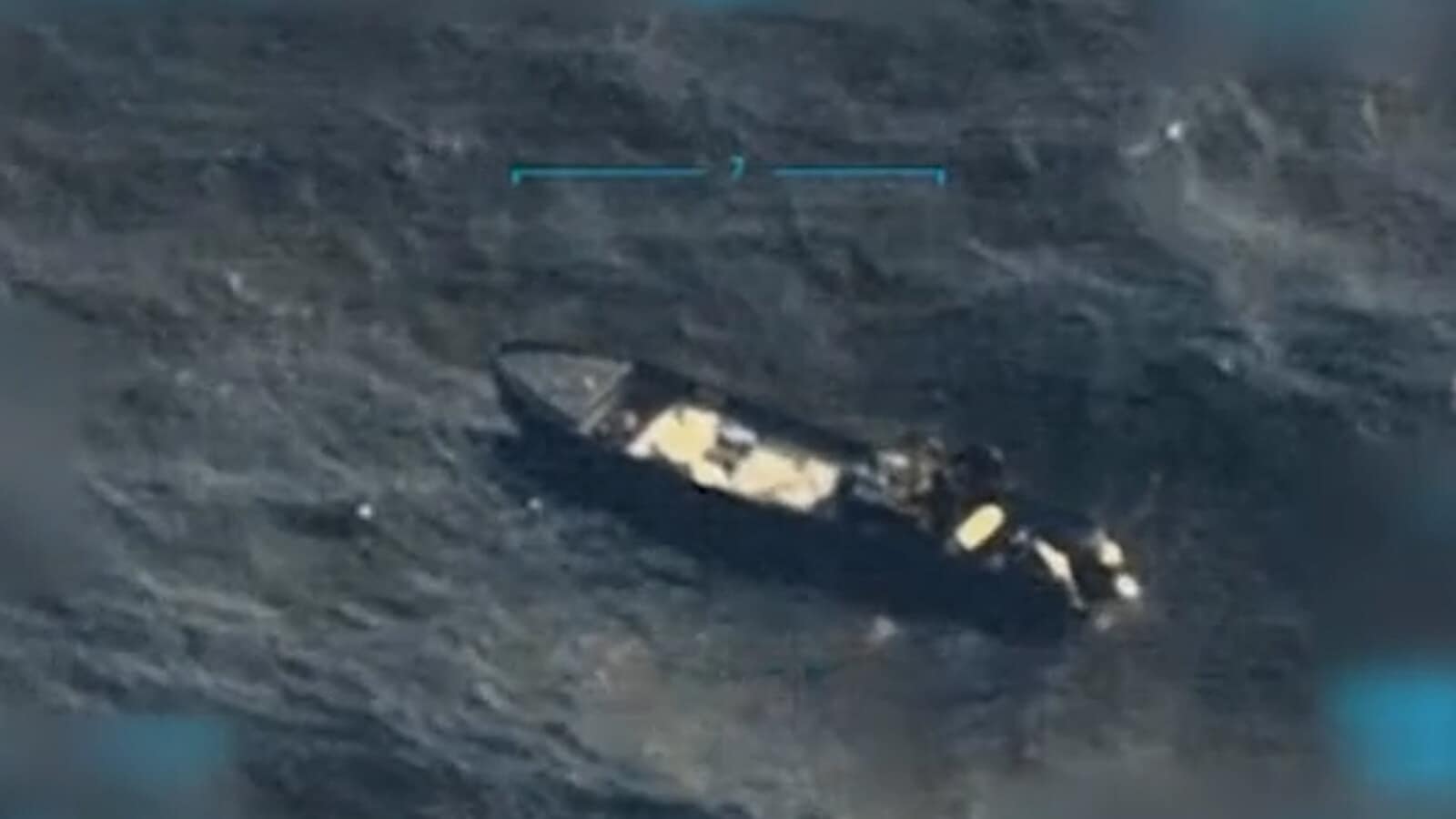
Most people see a headline about a "suspected drug boat" and envision a Hollywood chase. They see sleek cigarette boats and high-tech smugglers outrunning the law. The reality is far grimmer. The reality is a "low-profile vessel"—a fiberglass coffin painted the exact shade of a bruised wave, sitting so low in the water that it is invisible to the naked eye from more than a mile away.
Last week, one of these ghosts was spotted. Then it was gone.
The Cost of the Invisible War
When a U.S. Navy or Coast Guard crew identifies a target in the Eastern Pacific, the atmosphere on the ship shifts instantly. The boredom of a weeks-long patrol evaporates. It is replaced by a cold, clinical adrenaline. This isn't a game of tag. It is a high-stakes interception where the variables are wind speed, fuel levels, and the unpredictable desperation of men who have everything to lose.
In this most recent engagement, the encounter ended in fire.
Four people are dead. They weren't soldiers in a traditional sense. They weren't high-ranking cartel bosses sipping tequila in a mountain villa. They were the engine room of the trade—the men hired to sit in a cramped, gasoline-fumed hull for days on end, navigating by stars and cheap GPS units, surrounded by thousands of pounds of white powder that represents more money than their entire villages will see in a generation.
When the U.S. vessel moved in to interdict, the situation spiraled. The official reports are often sparse, citing "hostile intent" or "evasive maneuvers." But consider the physics of the moment. You have a massive multi-mission cutter or a nimble helicopter overhead and a small, overloaded craft below. The margin for error is zero. A single spark, a panicked sharp turn, or a warning shot that hits a fuel bladder can turn a drug bust into a maritime burial in seconds.
The Ghost Fleet
The vessels involved in these tragedies are engineering marvels of a desperate sort. Smugglers have moved away from traditional fishing boats. They now use Self-Propelled Semi-Submersibles (SPSS). These aren't true submarines; they can’t dive deep. Instead, they are designed to skim just below the surface, with only a small cockpit and exhaust pipes protruding.
Imagine being inside one.
The heat is stifling. The noise of the outboard motors is deafening, vibrating through your teeth. You are sitting on top of millions of dollars of cargo, but you are breathing in fumes that make your head swim. You are a needle in a haystack the size of a continent. To the U.S. Southern Command, you are a data point on a radar screen. To the cartel, you are an expendable line item.
The U.S. has poured billions into the detection of these craft. We use P-3 Orion surveillance planes, sophisticated satellite imagery, and long-range sensors. Yet, the flow rarely thins. For every boat that ends in a fireball or a seizure, three more likely slip through the net, offloading their cargo in the mangroves of Central America or the hidden coves of Mexico.
A Cycle Without a Bottom
The tragedy of the four lives lost in this latest strike isn't just about the immediate violence. It’s about the systemic machinery that put them there.
We often speak of the "drug war" as a series of tactical wins or losses. We count the kilos. We tally the arrests. But the Eastern Pacific is a theater of the absurd where the supply is infinite because the demand is insatiable. As long as the destination remains profitable, there will always be four more men willing to step into a fiberglass shell and risk the deep blue.
The sailors on the U.S. side of the line aren't immune to the weight of this, either. There is a specific kind of trauma that comes from pulling survivors—or bodies—out of a sea of floating cocaine and diesel fuel. They are trained for combat, yes, but the reality of maritime interdiction is often more akin to a high-speed industrial accident.
One moment, the ocean is empty. The next, it is filled with debris and the haunting silence that follows an explosion.
The Human Geometry of the Strike
Why does a strike happen instead of a simple boarding?
The ocean doesn't allow for easy exits. If a vessel refuses to stop, the options narrow. Snipers in helicopters might aim for the engines—a maneuver known as "disabling fire." It is a feat of incredible marksmanship, firing from a vibrating platform at a bouncing target. But if the boat is carrying volatile fuel or if the crew is armed, the "disabling" can become "destructive."
Statistics tell us that maritime seizures are up. We hear about the "record-breaking" hauls that would have flooded our streets. We see the photos of Coast Guard crews standing proudly behind piles of shrink-wrapped bales. These are the visible victories.
The invisible part is the four families who won't receive a phone call. They will simply wait for a boat that never returns, wondering if their sons are in a foreign prison or at the bottom of the Pacific.
The "drug boat" is a convenient term. It dehumanizes the vessel and the people inside, turning a human tragedy into a logistical success. But when the smoke clears over the water, the water doesn't care about the cargo. It doesn't care about the border. It simply closes over the wreckage, smooth and indifferent.
The sun sets over the Eastern Pacific, turning the water into a sheet of hammered gold. Somewhere out there, another hull is vibrating. Another crew is staring at a compass. Another gray ship is turning its bow to intercept. The cycle is as relentless as the tide, and twice as deadly.
The fire on the water goes out, but the hunger that lit it never fades.