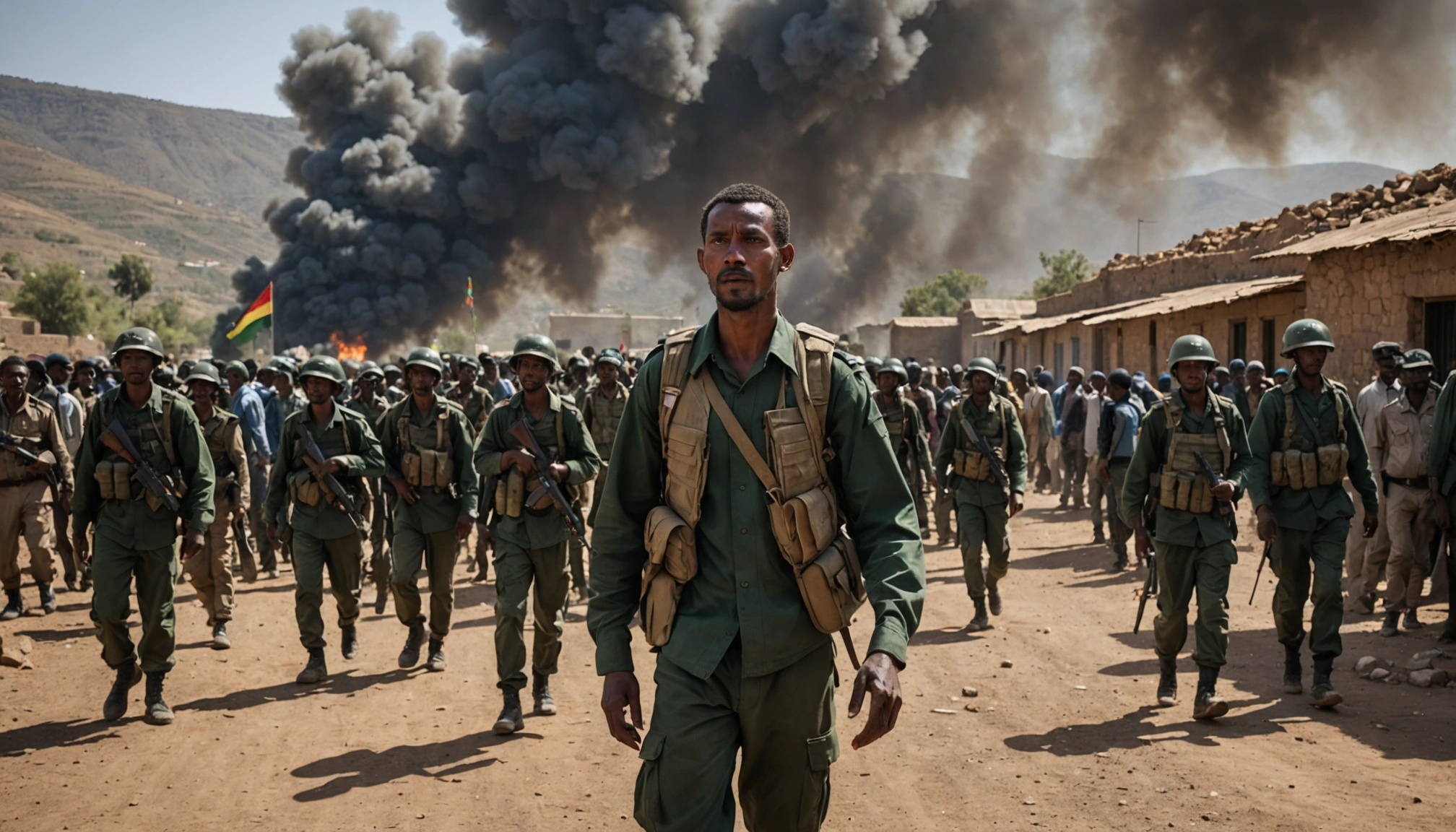
The current friction in the Middle East operates on a dual-track logic where localized ceasefires function as logistical breathers rather than permanent resolutions. While diplomatic channels maintain that the Iran-aligned ceasefire holds, the persistent exchange of fire suggests a decoupling of high-level state policy from proxy-level operational realities. This instability is further exacerbated by the expansion of the kinetic theater to include the United Arab Emirates, indicating a shift from a contained border dispute to a regional systemic failure.
The Architecture of Proportionality and Attrition
To understand why a ceasefire can be classified as "holding" while missiles are being intercepted, one must analyze the threshold of escalation. In modern asymmetric warfare, "holding" does not imply the absence of violence; it implies the absence of an escalation that forces a total state-on-state mobilization. This creates a state of managed attrition.
The Mechanism of Threshold Testing
Combatants utilize intermittent fire to probe defensive capabilities and political resolve. Each exchange serves as a data point in a broader strategic calculus:
- Defensive Saturation: Determining the failure rate and cost-per-intercept of systems like the Iron Dome or Patriot batteries.
- Political Stress Testing: Observing how domestic populations and international allies react to localized strikes.
- Command and Control (C2) Mapping: Forcing the opponent to activate radar or communication nodes, which are then logged for future suppression of enemy air defenses (SEAD) operations.
The paradox of the current "hold" is that while the primary actors—Iran and its state-level adversaries—avoid direct kinetic engagement, the proxy networks maintain a baseline of violence that prevents stabilization. This decoupling allows state actors to claim diplomatic compliance while their subordinates continue the mission of strategic exhaustion.
The UAE Front and the Diversification of Risk
The reported attacks on the UAE represent a significant evolution in the conflict’s geography. Historically, the UAE has positioned itself as a global hub for trade, tourism, and finance—sectors that are hyper-sensitive to security perceptions. By targeting Emirati soil, aggressors are not just seeking military damage; they are attacking the Economic Risk Premium.
The Vulnerability of the Rentier Model
The UAE’s national security is inextricably linked to its reputation as a safe harbor. A sustained kinetic threat creates several cascading failures:
- Insurance Escalation: Maritime and aviation insurance premiums spike, increasing the cost of goods and reducing the competitiveness of Jebel Ali and other logistics hubs.
- Capital Flight: Foreign direct investment (FDI) depends on long-term stability. Persistent threats encourage the relocation of regional headquarters to perceived safer zones.
- Tourism Contraction: Unlike hardened military targets, the tourism sector collapses at the first sign of sustained instability, impacting the non-oil GDP.
The expansion to the UAE suggests that the aggressors have identified the economic backbone of the Abraham Accords signatories as a primary target for psychological operations. This is a shift from tactical warfare to geo-economic sabotage.
The Three Pillars of Proxy Divergence
The "exchange of fire" despite a ceasefire is often the result of Proxy Divergence, where the interests of the patron state (Iran) and the client group (militias) temporarily drift apart. This divergence is driven by three structural factors:
1. Local Autonomy and Survival
Militia groups often operate with a "use it or lose it" mentality regarding their relevance. If a ceasefire lasts too long, their domestic political power or their justification for receiving Iranian funding diminishes. To maintain their position in the local power hierarchy, these groups must demonstrate continued combat efficacy, even if it contradicts the patron's immediate diplomatic goals.
2. Information Asymmetry
The lag between a high-level diplomatic agreement in Tehran or Doha and the operational commander in a trench leads to "kinetic residue." Orders to cease fire are rarely instantaneous and are often interpreted through the lens of local grievances, leading to retaliatory strikes that the command structure may not have authorized but cannot publicly disavow without appearing weak.
3. The Sunk Cost of Mobilization
Once a proxy group has mobilized its logistics, positioned its rocket arrays, and deployed its personnel, the cost of de-escalation is high. There is a tactical incentive to fire remaining inventory before a more rigorous monitoring regime is established.
The Fragility of Intercept-Based Security
A recurring flaw in regional strategy is the over-reliance on active defense systems. While the UAE and other regional powers possess sophisticated multi-layered missile defense, this creates a false sense of security that ignores the Cost-Exchange Ratio.
If a drone costing $20,000 forces the launch of two interceptor missiles costing $2 million each, the aggressor wins the economic battle regardless of whether the target was hit. This is a war of mathematical exhaustion. Over time, the defender's inventory of interceptors is depleted, and the financial burden becomes unsustainable.
Furthermore, no defense system is 100% effective. In a high-volume saturation attack, the probability of a "leaker" (a missile or drone that gets through) increases exponentially. For a financial center like Dubai or Abu Dhabi, a single successful strike on a high-visibility target has a disproportionate effect on national security perception.
Strategic Realignment and the Failure of Traditional Deterrence
The current situation demonstrates that traditional deterrence—the threat of massive retaliation—is failing to contain grey-zone activities. Because the attacks are often unattributed or conducted by non-state actors, the "return address" for a retaliatory strike is obscured.
The UAE and its allies are forced into a reactive posture, where they must defend everywhere while the aggressor only needs to succeed once. This imbalance necessitates a shift from purely military defense to a broader Resilience Framework:
- Redundant Logistics: Diversifying supply chains and energy exports to minimize the impact of a single port or pipeline being targeted.
- Intelligence-Led Interdiction: Moving the "kill chain" further upstream by targeting the financial and logistical nodes that supply proxy groups, rather than just shooting down the end-product missiles.
- Diplomatic Counter-Isolation: Forcing the patron state to take public accountability for the actions of its proxies. If a ceasefire "holds," any fire must be framed as a direct breach by the state patron, removing the "plausible deniability" buffer.
The Projection of Regional Power Dynamics
The interplay between the Iran-Israel-US triad and the Gulf states is now defined by Competitive Escalation Management. Each actor is trying to find the maximum level of violence they can inflict without triggering a regional conflagration that would destroy their own interests.
Iran uses its proxies to signal that it can disrupt global energy markets and regional stability at will, providing it with leverage in sanctions negotiations. Conversely, the UAE and Saudi Arabia are attempting to decouple their economic modernization plans from these regional security cycles. The attack on the UAE proves this decoupling is currently impossible.
The ceasefire is not a peace treaty; it is a recalibration of the battlefield. The "exchange of fire" is the language through which the parties negotiate the new boundaries of the status quo.
Tactical Forecast and Necessary Pivot
Expect the frequency of low-yield, high-visibility attacks to increase. The goal is not to win a territory, but to maintain a "permanent state of emergency" that prevents the normalization of the Abraham Accords and hampers the economic diversification of the Gulf states.
The strategic priority for regional stakeholders must shift from "stopping the fire" to "devaluing the fire." This involves hardening economic infrastructure, creating rapid-recovery protocols for financial markets following kinetic events, and establishing a regional collective defense pact that treats a proxy strike on one as a state strike on all. Only by removing the "proxy" shield and forcing direct accountability can the cycle of managed attrition be broken. The current ceasefire is a tactical pause; the underlying structural triggers for conflict remain fully primed.

.png?width=1200&auto=webp&trim=0%2C0%2C0%2C0)