The designation of South Los Angeles as a Black Cultural District is a victory on paper that masks a desperate race against the clock. For decades, the corridor along Crenshaw Boulevard served as the heartbeat of Black commerce and creativity in the West, only to be hollowed out by predatory lending, redlining, and strategic disinvestment. Now, as the city finally plants a flag to recognize this heritage, the community faces a brutal irony. The very recognition meant to preserve the culture is arriving just as the people who built it are being priced out by the arrival of the K Line and a wave of speculative real estate investment.
A monument in this context cannot just be a statue. If the city erects a bronze figure on a pedestal while the surrounding storefronts are converted into luxury condos that the average resident cannot afford, the project is a tombstone, not a tribute. The real challenge is determining where to place a marker that reflects both the scars of the 1992 uprising and the sophisticated joy of the Leimert Park art scene.
The Economic Ghost in the Room
Politics often favors the aesthetic over the material. It is much easier for the Los Angeles City Council to pass a resolution and commission a mural than it is to implement the aggressive rent controls or small business subsidies required to keep Black-owned legacy businesses alive. We see this pattern repeated in urban centers across the country. A neighborhood is "discovered," a cultural district is branded, and within five years, the original residents are gone.
The data suggests this trend is already in motion. Property values within a mile of the new rail stations have climbed at rates that far outpace the city average. For the grandmother who has owned her home since 1975, this looks like a windfall. For her children and grandchildren, it looks like an exit ramp. When the generational wealth is cashed out, the cultural continuity of the district snaps.
Placing a monument at the intersection of Crenshaw and Vernon—the historical epicenter of the community—is the logical choice. However, logic does not account for the displacement currently happening three blocks in every direction. If the monument is surrounded by businesses that no longer cater to the Black community, the designation is a hollow branding exercise for developers.
The Architecture of Erasure
Public space in South LA has always been contested ground. From the heavy-handed policing of the 1980s to the barricades erected during civil unrest, the physical environment has often felt like a cage rather than a home. Creating a cultural district requires a complete reversal of that architectural philosophy.
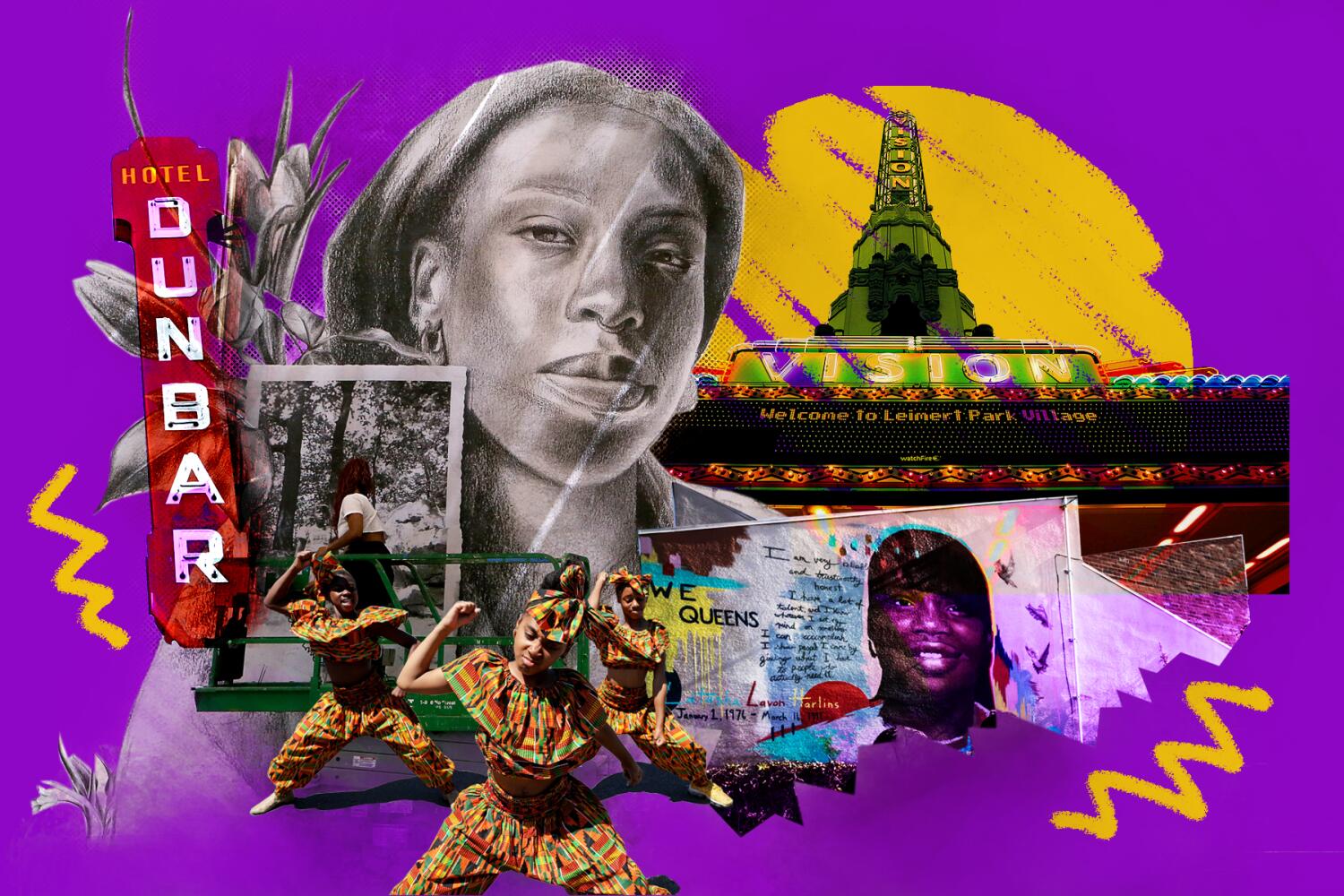
Critics of the current plan argue that the city is focusing too much on the "where" and not enough on the "who." A monument at the African American Cultural Center or near the historic Vision Theatre makes sense, but these locations are already under pressure. We must look at the "Stocktonized" version of urban planning—where a city designates a "historic" area only after the organic culture has been sufficiently diluted to make it "safe" for outside capital.
The monument must be an active site. It should serve as a functional hub for the community—perhaps a space that incorporates a land trust office or a center for local legal aid. It needs to be a fortress against the erasure of history.
The Leimert Park Paradox
Leimert Park Village is the undisputed soul of the district, yet it remains remarkably fragile. It is an ecosystem of jazz clubs, bookstores, and drum circles that has survived despite—not because of—city intervention. When the city discusses a monument here, the local stakeholders are rightfully suspicious. They have seen how "improvements" often lead to increased code enforcement and the eventual displacement of the street vendors and artists who give the area its character.
"A monument is a static object in a fluid world. We don't need a statue of a hero from 1960 as much as we need a deed to the building."
This sentiment, echoed by local activists, highlights the gap between bureaucratic "recognition" and actual survival. The monument should not be a destination for tourists to take photos; it should be a stake in the ground that signals a refusal to move.
Selecting the Site of Maximum Impact
There are three primary contenders for the physical heart of the Black Cultural District, each representing a different facet of the South LA experience:
- Crenshaw and Vernon (Leimert Park): This is the spiritual choice. It represents the artistic and intellectual peak of Black Los Angeles. A monument here would celebrate the persistence of the African diaspora's creative output.
- The Intersection of Florence and Normandie: This is the visceral choice. It marks the flashpoint of the 1992 Los Angeles Riots (or Uprising). A monument here would be a somber reminder of what happens when a community is ignored and pushed to its breaking point.
- The Destination Crenshaw "Wall": This is the modern choice. As an open-air museum already under construction, it represents a coordinated effort to marry transit with Black history.
The danger of choosing the third option is that it becomes an adjunct to the transit authority. The monument must remain independent of the Metro system's corporate identity. It must belong to the streets, not the station.
The Weaponization of Heritage
We must be honest about how "Cultural Districts" are used in modern urban policy. They are often utilized as "loss leaders" for gentrification. By highlighting the "grit" and "soul" of a neighborhood, city planners make the area attractive to a demographic that wants the aesthetic of diversity without the actual social responsibility of supporting the existing population.
To prevent this, the South LA Black Cultural District needs more than a monument; it needs a Community Benefits Agreement with teeth. Any new development within the district’s boundaries should be mandated to contribute to a fund that maintains the monument and, more importantly, provides low-interest loans to Black entrepreneurs in the immediate vicinity.
If the city isn't willing to protect the people, the monument is an insult. It is a gold watch given to an employee who was just fired.
Breaking the Pedestal Model
The traditional monument—a man on a horse or a leader at a podium—is a colonial relic that doesn't fit the ethos of South LA. This community was built by the collective: the church deacons, the neighborhood watch captains, the backyard mechanics, and the mothers who turned vacant lots into gardens.
A decentralized monument would be far more effective. Imagine a series of "living markers" across the district—interactive installations that use augmented reality to show the history of a specific corner, or physical benches that serve as charging stations and Wi-Fi hubs. This makes the monument a utility rather than an obstacle. It weaves the history into the daily survival of the residents.
The Crisis of Ownership
The brutal truth is that you cannot have a Black Cultural District if Black people do not own the dirt. Currently, the percentage of Black-owned property in South LA is at a historic low. As older generations pass away, the "heirs' property" trap—where multiple siblings inherit a home without a clear will—often leads to a forced sale to a developer who pays cash and flips the house for double the price.
The monument should be the headquarters for a Community Land Trust. This is the only way to ensure that the "Cultural District" designation isn't just a funeral procession. By taking land off the speculative market and holding it in a trust for the community, we create a permanent anchor.
Defining the Legacy
The debate over where the monument should stand is ultimately a debate over which version of history we want to tell. Do we tell the story of a community that was burned down and rebuilt, or the story of a community that sang and danced through the pain?
The answer is both. The monument must be large enough to hold the grief of the past and the ambition of the future. It cannot be tucked away in a park where it can be ignored. It must be in the way. It must force the commuters on the K Line to look out the window and acknowledge that they are passing through a place that was fought for.
Stop looking for a vacant lot. The monument should be built right in the middle of the most contested, high-value real estate in the district. It should occupy the space that the developers want most. That is the only way to prove the city actually values the culture it claims to be celebrating.
Demand a seat at the planning commission meetings and ask one question: Who owns the land under the statue? If the answer isn't "the community," the fight hasn't even started yet.