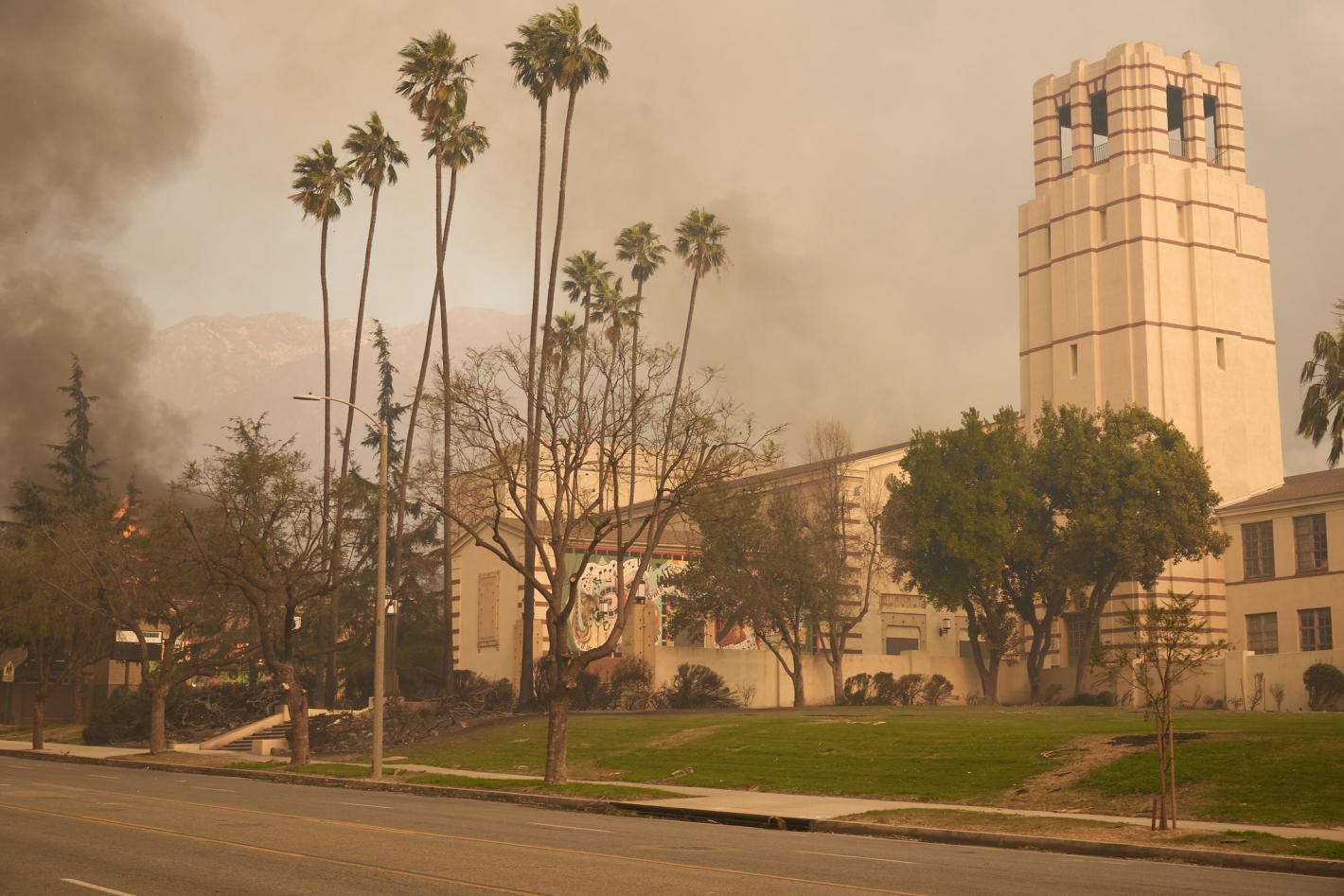
The smoke hasn’t just cleared; it has become the permanent atmosphere of the American West. When we look at the charred remains of the Santa Monica Mountains or the flattened neighborhoods of Bel-Air, we aren't just looking at a seasonal tragedy. We are witnessing the collapse of a century-old bargain between urban development and the natural world. The recent literary post-mortems of the Los Angeles fires attempt to frame this as a "new age of disaster," but that description is too passive. It suggests a storm that simply arrived. In reality, this is a calculated bankruptcy of urban planning and a failure of the insurance markets that once made the California dream affordable.
Los Angeles is currently the laboratory for a global crisis. The city is learning that you cannot build your way out of an ecosystem designed to burn. For decades, the narrative was about "fighting" fires. Today, the conversation has shifted toward the cold, hard math of "uninsurability." When the largest underwriters in the world stop writing policies for California homeowners, the disaster isn't just the flame; it is the total evaporation of the middle-class equity tied up in those homes.
The Myth of the Controlled Wilderness
We spent a hundred years pretending that the chaparral-covered hills of Southern California were a static backdrop for luxury real estate. They aren't. They are a fuel source. The Mediterranean climate of Los Angeles creates a specific, lethal cycle: a wet winter that triggers explosive plant growth, followed by a long, desiccating summer that turns that growth into kindling. By the time the offshore Santa Ana winds arrive in the fall, the hills are essentially a warehouse of dry energy waiting for a spark.
The core of the problem lies in the Wildland-Urban Interface, or WUI. This is the zone where residential fences meet the untamed brush. As Los Angeles expanded, it pushed deeper into these high-risk zones because the land was available and the views were prestigious. We built sprawling cul-de-sacs in canyons that act as natural chimneys during a fire. This wasn't an accident of geography. It was a choice driven by a real estate market that prioritized aesthetic value over survival.
When a fire starts in these zones now, the scale is different. It is no longer a brush fire. It is an "urban conflagration" where the houses themselves become the primary fuel. Once a home ignites, it burns at a much higher temperature than a sagebrush. It then radiates that heat to the neighbor’s house, creating a chain reaction that no fire department, no matter how well-funded, can stop. The sheer physics of a modern wind-driven fire exceeds the capacity of human intervention.
The Insurance Cliff and the End of the California Dream
If you want to see the future of American disaster, look at the balance sheets of State Farm and Allstate. Their decision to halt new homeowners’ policies in California wasn't a political statement. It was an admission of a broken model. Insurance relies on the idea that disasters are "rare and accidental." When a disaster becomes "predictable and inevitable," the insurance model breaks.
We are entering an era of "climate redlining." This isn't based on race, but on topographical risk. If you live in a ZIP code with a high fire-hazard severity rating, you are becoming a financial pariah. The state’s "insurer of last resort," the FAIR Plan, is currently bloated with policies that private companies refuse to touch. This is a ticking time bomb for the state’s economy. If homeowners cannot get affordable insurance, they cannot get mortgages. If they cannot get mortgages, property values crater.
The Hidden Cost of Suppression
For a century, the policy of the United States Forest Service was simple: put out every fire by 10:00 a.m. the next day. This sounded like a victory for civilization, but it was a catastrophic ecological mistake. By suppressing every small, natural fire, we allowed a massive buildup of "dead and downed" woody debris. We essentially spent a hundred years stockpiling gunpowder in our forests.
Now, when a fire starts, it isn't a low-intensity ground fire that clears out the underbrush. It is a "crown fire" that leaps into the treetops and destroys everything in its path. We are paying the "fire debt" accumulated by our grandparents. The bill has come due, and the interest rate is staggering.
The Architecture of Survival
Survival in the new Los Angeles requires a radical departure from traditional building styles. The classic California home—with its wooden decks, overhanging eaves, and lush, exotic landscaping—is a fire trap. Hardening a home against wildfire isn't about one big change; it is about a thousand tiny details.
- Ember Resistance: Most homes don't burn down because a wall of flame hits them. They burn because wind-blown embers, sometimes traveling miles ahead of the main fire, find a way into attic vents or under deck boards.
- Defensible Space: This isn't just about clearing brush; it’s about creating a "non-combustible zone" within five feet of the house. No mulch, no woody plants, no wooden fences touching the structure.
- Glazing and Siding: Double-paned, tempered glass is now a necessity to prevent windows from shattering under extreme radiant heat.
The struggle is that these upgrades are expensive. While the wealthy residents of Malibu can afford to retro-fit their estates with exterior sprinkler systems and fire-retardant gel, the working-class families in the foothills of the San Fernando Valley are left vulnerable. This creates a two-tiered system of disaster resilience. We are moving toward a world where only the rich can afford to survive the environment they live in.
The Winds of the Future
Climate change is often discussed in the abstract, but in Los Angeles, it has a physical presence: the heat. The "diurnal swing"—the difference between day and night temperatures—is shrinking. Nighttime no longer provides the cooling "recovery" that allows firefighters to gain the upper hand. The vegetation never gets a chance to reabsorb moisture from the air.
Furthermore, the Santa Ana winds are becoming more erratic. These high-pressure systems, which blow from the interior deserts toward the coast, are the primary drivers of the region’s most destructive fires. As the desert heats up faster than the ocean, the pressure gradient changes. We are looking at a future where the "fire season" is simply the entire calendar year.
The Limits of Technology
There is a temptation to believe that technology will save us. We see massive 747 Supertankers dropping orange retardant, and we feel a sense of security. But pilots will tell you that those drops are often just theater. In high winds, the retardant mists away before it hits the ground. It cannot stop a fire; it can only slow it down under the right conditions.
The real technology of survival is much more mundane. It’s better land-use zoning. It’s the political will to tell developers that they cannot build another 500-home subdivision in a high-risk canyon. It’s the courage to implement controlled burns that fill the air with smoke for a few days to prevent a catastrophe that fills the air with smoke for a month.
The Psychological Toll of the Permanent Threat
Living in a fire zone creates a specific kind of low-grade trauma. It is the "red flag" day when the wind picks up and you instinctively smell the air for smoke. It is the "go-bag" sitting by the front door, containing your birth certificates, hard drives, and family photos. This isn't just a lifestyle adjustment; it is a fundamental shift in how people relate to their homes. A home is no longer a sanctuary; it is a liability.
We are seeing a migration of the "fire-weary." People are leaving the canyons and the foothills, not because their house burned down, but because they can no longer live with the anxiety of waiting for it to happen. The California dream was built on the idea of endless horizons and the mastery of nature. That dream is being replaced by a gritty, survivalist reality.
A New Social Contract
To move forward, Los Angeles needs a new social contract regarding disaster. The current model—where the public subsidizes the risk of building in dangerous places through state-backed insurance and massive fire-fighting budgets—is unsustainable. We have to decide who pays when the inevitable happens.
If we continue to allow development in the WUI, we are essentially signing a death warrant for those communities. The "new age of disaster" isn't a mystery to be solved; it is a reality to be managed. This means making peace with the fact that some areas are simply too dangerous to inhabit. It means rethinking the American obsession with suburban expansion.
The next time you see the orange glow on the horizon of the Los Angeles skyline, understand that you aren't looking at a freak occurrence. You are looking at the natural state of the landscape asserting itself against an artificial urban dream. We can either adapt our architecture, our economy, and our expectations to fit the reality of the fire, or we can continue to watch our equity turn into ash.
Start by auditing your own property. If you have a wooden fence connecting your yard to your house, you have built a fuse. Replace it with metal or masonry. Clear the dry leaves from your gutters today, not when the smoke appears. Survival in the coming decade won't be about heroism; it will be about the unglamorous work of maintenance and the cold realization that the hills are no longer our friends.