Washington just handed Middle East capitals the biggest strategic headache they've had all year. On November 3, 2026, Democrats swept control of both the House and the Senate, dealing a sharp rebuke to President Donald Trump's foreign policy—and specifically to the U.S.-Israeli war with Iran that began back in February.
If you're sitting in Riyadh, Abu Dhabi, Doha, or Jerusalem right now, the math just changed overnight.
For years, Gulf leaders operated on a fairly simple bet. They could hedge their bets economically with Beijing, keep quiet diplomatic channels open with Moscow, and still count on Washington as the ultimate security guarantor when missiles started flying. That bet is looking shaky. When Vice President JD Vance publicly admitted on X that the Iran conflict and seemingly unconditional backing for Israel cost Republicans the midterms, every foreign ministry in the Persian Gulf took notes.
They didn't just read it as American domestic politics. They read it as an expiration date on American patience.
Why the 2026 Midterm Results Rattled Gulf Capitals
Let's be honest about what happened in the November 2026 elections. Voters didn't suddenly become Middle East policy wonks, nor did they fall in love with Tehran. They got tired of paying for an open-ended regional war while watching energy prices stay stubbornly high.
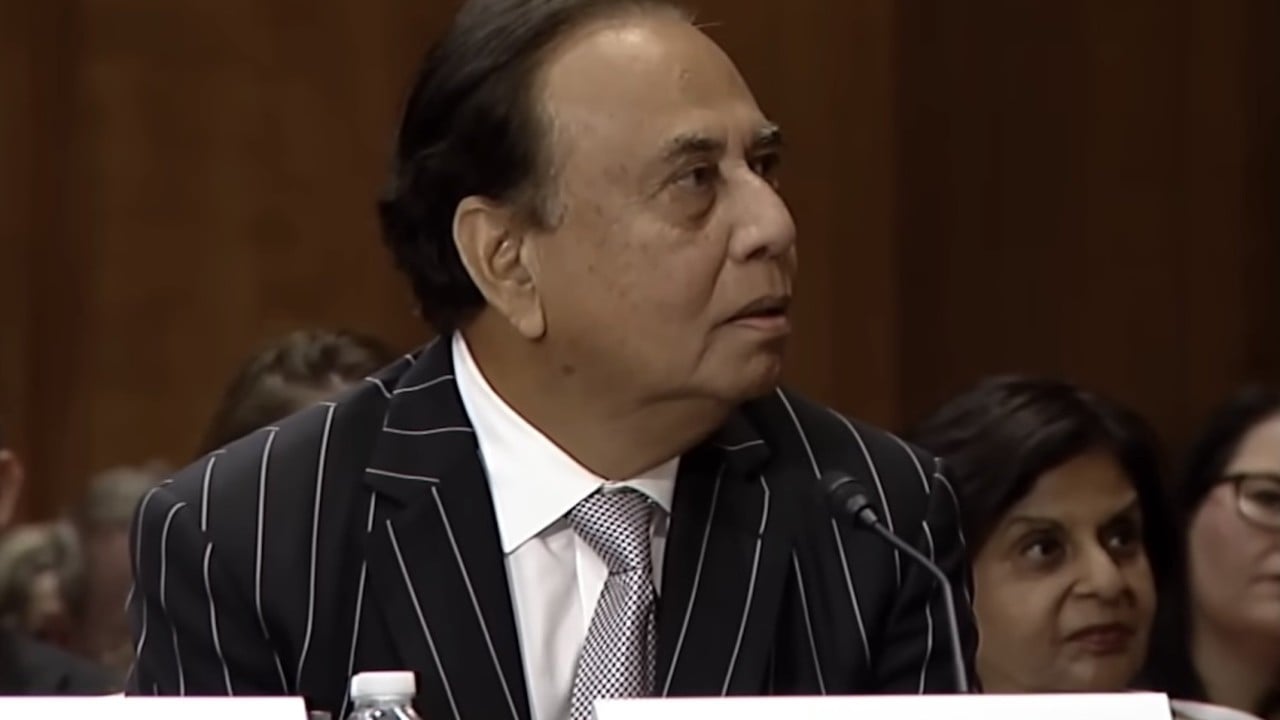
Several newly elected House Democrats ran on explicitly antiwar platforms. Others, like Michigan's Senator-elect Abdul El-Sayed, won races that signaled traditional pro-Israel lobbying groups don't hold the untouchable grip on Congress they once did. Even though Donald Trump still sits in the White House with broad executive authority over troop deployments and strike orders, a Democratic-controlled Congress holds the purse strings, the confirmation power for senior appointments, and the oversight committees.
Here is what that means in practice for regional powers:
- Arms sales will slow down. Democrats have historically been far more willing than Republicans to attach human rights conditions or outright blocks to weapons transfers destined for the Gulf and Israel.
- Semiconductor and AI deals face new roadblocks. Gulf sovereign wealth funds have poured billions into American tech infrastructure, yet congressional hawks are already eyeing stricter national security reviews on advanced chip exports and data center partnerships.
- Civilian nuclear ambitions are in limbo. Saudi Arabia's push for a U.S.-Saudi civilian nuclear accord—signed in July 2026—now faces a much tougher ratification and oversight gauntlet on Capitol Hill.
You don't need a PhD in international relations to see why Gulf rulers are nervous. When your top security patron is divided against itself, relying on a single phone line to the White House becomes a massive liability.
The Myth of the Permanent American Security Umbrella
For decades, the unspoken bargain in the Persian Gulf was straightforward. The U.S. kept the sea lanes open and deterred major regional aggressors, while Gulf monarchies kept oil flowing and bought American hardware.
That bargain cracked wide open in 2026.
First came the February 28 U.S.-Israeli offensive against Iran—dubbed Operation Epic Fury—which triggered waves of Iranian retaliation across the region. Then came the uncomfortable realization in Riyadh and Abu Dhabi that Washington's willingness to absorb political pain for its partners has strict limits. When Houthi forces resumed heavy attacks against Saudi targets, Washington sent military and intelligence advisers rather than launching a full-scale intervention on Riyadh's behalf. Meanwhile, the final 1,500 U.S. troops stationed in Iraq completed their withdrawal in October 2026.
Look at the pattern. Even when Washington deploys extra interceptors or carrier groups during acute flare-ups, the broader trajectory points toward a smaller, more transactional footprint.
Middle East powers aren't waiting around to see how the 2028 presidential race plays out. They're already building their own insurance policies.
The Mecca Defence Alliance Changes the Map
If you want proof that the region is moving past total dependence on Washington, look at what happened in Mecca on August 7, 2026.
Saudi Arabia, Turkey, and Pakistan signed the Mecca Joint Defence Agreement—a tripartite collective security pact modeled loosely on NATO's mutual defense principle, where an attack on one is treated as an attack on all three. By November 14, 2026, all three governments had formally ratified the treaty.
Think about the sheer weight of that combination. You have Saudi financial muscle, Turkish military industry and intelligence reach, and Pakistan's nuclear-armed standing army locking arms in a formal defense structure.
Even more telling is how they used it. On October 26, 2026—just one day after major Houthi strikes hit Saudi territory—Saudi Defence Minister Prince Khalid bin Salman flew straight to Tehran. He didn't bring an American envoy. He brought Pakistan's army chief and Turkey's intelligence chief to negotiate de-escalation directly with Iranian leaders.
That single trip tells you everything about where Middle East diplomacy is heading. Regional powers are learning to manage their own neighborhood without waiting for a green light from the State Department.
How Iran and Israel Are Reading the Congressional Shift
While Gulf monarchies are hedging, the two main combatants in the 2026 conflict are drawing completely opposite lessons from the American midterm results.
In Tehran, officials wasted zero time framing the Democratic sweep as a strategic victory. Iranian Parliament Speaker Mohammad Baqer Ghalibaf declared that American voters had rejected the war. From Tehran's perspective, surviving the initial February strikes and dragging out the conflict through Strait of Hormuz tensions and proxy pressure worked. They see a constrained White House that will struggle to sustain a prolonged military campaign against a skeptical Congress, even as Vice President Vance insists Washington and Tehran have made progress toward a negotiated settlement.
Jerusalem faces a much trickier spot.
Israeli Prime Minister Benjamin Netanyahu, dealing with his own inconclusive domestic election dynamics in late 2026, now has to navigate a U.S. Congress where blank-check military aid is no longer guaranteed. Moderate Democrats still back defensive support for Israel, yet progressive lawmakers are pushing hard for strict human rights conditions or partial weapons embargoes.
Israel can't replace American military aid overnight—nobody else produces the exact munitions and interceptor stockpiles the IDF relies on. Still, Israeli planners know that every major operational decision in 2027 will trigger immediate pushback on Capitol Hill, forcing Jerusalem to weigh diplomatic autonomy against the risk of legislative freezes.
Where Gulf Diplomacy Goes From Here
So what does a "relook" at U.S. ties actually look like on the ground? It doesn't mean kicking American bases out of Qatar or Bahrain tomorrow. U.S. Central Command remains deeply embedded in the region's air defense architecture, and American financial markets are still irreplaceable for Gulf sovereign funds.
Instead, Middle East powers are shifting from exclusive alignment to aggressive diversification.
- Multi-track security pacts. Alongside the Mecca Defence Alliance with Turkey and Pakistan, Gulf states have been signing specialized bilateral agreements with non-traditional partners. Earlier in 2026, Qatar, Saudi Arabia, and the UAE inked 10-year air defense deals with Ukraine to tap into Kyiv's hard-won expertise countering Iranian-designed Shahed drones.
- Direct regional de-escalation. Oman's Foreign Minister Badr Albusaidi has actively pushed to revive a broader non-aggression framework bringing together the six Gulf Cooperation Council states, Iran, and Iraq. When Washington's domestic politics look volatile, talking directly to your neighbors becomes basic survival.
- Bipartisan lobbying in Washington. Gulf diplomats aren't putting all their eggs in the White House basket anymore. Throughout the autumn of 2026, senior Gulf leaders made a point of engaging both Republican figures and key Democratic voices like Senator Chris Murphy, recognizing that any tech transfer, nuclear deal, or arms package now requires Democratic buy-in to survive.
- Deeper Asian economic integration. Trade and energy flows between the Persian Gulf and East Asia—particularly China, India, Japan, and South Korea—continue to anchor Gulf fiscal budgets. When Washington debates tariffs or export controls, Riyadh and Abu Dhabi double down on Asian energy and infrastructure partnerships that don't come with congressional lectures.
What You Should Watch Over the Next Six Months
If you're tracking geopolitical risk, energy markets, or defense policy in the Middle East, ignore the noisy rhetoric from campaign rallies and watch four concrete indicators between now and mid-2027.
First, keep an eye on Capitol Hill's War Powers votes and arms sale holds. The real test of the new Democratic majority isn't floor speeches—it's whether Senate committees stall pending munitions shipments or force formal votes restricting executive military action against Iran.
Second, watch the implementation of the Mecca Defence Alliance. Signing a treaty in August and ratifying it in November is one thing. Joint military exercises, intelligence sharing, and actual troop or air-defense deployments between Saudi Arabia, Turkey, and Pakistan will prove whether this bloc has real teeth.
Third, track Strait of Hormuz shipping insurance rates and transit volumes. Any breakdown in the fragile U.S.-Iran diplomatic track that Vance has been managing will show up immediately in tanker premiums long before politicians admit talks have failed.
Finally, follow the U.S.-Saudi civilian nuclear accord. If Congress buries that agreement in partisan conditions, expect Riyadh to turn immediately to Chinese, South Korean, or French nuclear vendors—a move that would permanently redraw the strategic map of the Middle East.
The era when a single U.S. administration could dictate the security architecture of the Persian Gulf is over. Middle East powers haven't abandoned Washington, yet they've stopped treating American reliability as a law of nature—and they're building the exits while they still have time.