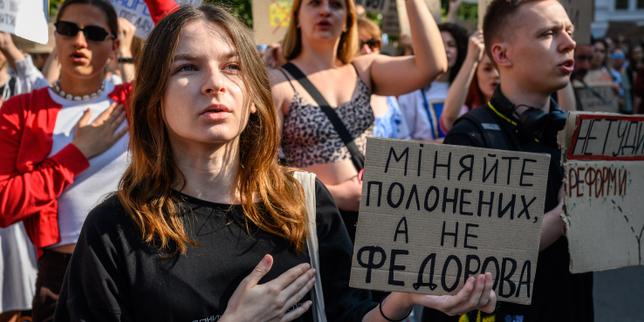
You don't usually see thousands of Ukrainians taking to the streets to protest their own government during an existential war. Right now, Russian missiles are still hitting Kyiv. Yet, major cities like Kyiv, Kharkiv, Lviv, and Odesa just saw angry crowds waving flags and chanting "Bring Fedorov back".
The sudden ouster of Defense Minister Mykhailo Fedorov is the spark that lit this political fuse. President Volodymyr Zelensky tried to frame this massive cabinet reshuffle as a necessary pivot to update political strategy. Instead, it looks like a massive self-inflicted wound that has deeply fractured the trust between the government, the military, and the public.
The Tech Savior Sacked for Clashing with the Old Guard
Mykhailo Fedorov wasn't just another suit in a cabinet. At 34, he was the face of Ukraine’s modern, asymmetric warfare. Long before he took the defense portfolio, he revolutionized how Ukrainians interacted with their government through digital services. When he stepped into the defense role, he brought that same tech-first, anti-corruption mindset to a military bureaucracy famously bogged down by Soviet-era habits.
Under his watch, short-range tactical drones became the ultimate equalizer, plugging crucial gaps on the front lines and halting Russian advances even when artillery shells were running dangerously low. The logic of his strategy was simple but profound: let drones fight, not people.
So why did Zelensky drop him?
The president pointed to "friction" between Fedorov and General Oleksandr Syrskyi, the commander of Ukraine’s armed forces. Basically, Fedorov’s rapid, decentralized tech innovations clashed hard with the traditional military establishment. Zelensky's justification was blunt: if his top officials can't resolve their issues, he will step in and resolve it for them.
But to many Ukrainians, sacrificing the country's most effective reformer to appease the old military brass feels like a step backward.
The Streets and the Military React
The backlash was instant and highly unusual for wartime Ukraine, where public dissent is generally self-censored to maintain national unity. People are genuinely angry. Activists, technology workers, and everyday citizens felt compelled to protest.
"I generally don't go to rallies, but I see this as such a stupid decision... we're simply shooting ourselves in the foot," confessed Stefan, a protester in Kyiv.
The discontent isn't just on the streets; it has reached the upper ranks of the military. Pavlo Yelizarov, the deputy commander of the Ukrainian Air Force, resigned in protest immediately after the announcement, calling Fedorov's removal a "great evil" for national defense.
Replacing a highly capable, tech-minded defense chief with Naftogaz CEO Serhiy Koretskiy as Prime Minister, alongside a broader reshuffle, has left many wondering about the administration's direction. This is Zelensky's fourth major government reorganization since the full-scale invasion began, and public patience is wearing thin. Under martial law, wartime elections are prohibited, meaning Zelensky remains in office without a fresh democratic mandate. This makes maintaining public trust through transparent leadership incredibly important.
The Real Risk Behind the Shakeup
This political drama isn't happening in a vacuum. It comes at a highly sensitive time. While Ukraine has managed to stabilize parts of the front and pressure Russia with long-range strikes, its forces are still battling massive manpower shortages.
Fedorov's digital transformations and anti-corruption efforts were crucial for keeping Western allies confident that their military aid was being used efficiently. By removing the primary figure fighting internal corruption and pushing for advanced military tech, Zelensky risks slowing down the flow of innovative drone technology to the front lines. It could also give skeptical foreign donors a reason to hesitate.
If you want to understand how deep the public love for Fedorov runs and see the atmosphere in the streets during these historic protests, this France 24 report on the Kharkiv demonstrations shows the raw frustration of citizens demanding his reinstatement.
This political gamble might have resolved an internal dispute between Zelensky’s generals and ministers, but it has created a far larger problem: a growing disconnect between the leadership in Kyiv and the people fighting on the ground.