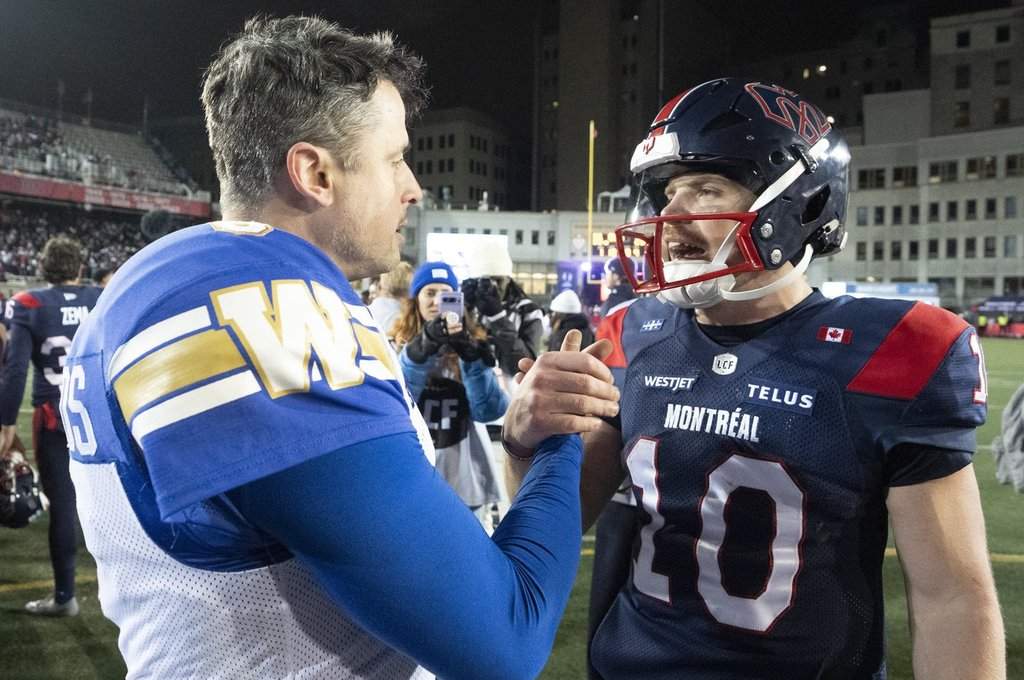
Zach Collaros has not retired, and his decision to delay an announcement is a calculated pause driven by physical recovery, roster leverage, and the brutal economics of the Canadian Football League. For the Winnipeg Blue Bombers, a quarterback in limbo is far more than a winter storyline. It is an organizational bottleneck that freezes free agency blueprints, complicates salary cap math, and forces a perennial contender to plan for two vastly different futures at the exact same time.
Football players rarely walk away on a clean schedule. When a veteran signal-caller steps to a podium at the end of a grueling season and says he needs time to think, the public usually interprets the statement as emotional exhaustion. That is only half the truth. Behind closed doors in Winnipeg, a quarterback delaying his retirement decision is a standard, high-stakes negotiation with both his own body and the front office.
The Anatomy of an Offseason Delay
The immediate aftermath of a CFL season is the worst possible time to make a permanent career choice. Bodies are bruised, joints are swollen, and the mental fatigue of a 21-week grind clouds judgment. Collaros, who has absorbed more than his fair share of punishment over a decade-plus career in the three-down game, knows that November pain feels entirely different from February readiness.
Medical reality dictates the timeline. Soft tissue injuries, concussions, and the cumulative toll of playing behind shifting offensive lines require months of decompression before an athlete can honestly assess whether they have another eighteen games left in the tank. If a quarterback retires in late November, the door slams shut. By waiting, Collaros buys himself the only commodity a veteran athlete cannot buy on the open market—time to see how his body responds when the adrenaline fades and the inflammation subsides.
There is also the psychological trap of leaving the game too early. Dozens of former CFL quarterbacks have spoken openly about the sudden void that hits when training camp opens in May and they are sitting on a couch instead of taking snaps under center. Once you file the paperwork, the routine that defined your adult life evaporates overnight. Taking a few months to test the waters of civilian life is a protective measure against making a permanent decision based on temporary exhaustion.
The Salary Cap Chess Match in Winnipeg
While Collaros weighs his physical readiness, general manager Kyle Walters and head coach Mike O'Shea are staring at a spreadsheet that refuses to balance itself. In the CFL, the quarterback position dictates every single financial move an organization makes. A starting-caliber veteran commands a massive chunk of the salary cap, often eating up between ten and fifteen percent of the entire team payroll.
When that franchise quarterback is undecided, the front office operates in a state of suspended animation. Winnipeg cannot simply go out and spend top dollar on a replacement starter while Collaros is still on the books, nor can they safely assume he will be under center for Week 1.
Consider how contract structures complicate this standoff:
- Offseason Roster Bonuses: Veteran CFL contracts are heavily weighted with winter reporting or roster bonuses. These dates act as hard deadlines, forcing both the player and the team to show their cards before a massive check clears.
- The Backup Dilemma: If Winnipeg signs a high-end insurance policy at quarterback, they risk alienating Collaros or blowing up their cap space for defensive and offensive line depth.
- Free Agency Leverage: Pending free agents across the league watch the quarterback situation closely. Wide receivers and offensive linemen want to know who is throwing the football before they commit to a below-market deal to chase a Grey Cup ring.
A hypothetical scenario illustrates the trap clearly. Imagine a front office commits $300,000 to a capable veteran backup in January because their starter is leaning toward retirement, only for the starter to announce in February that he feels great and wants to play one more year. Suddenly, the team is carrying nearly a million dollars in quarterback salaries, forcing them to cut two starting defensive backs or an All-Star left tackle just to become cap-compliant. That is the exact tightrope Winnipeg is walking right now.
The Weight of a Dynasty Window
The Winnipeg Blue Bombers have spent the last several years operating as the gold standard of the Canadian Football League. Sustained excellence in a nine-team league with a strict salary cap is notoriously difficult to maintain. Roster turnover is relentless, coaching staffs get poached, and the physical toll of playing deep into November every single year catches up to veteran rosters faster than outsiders realize.
Collaros is the engine that made Winnipeg's modern era work. Before his arrival via a late-season trade from Toronto in 2019, the Bombers were carrying a championship drought that stretched back to 1990. Collaros stepped into a run-heavy offense, brought elite pocket awareness and vertical passing efficiency, and immediately turned Winnipeg into an annual Grey Cup fixture.
That history creates immense pressure on both sides. For Collaros, walking away means accepting that a historic run is officially over, potentially leaving one last championship on the table. For the organization, moving on from Collaros means stepping into the unknown. Finding a reliable CFL quarterback is the hardest job in North American sports outside of Major League Baseball pitching rotations. You do not casually replace a two-time Most Outstanding Player without enduring some lean years.
What History Tells Us About Aging CFL Quarterbacks
The Canadian game is uniquely unforgiving to aging pocket passers. While the wider field and twelve-man formations create space for receivers, the lack of a fourth down puts immense pressure on quarterbacks to make rapid reads and absorb hits in the pocket. Pass rushers know that on second-and-long, the quarterback has to hold the ball for an extra beat to let deeper routes develop across a 65-yard-wide field.
History offers plenty of cautionary tales for quarterbacks trying to squeeze out one final season:
- The Sudden Cliff: Unlike running backs who gradually lose a step, aging quarterbacks often look completely fine right up until the exact game their arm strength or pocket mobility vanishes. Ricky Ray, Henry Burris, and Anthony Calvillo all battled severe physical wear in their late thirties, proving that durability becomes a week-to-week lottery.
- The Offensive Line Variable: An aging quarterback is entirely dependent on his front five. If Winnipeg loses key veteran blockers to retirement or free agency in the same offseason, asking an older quarterback to survive behind a rebuilding line becomes a dangerous proposition.
- The Backup Reality: Teams rarely develop a seamless successor while a legend is still taking ninety percent of the practice reps. When the veteran finally steps aside, the young understudy is usually thrown into live fire with minimal game experience, leading to an inevitable dip in offensive production.
Collaros has already beaten the odds once. Earlier in his career, severe concussions had many observers convinced his playing days were finished before he ever put on a Blue Bombers uniform. He reinvented his preparation, adjusted how he protected himself in the pocket, and delivered the best football of his life in his thirties. That resilience is precisely why nobody in Winnipeg is willing to push him out the door before he is ready to leave.
The Quiet Friction Behind the Scenes
Publicly, the relationship between Collaros, O'Shea, and Walters is defined by mutual respect and loyalty. In private, professional sports is still a cold business. Loyalty has an expiration date when jobs and championships are on the line.
Mike O'Shea built his coaching philosophy on player autonomy and trust, which explains why he is comfortable giving his quarterback all the space he needs. However, every day that passes without a definitive answer narrows Kyle Walters' options on the trade market and in scouting departments across North America. If Winnipeg intends to pivot to a younger, more mobile quarterback—or make a blockbuster trade for an established starter from another division—those conversations start months before free agency officially opens in February.
The CFL offseason moves fast once the calendar flips to the new year. Negotiation windows open, agents start floating numbers, and rival general managers aggressively target Winnipeg's pending free agents. If Collaros waits until late January to announce his retirement, the Bombers could find themselves scrambling for scraps at the most important position on the field. Conversely, if he commits to returning, Winnipeg immediately becomes a prime destination for veteran talent looking to chase one more ring.
The Real Meaning of the Silence
Fans want neat headlines. They want a press conference with tears, a highlight reel, and a clear transition plan for the next generation. Professional football rarely provides that kind of tidy narrative.
Zach Collaros delaying his retirement decision is not indecisiveness, nor is it a publicity stunt. It is the natural friction between an elite competitor who refuses to quit while he still feels he can win, and a brutal sport that demands an enormous physical price from anyone over the age of thirty-five. Until Collaros tests his body in winter workouts and looks across the table at the roster Winnipeg can realistically assemble around him, the entire Canadian Football League is stuck waiting on one man's gut instinct.