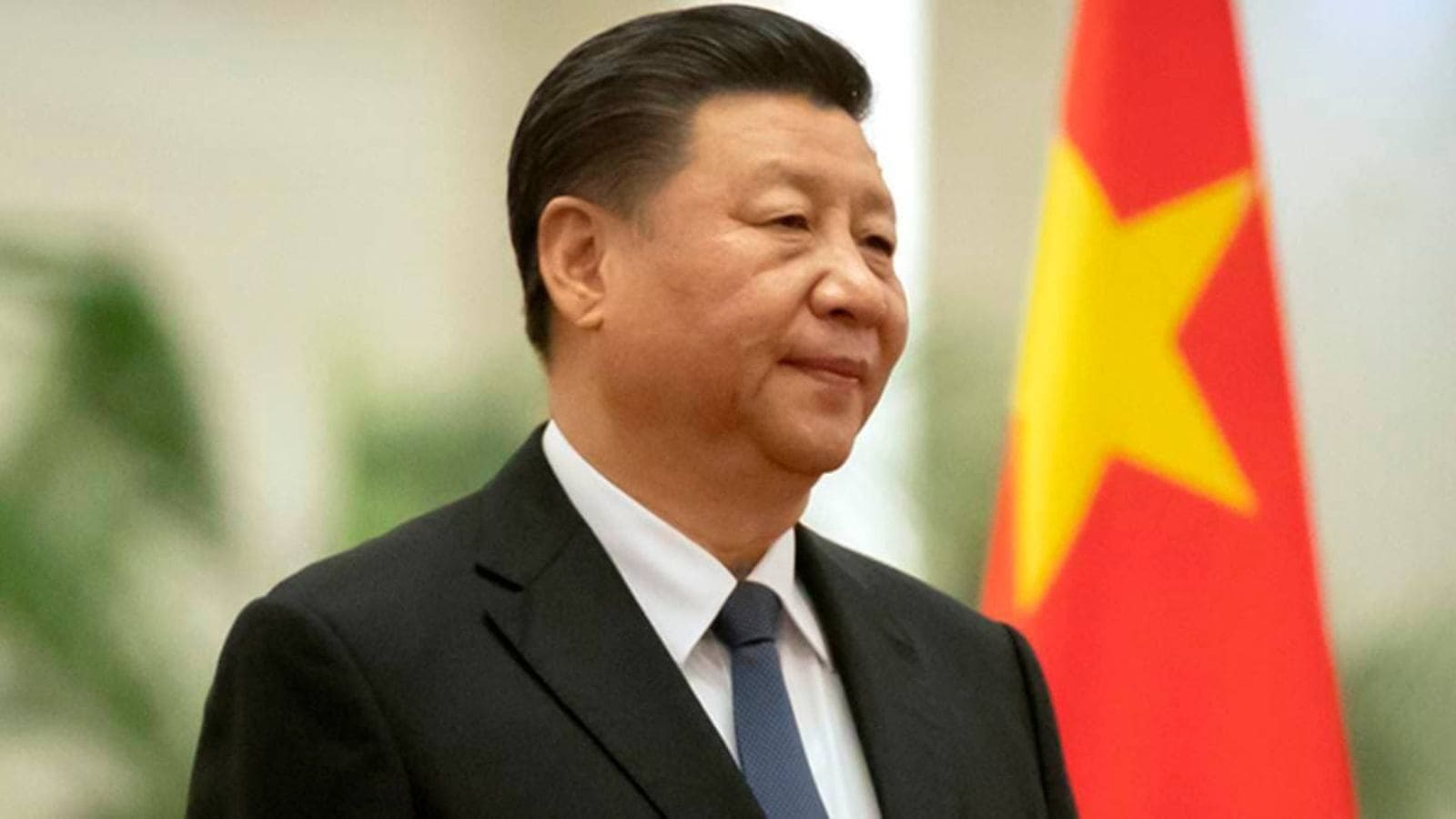
Xi Jinping doesn't trust his own generals. It's that simple. If you've been watching the headlines about disappearing ministers and sudden reshuffles in the People's Liberation Army (PLA), you're seeing a leader who's more afraid of his inner circle than he is of any foreign navy. This isn't just about cleaning up a bit of "grease" in the system. It's a fundamental architectural rebuild of the world’s largest fighting force, and it’s driven by a singular, obsessive need for absolute loyalty.
Most people look at the recent purges and see a crackdown on bribery. That’s a mistake. While money is changing hands—billions of it—the real issue for the Chinese Communist Party (CCP) is control. Xi realized early on that a wealthy general is a general with options. A general with options is a threat.
The scale of this current house-cleaning is staggering. We aren't just talking about a few low-level colonels. We're talking about the top brass of the Rocket Force, the very people in charge of China’s nuclear arsenal. When the guys holding the keys to the nukes start vanishing, you know the paranoia at the top has reached a boiling point.
The collapse of the Rocket Force leadership
The Rocket Force was supposed to be Xi’s pride and joy. It’s the centerpiece of China’s strategy to push the U.S. out of the Western Pacific. Yet, in the last year, we’ve seen a systematic decapitation of its leadership. Why? Because the technical nature of missile warfare requires a level of competence that often clashes with rigid political dogma.
Rumors of "quality control" issues with missiles—some allegedly filled with water instead of fuel—have circulated in intelligence circles. Whether every specific rumor is true matters less than the undeniable reality: the hardware didn't match the propaganda. For Xi, a missile that doesn't fire isn't just a technical failure. It’s a betrayal. It means the money he poured into the military was siphoned off by the very people he trusted to build his "world-class" force.
The removal of General Li Shangfu, the former Defense Minister, was the most public signal of this internal rot. He wasn't just a face at a podium. He was a key player in equipment procurement. His disappearance, followed by a quiet dismissal, tells you everything you need to know about where the friction lies. The PLA’s procurement system is a black box where billions of yuan go in, and sometimes, substandard tech comes out.
Loyalty is the only metric that matters
If you think the PLA is a professional meritocracy like most Western militaries, you're looking at it wrong. It’s a party-army. It belongs to the CCP, not the state. Xi’s "New Era" demands that every soldier, from the grunts in the barracks to the admirals on the carriers, has a "political soul."
He’s seen what happens when a military becomes its own power center. He watched the Soviet Union collapse and concluded that the Red Army failed because it wasn't "politicized" enough at the end. It didn't step in to save the party. Xi won't make that mistake. He spends an incredible amount of time ensuring that "the party commands the gun."
The 2026 reality of military discipline
By now, the discipline inspections have become a permanent feature of military life. It’s a state of constant high-tension. Officers are no longer just worried about their tactical proficiency. They’re worried about their "political stance." This creates a culture of "lying flat" or "passive resistance" among the ranks. If you make a bold decision and it fails, you’re a traitor. If you do nothing, you’re just another loyal soldier following orders.
This creates a massive problem for China’s actual combat readiness. Modern warfare requires initiative. It requires decentralized decision-making. Xi’s purge does the exact opposite. It centralizes everything. It forces generals to look toward Beijing for every single move, fearing that a wrong step will land them in a "black jail."
Misconceptions about the anti-corruption drive
Don't buy the narrative that this is purely about making the PLA a leaner, meaner fighting machine. Sure, cutting out the fat helps, but the primary goal is the survival of the regime. Corruption in the PLA has been rampant for decades. Selling ranks was practically an HR policy under previous leaders. Xi didn't start the fire; he’s just using it as an excuse to burn out his rivals.
- The "Paper Tiger" Risk: When you purge your most experienced officers, you lose institutional memory. The guys replacing them are often "political survivors"—men who are great at quoting Xi Jinping Thought but haven't spent much time thinking about how to actually win a high-tech war.
- The Intelligence Gap: These purges suggest that China’s internal security apparatus is incredibly effective at finding dissent but also suggests the leadership feels incredibly vulnerable.
The Central Military Commission (CMC), which Xi chairs, has been restructured to bypass traditional chains of command. He’s shortened the distance between his desk and the nuclear trigger. It’s a move for speed, but it’s also a move born of deep-seated insecurity.
What this means for regional stability
If Xi feels his military is compromised by corruption and disloyalty, is he more or less likely to start a conflict? It’s a double-edged sword. On one hand, a compromised military might make him hesitate on an invasion of Taiwan. He knows his equipment might not work. He knows his generals might be lying to him about their capabilities.
On the other hand, a leader who feels his grip on power is slipping internally often looks for an external distraction. Nationalism is a powerful glue. If the purges continue and the economy keeps stuttering, the temptation to "resolve" the Taiwan issue to cement his legacy might become irresistible, regardless of the military's actual state of readiness.
We’re seeing a military that is being rebuilt in the image of one man. That’s dangerous. History is full of examples of armies that looked terrifying on paper but folded the moment they met a motivated foe because their leadership was too scared of their own shadows to lead.
The struggle for a "Clean" military-industrial complex
The purge has moved beyond the officers and into the state-owned defense enterprises. The bosses of major missile and aviation firms have been swept up. This is where the real "rot" lives. The military-industrial complex in China is a maze of shell companies and patronage networks.
Xi is trying to force a "clean" procurement system in a country where "clean" is a relative term. You can’t have a transparent military-industrial complex in a system that lacks a free press, independent courts, or any form of public oversight. You’re just replacing one group of corrupt officials with another group that promises to be more loyal to the current boss.
The disconnect between the flashy propaganda videos of the PLA and the reality of its internal chaos is widening. Every time a new general is "disappeared," the image of a unified, unstoppable force cracks a little more. The PLA is currently an army in transition, and not necessarily a smooth one.
Understanding the long-term impact on the PLA
This isn't a one-and-done event. It’s a perpetual cycle. Xi has created a system where loyalty is verified through constant purging. This keeps the military off-balance. If you're an officer in the PLA today, your biggest enemy isn't the U.S. Navy. It’s the inspector from the Commission for Discipline Inspection sitting in the office down the hall.
The psychological toll on the officer corps is real. They’re being told to be "aggressive" and "daring" in the South China Sea, while simultaneously being told that any deviation from the party line is a death sentence. That’s a recipe for a frozen command structure. In a real war, that hesitation costs lives and loses battles.
Xi’s search for absolute loyalty might actually be the thing that makes the PLA less effective in a real fight. He's prioritizing the survival of the CCP over the lethality of the military. For a leader obsessed with "Great Rejuvenation," that’s a massive gamble.
Keep a close eye on the official appointments in the coming months. Look for "outsiders" being moved into the Rocket Force and the Navy—men with no prior ties to those specific branches. That’s the clearest sign that the trust is gone. When you start bringing in "political commissars" to run technical units, you know the purge has entered its most desperate phase.
The next step is simple. Watch the defense budget. If the spending continues to climb while the purges accelerate, Xi is trying to buy his way out of a loyalty crisis. It rarely works. True loyalty can't be bought, and it certainly can't be forced through fear alone.
Check the official state media outlets like Xinhua or the PLA Daily for mentions of "rectification" or "cleansing the poison." These are the code words for the ongoing purge. If those terms are still appearing in late 2026, the internal war for the soul of the PLA is far from over.