Words do not bleed, but they can cut like shrapnel.
In the quiet, wood-paneled corridors of French justice, a legal document now sits on a desk, heavy with the names of people who know exactly what shrapnel feels like. These are Franco-Israeli citizens. They are survivors, parents, siblings, and children of those who were slaughtered, raped, or dragged into the dark tunnels of Gaza on October 7, 2023. For them, that autumn morning is not a date in a history book or a talking point on a late-night debate show. It is a permanent fracture in their lives.
Now, they are fighting back with the only weapon the state guarantees them: the law.
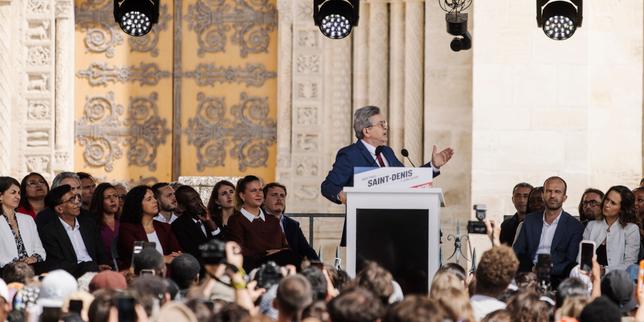
A formal legal complaint has been filed against Jean-Luc Mélenchon, the fiery, polarizing figurehead of the far-left France Unbowed (LFI) party. The accusation is severe, carries immense historical baggage, and cuts straight to the heart of a fractured nation. It is apologie du terrorisme—the condoning or glorifying of terrorism.
This is not a mere political skirmish. It is a battle over the boundaries of human empathy, the definition of atrocity, and the terrifying power of political rhetoric to erase human suffering.
The Semantic Shield
To understand how a veteran politician ends up accused of glorifying mass murder, one must look at the linguistics of avoidance.
In the immediate aftermath of October 7, while the world was still reeling from videos of burning kibbutzim and fleeing festival-goers, Mélenchon and his closest political allies made a deliberate choice. They refused to call Hamas a terrorist organization. Instead, they described the group’s actions as an "armed offensive by Palestinian forces" or "war crimes."
To a casual observer, this might look like academic hair-splitting. To the victims, it felt like a second assault.
Consider a hypothetical family sitting in a Parisian apartment, waiting for news of a cousin missing from the Nova music festival. They hear a prominent national leader use sterile, detached language to describe a slaughter. The words act as a semantic shield, deliberately softening the edges of an absolute horror to fit a pre-existing ideological narrative. It transforms a targeted slaughter of civilians into a conventional military engagement.
The legal complaint, brought forward by a coalition of victims represented by prominent attorneys, argues that this refusal is not neutral. It is an act of normalization. By stripping Hamas of the designation "terrorist," the rhetoric subtly elevates a group that tortures children into a legitimate resistance movement. It rewrites a massacre as an act of war.
When History Demands Precision
France is a country haunted by terrorism. From the Bataclan to Nice, the French collective consciousness is deeply scarred by Islamist violence. Because of this painful history, French law takes apologie du terrorisme incredibly seriously. It is not protected free speech; it is a criminal offense.
The law understands something that politicians often forget: language creates permission.
When a leader with millions of followers suggests that an act of terror is merely a complicated geopolitical reaction, they shift the cultural baseline. They make the unthinkable debatable. For the Franco-Israeli families who initiated this lawsuit, the danger is immediate and visceral. They have watched antisemitism skyrocket across France since October 7. They see a direct line between the minimization of Hamas's atrocities and the graffiti sprayed on their own neighborhood synagogues.
This legal move is an attempt to draw a line in the sand. It forces the judiciary to answer a fundamental question: Can a political leader hide behind strategic ambiguity when dealing with the slaughter of innocents?
The Echo Chamber of the Unbowed
Step into the universe of Jean-Luc Mélenchon, and the narrative changes entirely. His defenders argue that he is a champion of international law, a man merely trying to contextualize a decades-long conflict without falling into the trap of unconditional alignment with the Israeli government. They view the lawsuit as a political hit job, an attempt to silence the primary voice of the French left and weaponize judicial systems to score electoral points.
But context is a double-edged sword.
There is a vast difference between criticizing the policies of a state and failing to unequivocally condemn the systematic execution of teenagers in their beds. The tension lies exactly in that space. Mélenchon’s rhetoric often feels like a calculus of electoral math, designed to appeal to a specific, frustrated demographic within France, even if it means alienating the nation's Jewish community and fracturing his own political alliances.
The real tragedy is that this political maneuvering happens over the graves of real people. The law suit brings forward the voices of those who cannot be dismissed as mere political opponents. These are people whose lives were shattered in real-time.
The Quiet Aftermath of the Storm
The legal process in France moves with agonizing slowness. Investigators will examine hours of footage, dissect tweets, and analyze transcripts of speeches. They will debate intent, syntax, and political context. Mélenchon will likely use the platform to position himself as a martyr for the Palestinian cause, fighting against an establishment determined to bringing him down.
The courtroom will be loud, theatrical, and deeply divisive.
But away from the television cameras and the fiery parliamentary sessions, the families who signed that complaint will return to their quiet rooms. They will look at photographs of faces they will never see again. They will live with the silence left behind by October 7.
They did not ask to be part of a French political drama. They did not choose to become symbols in a culture war. They simply demanded that when their loved ones were hunted down and murdered, the world—and the leaders of the country they call home—should have the courage to call it exactly what it was.


