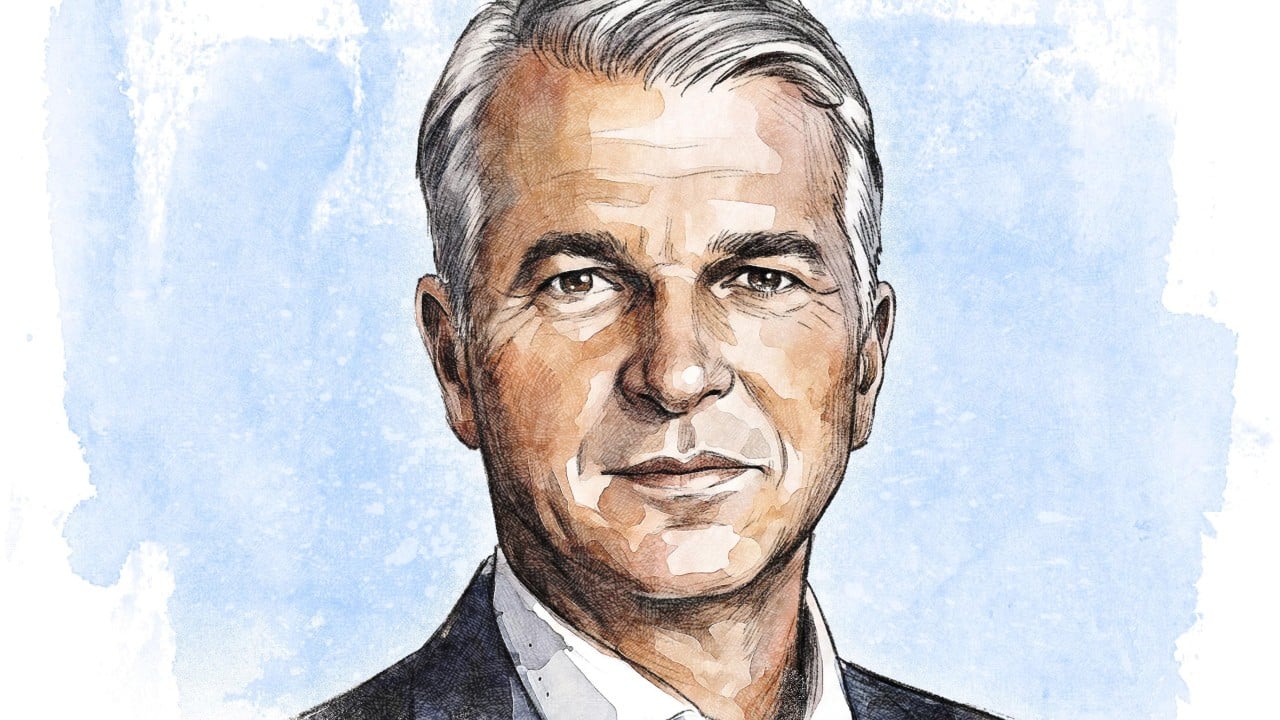
Rain hits the cobblestones of Paradeplatz with a distinct, metallic chill in March. If you stand outside the limestone facade of UBS’s Zurich headquarters at dawn, you do not hear the roar of global capitalism. You hear silence. Thick, heavy, suffocating silence. Inside those walls, however, the air is vibrating with a frequency only a handful of people on earth can tolerate.
In March 2023, that silence was shattered by a phone call that effectively ended a century-long rivalry and placed the entire Swiss economy on the shoulders of one man. If you liked this piece, you might want to read: this related article.
Sergio Ermotti was already retired from the top job. He had walked away in 2020 after spending nine years rebuilding UBS from the ashes of the 2008 financial crisis and a rogue trading scandal that nearly broke the bank’s spine. He was enjoying life, chairing Swiss Re, breathing air that did not smell of emergency board meetings and systemic risk. Then Credit Suisse collapsed. Over a single feverish weekend, a 167-year-old titan of global finance disintegrated under the weight of its own scandals and a sudden, terrifying loss of trust. The Swiss government stepped in, orchestrated an emergency shotgun marriage, and looked around the room for the only person alive who knew how to defuse a bomb of that magnitude.
They called Sergio back. For another perspective on this development, see the latest update from Forbes.
To understand what Ermotti faces today—and why his battles over banking regulations matter to anyone who has ever held a savings account, a mortgage, or a pension—you have to look past the dry quarterly earnings reports and the dense prose of central bank white papers. You have to look at the human anatomy of a financial crisis.
The Anatomy of a Panic
Consider a hypothetical scenario to see how fragile this entire machine actually is. Picture a retired schoolteacher named Clara living in a quiet town outside Basel. Clara does not trade derivatives. She does not read the Financial Times. She has spent forty years putting a fraction of her paycheck into a savings account at a historic Swiss bank, trusting that the marble pillars and the national flag flying above the door meant her life’s work was locked inside an impenetrable fortress.
On a Wednesday morning in 2023, Clara hears on the radio that wealthy clients in Asia and the Middle East are pulling billions out of that bank. By Thursday afternoon, the numbers on her smartphone screen feel less like money and more like evaporating water. She does not care about liquidity coverage ratios or Additional Tier 1 bonds. She cares about whether she can pay her heating bill in November. Multiply Clara by millions of depositors, add thousands of corporate payrolls that rely on Friday wire transfers, and suddenly a "regulatory issue" becomes an existential threat to civil society.
This is the invisible reality behind every dry press release coming out of Bern, Brussels, and Washington. Banking is not built on gold bars stacked in underground vaults. It is built entirely on collective belief. When that belief fractures, a bank does not slowly decline like a failing retail store. It dies at the speed of a fiber-optic cable.
Ermotti knows this viscerally. Having grown up in Lugano, in the Italian-speaking canton of Ticino, he did not enter banking through the polished corridors of an elite British boarding school or an Ivy League endowment. He started as an apprentice at Corner Bank at age fifteen. He learned the mechanics of finance from the bottom up—touching the paper, understanding the ledger, seeing how credit moves through the veins of real businesses. That background gives him a blunt, unsentimental view of risk that often clashes violently with the theoretical models of academic regulators.
Scars from the 2008 Reckoning
When Ermotti first took the helm of UBS in 2011, the institution was radioactive. During the 2008 global financial crisis, UBS had taken massive losses on toxic U.S. subprime mortgages, forcing the Swiss government and the Swiss National Bank into a $60 billion rescue package. Public fury in Switzerland was white-hot. Ordinary citizens felt betrayed by an elite class of bankers who had privatized their bonuses and socialized their catastrophic mistakes.
Then came the 2011 rogue trading scandal in London, where a single trader lost over $2 billion without triggering internal alarms. The bank’s culture was broken, its reputation was in tatters, and its balance sheet was bloated with risky investment banking bets that nobody fully understood.
Ermotti made a choice that seemed radical at the time. While rivals on Wall Street doubled down on high-risk trading, he took a scalpel to UBS’s investment bank, slashing thousands of jobs and pivoting the entire institution toward global wealth management. The logic was simple, almost architectural: stop gambling with the house’s money and focus on managing the assets of the world’s entrepreneurs and families.
It worked. Over nine years, UBS stabilized, rebuilt its capital buffers, and became the envy of European banking.
Yet the ghosts of 2008 never left the room. They simply moved into the offices of the regulators.
The Regulatory Web
If you want to understand the friction between Sergio Ermotti and the Swiss authorities today, picture a homeowner who survives a devastating house fire. Afterward, the fire marshal visits and demands that the homeowner install sprinklers in every room, replace all wooden furniture with concrete, and keep fifty buckets of water balanced on every doorframe. The fire marshal’s intent is pure: never again. But eventually, the house becomes so heavy with fire-prevention equipment that the floorboards begin to collapse under the weight.
This is the exact trap global banking regulation has wandered into over the past fifteen years.
Following the 2008 crash, lawmakers worldwide passed sweeping reforms—Dodd-Frank in the United States, Basel III internationally, and the "Too Big to Fail" framework in Switzerland. The core idea was sound: force giant banks to hold vastly more equity capital so they can absorb their own losses without begging taxpayers for a bailout.
But after UBS absorbed Credit Suisse in 2023, the math changed overnight. Suddenly, Switzerland—a country of roughly nine million people with an annual gross domestic product around $900 billion—was home to a single megabank with a balance sheet exceeding $1.6 trillion. Nearly twice the size of the entire national economy.
Panic set in among Swiss politicians and regulators. What happens if this new, gargantuan UBS stumbles? Who could possibly rescue a bank twice the size of the country that hosts it?
In response, the Swiss Federal Council proposed sweeping new rules that would force UBS to hold tens of billions of dollars in additional capital—specifically requiring the parent bank to back its foreign subsidiaries with 100 percent equity rather than the current 60 percent. To a politician speaking to anxious voters, this sounds like common sense. Make the giant wear heavier armor.
To Ermotti, it looks like an execution warrant disguised as safety.
The High Cost of "Safe"
Capital is not free. When a regulator tells a bank it must lock away an extra $15 billion to $25 billion in pure equity, that money cannot be lent to a mid-sized engineering firm in Winterthur to build a new factory. It cannot be used to fund green energy infrastructure or underwrite mortgages for young families. Worse, it makes the bank dramatically less competitive against American titans like JPMorgan Chase or Morgan Stanley, which operate under a massive domestic market and different capital rules.
Ermotti has spent the months since his return walking a razor-thin diplomatic tightrope. In public speeches from Zurich to London, his tone carries a mixture of fierce pride and thinly veiled frustration. He points out a reality that regulators often prefer to ignore: Credit Suisse did not fail because it lacked capital on paper. In the weeks before its collapse, Credit Suisse’s capital ratios actually met regulatory minimums.
It failed because it lost its mind, its strategy, and its credibility.
Scandal after scandal—Archegos, Greensill, corporate espionage, billions in losses—eroded trust until clients simply walked out the door. You cannot regulate away bad management. No amount of capital buffer can save an institution once the market decides its leadership can no longer be trusted to tell the truth.
When you pile indiscriminate capital requirements onto a healthy bank to punish it for the sins of a dead rival, you do not create stability. You create stagnation. You force the bank to shrink, raise prices for everyday borrowers, or pack its bags and move its headquarters to New York or London where the regulatory climate is more forgiving.
Inside the Integration Machine
While politicians debate theoretical rules in Bern, Ermotti and his leadership team are executing the most complex corporate merger in modern financial history.
Try to grasp the sheer scale of fusing two global megabanks while keeping the lights on every single second. It is like performing a heart transplant on a marathon runner mid-race. There are tens of thousands of overlapping IT systems, millions of client accounts, thousands of real estate leases, and two fiercely distinct corporate cultures that spent decades trying to destroy each other in the marketplace.
Inside UBS’s operations centers, teams are methodically decommissioning thousands of legacy Credit Suisse servers, migrating trillions of dollars in client assets, and winding down tens of billions in toxic, non-core assets that UBS never wanted in the first place. Every week brings agonizing human decisions. Brilliant bankers who did nothing wrong lose their jobs because two divisions cannot coexist under one roof. Careers are upended. Whole departments vanish.
Ermotti handles this with a cold, surgical focus that only someone who has already stood at the edge of the abyss can maintain. He knows that speed is mercy in a restructuring. Dragging out the uncertainty bleeds talent and terrifies clients. Every quarter that passes without a major operational glitch is a quiet triumph that rarely makes headlines because competence is boring. Disaster is what sells newspapers.
The Illusion of Zero Risk
There is a deeper philosophical question sitting beneath this clash of titans, and it affects every citizen in the modern world.
We have become obsessed with the idea of zero risk.
After every crisis—whether it is a pandemic, a supply chain freeze, or a banking collapse—societies demand laws that guarantee nothing bad can ever happen again. Politicians rush to pass thousand-page rulebooks designed to eliminate every possible point of failure.
Yet finance, by its very nature, is the business of managing risk. If a bank takes zero risk, it stops being a bank and becomes a warehouse. And warehouses do not grow economies. They do not fund medical breakthroughs, build bridges, or give small business owners the capital they need to hire their first ten employees.
When regulators weave a web so tight that banks cannot move, risk does not disappear. It simply migrates into the shadows. It flows out of regulated banks and into private credit funds, unregulated shadow banks, and opaque algorithmic trading firms where central banks have zero visibility and zero control. In trying to make the visible financial system completely bulletproof, regulators often make the invisible system catastrophically fragile.
Ermotti understands this hydraulic pressure of global money. He has watched capital flow across borders for four decades. He knows that if Switzerland makes it prohibitively expensive to run a global wealth manager from Zurich, the wealth will not stay in Switzerland out of patriotism. It will flow to Singapore, Dubai, or New York at the click of a mouse.
The Burden of Command
Late at night, when the trading floors in Zurich have emptied and the cleaning crews move silently between the desks, the weight of that balance rests squarely on the corner office.
Ermotti has already stated he plans to step down once the integration is complete, around 2027. He did not come back for the paycheck or the prestige; he already had both. He came back because when your house is on fire and you are the only one in town who knows where the water mains are buried, walking away is not an option.
He stands between two worlds that rarely speak the same language. On one side are the markets—ruthless, impatient, unforgiving of weakness or inefficiency. On the other side are the governments—cautious, political, haunted by the memory of taxpayer bailouts and angry voters.
Navigating that space requires more than financial genius. It requires nerve. It requires looking a prime minister or a central bank governor in the eye and saying, If you tighten this rope any further, you will strangle the very thing you are trying to protect.
The next financial crisis will not look like 2008, and it will not look like 2023. It will arrive from an angle nobody modeled, triggered by a catalyst nobody predicted, moving faster than any committee in Bern or Washington can convene an emergency session. When that morning comes, thick books of regulations will sit unopened on dusty shelves, and the survival of millions of ordinary savings accounts will once again come down to a single, unquantifiable metric: whether the person sitting behind the desk at dawn has the steady hands to hold the line while the rest of the world panics.