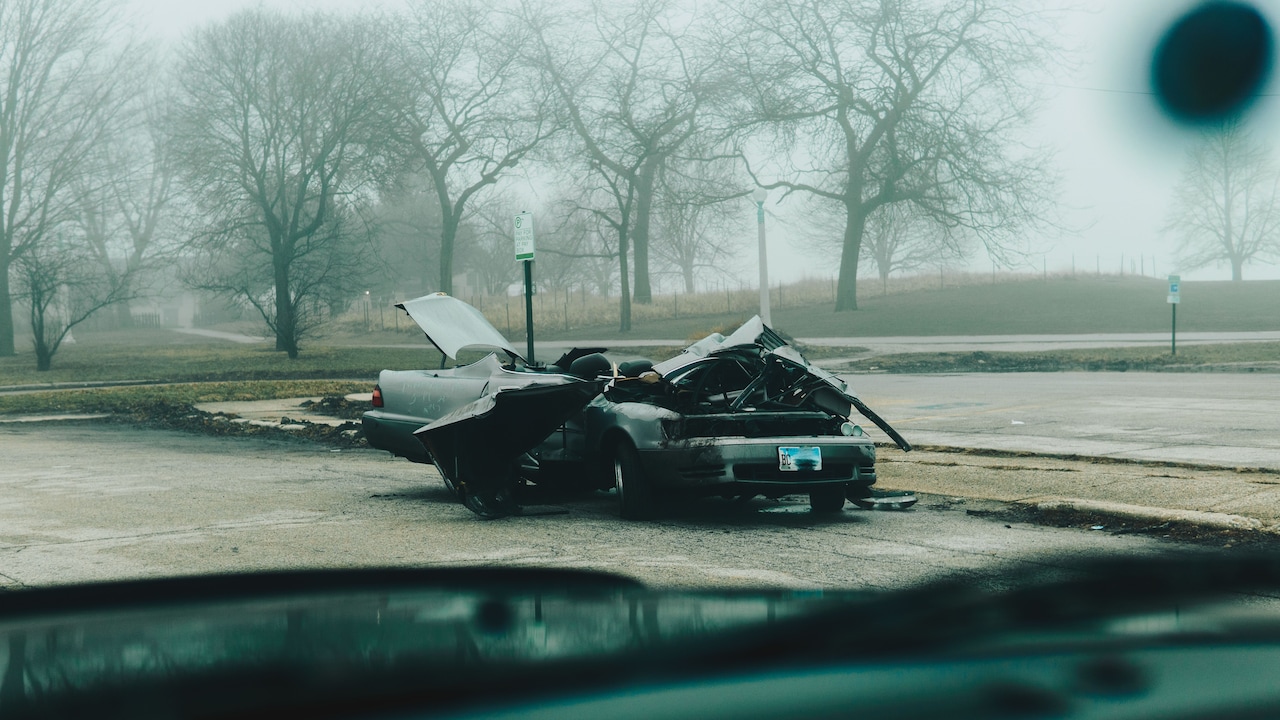
Two minutes before impact, a screen can erase everything in front of a two-ton vehicle. Traffic slows down ahead. Brake lights glow on a stretch of highway where people assume the cars behind them are paying attention. Then comes the sound of metal folding into metal, and a life is gone before anyone even hits the horn.
That kind of split-second distraction isn't an abstract highway safety warning. In October 2026, prosecutors in Juab County, Utah, filed a second-degree felony automobile homicide charge against 44-year-old Christine Chao of Rosemead, California, following a deadly three-vehicle crash on Interstate 15 near Levan where investigators allege she accessed a website commonly used for pornographic videos less than two minutes before the collision in slowed construction traffic. Charging documents noted there were no brake marks on the road showing she slowed before hitting a white sedan that was pushed into a black SUV, killing a passenger in the sedan.
People click stories like this because the combination feels shocking, almost surreal. Watching explicit video behind the wheel sounds extreme, yet the underlying trap—taking your eyes and brain off traffic at highway speed—is the exact same mechanism behind thousands of ordinary distracted-driving wrecks every year.
How A Screen Steals Seconds You Don't Have
At 65 miles per hour, a car covers roughly 95 feet every second. Look down for five seconds to find a video, tap play, or glance at a screen, and you've traveled more than the length of a basketball court completely blind. When traffic bottlenecks in a work zone, five seconds isn't just risky. Honestly, it's plenty of time to turn stopped cars into a wall.
Distraction isn't one single thing, either. Safety researchers break it into visual (eyes off the road), manual (hands off the wheel), and cognitive (mind off driving). Video streaming and browsing hit all three at once. Even when a driver thinks they're "just listening" or glancing occasionally, visual attention locks onto movement and contrast on a small screen while peripheral awareness drops off a cliff.
According to the National Highway Traffic Safety Administration (NHTSA), 3,208 people were killed and an estimated 315,167 were injured in crashes involving distracted drivers across the United States in 2024. Separate analysis from the National Safety Council (NSC) of NHTSA Fatality Analysis Reporting System data shows cell phone use accounted for 14% of fatal distraction-affected crashes in 2024, up from 12% the year before.
A vehicle moving at highway speed doesn't forgive a delayed reaction just because your intent wasn't malicious.
What gets overlooked in quick news summaries is how subtle the transition from "routine phone habit" to "catastrophic crash" actually is. Most drivers who cause fatal phone crashes don't set out intending to hurt anyone. They get sucked into a micro-habit—checking a link, scrolling, loading a clip—thinking they have plenty of buffer room. Then traffic brakes ahead of a lane closure, and the buffer disappears.
Why Phone Forensics Show Up In Court
A lot of drivers still assume that if they don't text a specific word or admit to looking at a screen, nobody can tell what their phone was doing. That belief is outdated and dangerous.
Modern smartphones leave dense internal footprints. Even when someone closes a browser tab or clears visible history, forensic examiners working under a search warrant can look at system logs, app data, screen-state timestamps, and carrier records to establish what happened and when. Investigators don't just guess from a crash scene; they line up digital timestamps against physical clues like skid marks, vehicle resting positions, eyewitness accounts, and a car's event data recorder.
In the Utah case, charging documents pointed to both the lack of brake marks on the pavement and phone examination findings showing access to a site commonly used for pornographic videos shortly before the wreck. Taken together, physical evidence and device records tell a tight chronological story that's hard to hand-wave away in court.
That doesn't mean every phone extraction is simple or immune to legal pushback. Defense attorneys scrutinize warrant scope, exact timestamps, time-zone settings, and whether an action required active human input versus background activity or automated preloading. Data can also be contested or lost if devices aren't properly preserved or if investigators overreach beyond the relevant time window. Still, when phone logs match a rear-end impact in stopped traffic with zero braking, juries pay close attention.
When Distracted Driving Crosses Into Felony Charges
One common misconception is that a bad crash caused by phone use is always treated like a minor traffic ticket or a simple accident. It isn't.
When a death occurs, prosecutors look closely at how extreme the risk was and how blatantly a driver ignored obvious hazards. Depending on state law and the exact facts, a fatal distracted-driving crash can bring charges ranging from negligent or vehicular homicide to manslaughter or felony automobile homicide, alongside civil wrongful-death lawsuits.
There's also a real debate among legal experts, lawmakers, and safety advocates about where to draw the line between ordinary negligence and criminal recklessness. Some argue that any deliberate handheld screen use on a busy highway—especially watching video or browsing explicit content—shows conscious disregard for human life and warrants severe felony prosecution. Others warn against over-broad statutes that treat brief, momentary lapses the same way as egregious recklessness, or point out how hard it can be to prove exact causation when multiple factors collide.
Either way, once a fatality happens, the legal stakes shift from insurance adjusters to district attorneys and criminal courts. A single choice made in a moment of boredom or impulse can carry years in prison, permanent loss of driving privileges, and lifelong financial and emotional fallout for everyone involved.
What You Can Do Right Now Behind The Wheel
You don't need a lecture on road safety to know when your attention is slipping. You need practical habits that remove temptation before the car is rolling.
- Put the phone out of reach before shifting into drive. Toss it in a center console, glove box, or bag in the back seat so reaching for it takes extra effort and breaks the reflex loop.
- Turn on driving focus modes automatically. Enable Do Not Disturb While Driving or CarPlay/Android Auto limits so incoming alerts don't pull your eyes downward every thirty seconds.
- Treat highway work zones like high-alert zones. Slow down early when signs warn of construction or lane shifts, leave extra following distance, and watch brake lights two or three cars ahead rather than riding bumper-to-bumper.
- Pull over completely for anything requiring visual focus. If you need to search, type, watch, or fix an app issue, take an exit or stop safely off the road—it adds a couple of minutes, and those minutes are cheap.
If you're ever involved in a collision, keep your phone intact and don't alter or wipe data on your device or vehicle systems, since preserving accurate records matters in any investigation. Better yet, keep your hands on the wheel and your eyes on the traffic ahead so you never have to find out how fast five seconds can ruin a life.