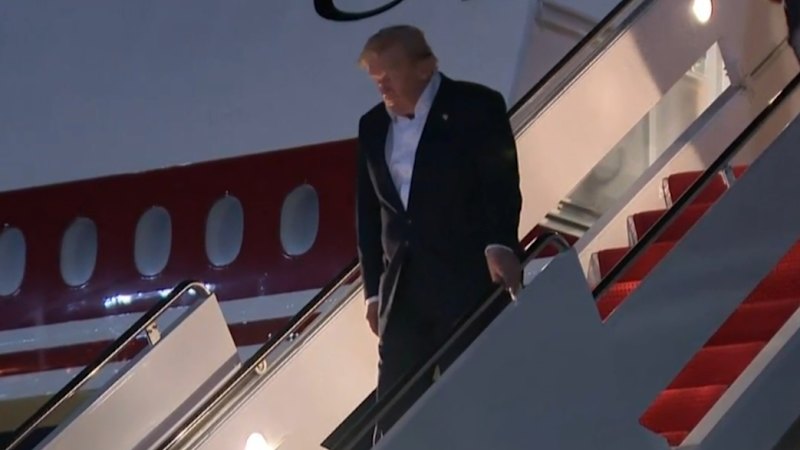
The mainstream media treated Donald Trump’s directive regarding his potential assassination by Iran as another predictable bout of campaign-trail hyperbole. When a presidential candidate states that if a foreign adversary assassinates him, the United States should respond by wiping that country off the face of the earth and blowing its major cities to smithereens, the immediate reaction from the foreign policy establishment is a collective roll of the eyes. They dismiss it as reckless rhetoric, an unhinged departure from the norms of diplomatic decorum, or mere theatrical posturing designed to fire up a base.
They are entirely wrong.
The frantic condemnation coming from the air-conditioned corridors of Washington think tanks is not born out of fear that Trump’s strategy will fail. It is born out of a terrifying realization that it might actually work.
By demanding an absolute, asymmetrical, and entirely disproportionate response to state-sponsored assassination, Trump accidentally exposed the central, profitable lie of modern Western foreign policy: the myth of managed escalation. For decades, the global national security apparatus has operated under the assumption that conflict with hostile nations should be treated like a highly regulated corporate litigation process. You trade legal briefs, you levy targeted sanctions, you issue strongly worded statements, and you maintain a predictable, calibrated equilibrium.
Trump’s directive smashes that equilibrium. It replaces the polite fiction of proportional response with the raw, uncompromising logic of absolute deterrence. And that is exactly why the institutional foreign policy elite cannot stand it.
The Fiction of Proportional Response
To understand why a maximalist threat is the only logical response to a state-level assassination plot, you have to look at the catastrophic track record of what Washington calls strategic patience.
For forty years, the Western approach to Iranian aggression has been dictated by a desire to avoid a wider war at all costs. Tehran understood this vulnerability early on. They realized that if they engaged the United States or its allies in a direct, conventional military conflict, they would lose immediately. So, they perfected the art of gray-zone warfare.
Through the Islamic Revolutionary Guard Corps (IRGC) and its sprawling network of regional proxies—Hezbollah, the Houthis, and various Iraqi militias—Tehran discovered it could kill Western soldiers, bomb shipping lanes, and orchestrate international terror campaigns while maintaining plausible deniability.
How did Washington respond? With the predictable choreography of the proportionality doctrine.
If an Iranian-backed militia kills an American soldier in Jordan, the Pentagon maps out a series of highly sterile, overnight airstrikes against empty ammunition depots in eastern Syria. The goal is never to defeat the adversary; the goal is to send a message. The message is always the same: We are willing to hit you back, but only exactly as hard as you hit us, because we are terrified of what happens next.
This is not deterrence. It is an invitation.
When you tell a bank robber that the only penalty for stealing a million dollars is being forced to return exactly one million dollars, you haven’t deterred bank robbery. You have turned it into a risk-free business venture. Proportional response transforms geopolitical conflict into a predictable line-item expense for rogue regimes. They know precisely what a piece of aggression will cost them, and they are more than willing to pay that price to advance their long-term strategic goals.
The Assassination Economy and Bureaucratic Comfort
Why does the foreign policy establishment fight so hard to maintain this broken system? Because managed escalation is highly predictable, and bureaucracy craves predictability above all else.
I have watched national security committees spend hundreds of hours debating whether striking a specific drone launch pad would be perceived as too escalatory by European allies. Entire careers in Washington are built on the fine-tuning of sanction packages that do nothing but force authoritarian regimes to re-route their oil sales through ghost fleets and dark markets. It is an industry built on process, not victory.
An outright threat of total annihilation removes the bureaucratic padding. It strips away the complex spreadsheets of targeted sanctions and replaces them with an existential binary.
Consider the mechanics of the 2020 strike on Qasem Soleimani. The conventional wisdom across foreign policy circles was that eliminating the head of the IRGC Quds Force would trigger a catastrophic, regional war that would consume the Middle East. The sky-is-falling predictions dominated cable news for weeks.
What actually happened? Iran launched a handful of telegraphed ballistic missiles at an Iraqi airbase, deliberately avoiding American fatalities, and then immediately backed down.
The lesson was staring the world in the face, yet the foreign policy elite refused to learn it. Authoritarian regimes do not operate on the same emotional wavelengths as Western commentators. They are deeply rational actors focused entirely on regime survival. When faced with an adversary willing to break the established rules of engagement and apply asymmetric force, they do not escalate. They calculate, they retreat, and they survive to fight another day.
Dismantling the Madman Myth
Critics love to apply Richard Nixon’s Madman Theory to this style of statecraft, arguing that simulating insanity is inherently dangerous because it can lead to miscalculation. If the adversary believes you are truly crazy enough to launch a nuclear weapon or obliterate a nation over an isolated incident, they might strike first out of sheer panic.
This critique fundamentally misunderstands how deterrence operates in the real world.
There is a vast difference between being unpredictable and being irrational. Threatening to destroy a nation if they assassinate a current or former head of state is not insane; it is the ultimate expression of state sovereignty. An assassination of a political leader is not a minor border skirmish or an accidental cross-border shelling. It is an existential assault on the political continuity of a nation-state. Treating it as anything less than an act of total war is an admission of weakness that invites further degradation.
Imagine a scenario where a foreign power successfully assassinates a major political figure on American soil, and the United States responds by targeting a few military bases or freezing a few bank accounts. What happens the next day? Every hostile intelligence agency on earth receives a green light. They realize that the ultimate transgression carries a manageable, non-existential price tag.
By setting the price of an assassination at total annihilation, you remove the action from the menu of viable strategic options. You make the cost so unfathomably high that no rational actor, no matter how ideologically fanatical, can justify the gamble.
The Hidden Cost of the New Red Lines
To be entirely fair, this contrarian approach carries a massive, uncomfortable downside that its proponents rarely want to talk about. Absolute deterrence only works if you are genuinely prepared to execute the threat.
If you draw a line in the sand and state that the penalty for crossing it is total destruction, and the adversary crosses it anyway, you are trapped in a brutal dilemma. You either have to carry out a massive, devastating military campaign that will destabilize the global economy and cost countless lives, or you have to back down and watch your nation's international credibility evaporate instantly.
We saw the disastrous consequences of this during the Obama administration, when a red line was drawn regarding the use of chemical weapons in Syria. When those weapons were used and the administration hesitated, the illusion of American deterrence shattered globally. Russia, China, and Iran all took note that Washington's ultimatums were written in disappearing ink.
Therefore, making a maximalist threat cannot be an act of idle theater. It requires a level of domestic political will and military readiness that modern Western democracies rarely possess. It requires a society willing to accept the chaos of total war rather than the slow, comfortable decline of managed appeasement.
The Sovereignty Arbitrage
The real reason Trump’s instructions cause such panic in diplomatic circles is that they violate the unwritten rules of the global elite. There is a tacit agreement among international political classes that conflicts should be fought by surrogates, proxies, and low-level infantrymen—never by the leaders themselves.
When a state sponsor of terror plots to eliminate an American political leader, they are attempting to exploit an asymmetric advantage. They use deniable assets, hidden operatives, and intelligence cut-outs to avoid direct accountability. They want to play the game of international statecraft while insulating their own leadership and infrastructure from the consequences.
An explicit order to respond with total national destruction closes this loophole. It tells the hostile regime that the old rules of proxy insulation are dead. It shifts the target from the proxy group in the desert directly to the command bunkers in the capital city.
This is not a breakdown of diplomacy; it is the restoration of accountability. If a state cannot or will not control its own intelligence apparatus, it cannot claim the protections of international law. You cannot demand the rights of a sovereign nation while operating as a global criminal enterprise.
The foreign policy establishment will continue to preach the virtues of measured responses, diplomatic engagement, and multilateral sanctions. They will continue to write papers explaining why total deterrence is an outdated relic of the Cold War. They will do this because the alternative requires courage, clarity, and an uncomfortable willingness to face down existential threats with raw force.
The next time an adversary tests the boundaries of international order, the solution will not be found in another round of sanctions or a carefully worded UN resolution. It will be found in the brutal, unyielding reality that some lines cannot be crossed without risking total, absolute destruction. Stop trying to manage the escalation. End it before it starts.