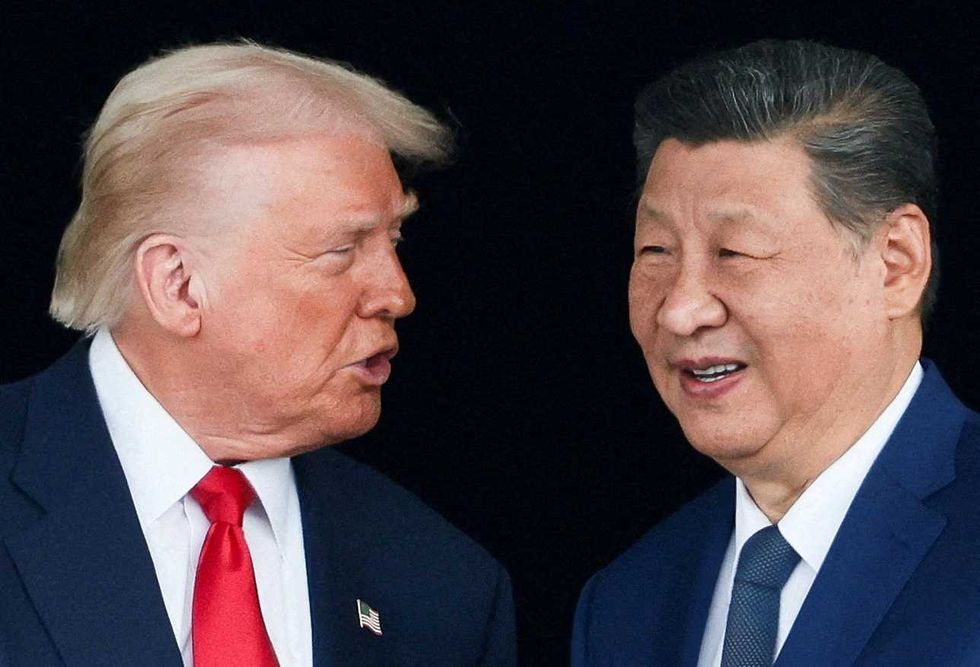
The traditional playbook of global macroeconomics has been flipped upside down. For decades, Wall Street and international institutions looked to Washington as the ultimate anchor of stability while treating emerging markets as the primary sources of systemic risk. That era is officially over. Today, the United States has evolved into the single largest driver of global political and financial volatility, a structural shift that is inadvertently handing China its greatest strategic advantage in a generation.
This is not a temporary byproduct of an election cycle or a passing legislative gridlock. It is a fundamental rewiring of how American power projects outward. As Washington grapples with deep-seated institutional decay, weaponized fiscal policies, and an unpredictable foreign policy stance, global markets are forced to price in a permanent premium for American instability. Beijing, operating with long-term capital deployment and centralized control, is quietly positioning itself as the alternative adult in the room.
The Weaponization of the Dollar and the Rise of Fiscal Anarchy
The bedrock of American hegemony has always been the greenback. By controlling the global reserve currency, the United States possessed an exorbitant privilege, allowing it to run massive deficits without facing the immediate inflationary or borrowing penalties that plague ordinary nations.
That privilege is being pushed to its absolute breaking point.
Washington has increasingly turned to aggressive financial sanctions as its primary foreign policy tool, effectively cutting off adversaries—and occasionally threatening allies—from the SWIFT messaging system. When the US froze hundreds of billions of dollars in Russian foreign reserves, it sent a chilling message to central banks worldwide. If your reserves can be erased by an executive order from Washington, they are not truly yours.
This aggressive financial posture coincides with a domestic fiscal trajectory that can only be described as reckless. The US national debt is compounding at a rate that defies historical precedent during peacetime expansions. Neither major political party demonstrates the slightest appetite for fiscal discipline. Instead, the budget process has degenerated into a recurring game of chicken over the debt ceiling, threatening a technical default that would instantly paralyze global commerce.
Global investors are taking note. Central banks across the Global South are systematically diversifying away from the dollar, shifting capital into gold, regional currencies, and Chinese sovereign bonds. It is a slow, grinding migration, but the direction is unmistakable. Washington is actively burning its own monetary credibility, creating a vacuum that Beijing is eager to fill.
Beijing’s Strategy of Quiet Calculation
While the American political machinery operates on a hyper-reactive loop driven by social media cycles and short-term electoral gains, China plays a completely different game. Beijing’s leadership understands that it does not need to defeat the United States in a direct confrontation. It simply needs to outlast American attention spans and offer a predictable, transactional alternative to a volatile West.
Consider the contrast in international infrastructure development. American foreign aid often comes bundled with strict regulatory demands, transparency requirements, and shifting political conditions that change every four to eight years. China’s approach through its sprawling trade networks is transactional, fast, and entirely indifferent to internal governance. To a developing nation in Africa, Latin America, or Southeast Asia needing deep-water ports or rail networks, Beijing offers a concrete contract while Washington offers a lecture on democratic values.
This predictability is China’s secret weapon. International business detests uncertainty above all else. By maintaining a highly disciplined, top-down economic strategy, Beijing presents an image of administrative competence that contrasts sharply with the chaotic scenes broadcast from Capitol Hill.
The Myth of De-Risking and the Reality of Interdependence
Western politicians frequently employ the rhetoric of decoupling or de-risking, suggesting that advanced economies can neatly isolate their supply chains from Chinese influence. It is a fantasy.
The global manufacturing ecosystem is too deeply integrated to be dismantled by legislative fiat. When the US imposes sweeping tariffs or export controls on Chinese technology, the immediate result is not a resurgence of domestic manufacturing. Instead, supply chains simply route through intermediary nations like Vietnam, Mexico, or Malaysia. The components remain largely Chinese; they just acquire a different stamp of origin along the journey, adding layers of cost, bureaucracy, and inefficiency for global consumers.
The Semiconductor Bottleneck
Nowhere is this dynamic clearer than in the high-stakes battle over advanced microchips. Washington’s aggressive export restrictions aimed at choking off China’s artificial intelligence capabilities have forced Beijing into an aggressive, state-funded crusade for technological self-reliance.
The strategy is backfiring on Western tech giants. By cutting off American chip designers from their largest commercial market in China, Washington is depriving its own domestic champions of the massive revenues required to fund the next generation of research and development. Meanwhile, Chinese firms are rapidly closing the engineering gap, developing domestic alternatives that will eventually permanently exclude American hardware from the Asian ecosystem.
The Fractured Alliance Matrix
American foreign policy has historically relied on a robust network of global alliances. Today, those alliances are fraying under the weight of American domestic unpredictability.
European and Asian allies no longer trust that agreements signed by one American administration will be honored by the next. The unilateral withdrawal from international treaties and the constant threat of protective tariffs against nominal allies have forced capitals from Berlin to Tokyo to hedge their bets. They are quietly developing autonomous defense capabilities and independent trade policies.
Global Risk Transmission Vectors
┌──────────────────────────┐     ┌──────────────────────────┐
│   US Domestic Chaos      │ ──> │ Weaponized Dollar Policy │
└──────────────────────────┘     └──────────────────────────┘
             │                                 │
             ▼                                 ▼
┌──────────────────────────┐     ┌──────────────────────────┐
│ Fraying Western Alliance │     │ Accelerated De-Dollarization│
└──────────────────────────┘     └──────────────────────────┘
             │                                 │
             └───────────────┬─────────────────┘
                             ▼
               ┌──────────────────────────┐
               │ Opportunistic Chinese    │
               │    Strategic Expansion   │
               └──────────────────────────┘
This structural anxiety works directly in China’s favor. When Washington pressures European capitals to completely ban Chinese telecommunications infrastructure or limit green technology imports, the response is increasingly lukewarm. Europe, facing its own structural stagnation, cannot afford to cut ties with its most vital trading partner simply to satisfy Washington’s confrontational geopolitical posture.
The Overlooked Fragility of the American Banking System
The systemic risk emanating from the US is not confined to political theater; it is deeply embedded in its financial architecture. The aggressive interest rate maneuvers executed by the Federal Reserve to combat inflation have exposed massive, unrealized losses across the balance sheets of regional American banks.
Regulatory oversight remains fragmented and highly politicized. The failure of several major financial institutions in recent years was not an isolated anomaly but a symptom of a deeper structural rot. The combination of loose monetary policy followed by violent tightening cycles has created an environment where global capital is constantly on edge, waiting for the next hidden vulnerability in the American shadow banking sector to rupture.
China’s financial system is certainly not without its own deep flaws, notably a massive real estate debt bubble and local government financing vehicles that are severely overleveraged. The critical difference lies in the mechanism of crisis management. In Beijing, the state controls the banks, the courts, and the primary corporate actors. When a bubble threatens to burst, the state can forcefully reallocate losses, suppress panic, and mandate restructurings without the messy, public contagion that characterizes Western market panics. It is an authoritarian model, but from the cold perspective of systemic risk mitigation, it prevents the sudden, uncontrolled collapses that send shockwaves through global markets.
The Shift in Global Swing States
The clearest indicator of Washington's declining influence is the behavior of global swing states—nations like Saudi Arabia, India, Brazil, and Indonesia. These countries are no longer willing to choose a side in a rigid, bipolar geopolitical struggle.
Instead, they are practicing a aggressive form of multi-alignment. They welcome American security cooperation while simultaneously expanding trade ties with China and joining alternative economic blocs like the expanded BRICS coalition. They look at Washington’s polarization and conclude that relying solely on the American security umbrella is a dangerous long-term gamble.
This diplomatic realignment is reshaping international institutions. The era where the G7 could dictate global economic policy is gone. The decisions that matter are increasingly happening in rooms where Washington does not hold a veto, and where Beijing is more than happy to bankroll the proceedings.
The United States remains a formidable superpower with unparalleled military might and a uniquely resilient culture of corporate innovation. But military hardware and Silicon Valley startups cannot compensate for a broken political core. As long as Washington treats its fiscal health, its currency, and its foreign alliances as chips in a domestic political poker game, it will remain the primary source of instability on the global stage. China does not need to orchestrate the downfall of the American century; it merely needs to stand by with an open ledger while Washington continues to dismantle its own foundation.