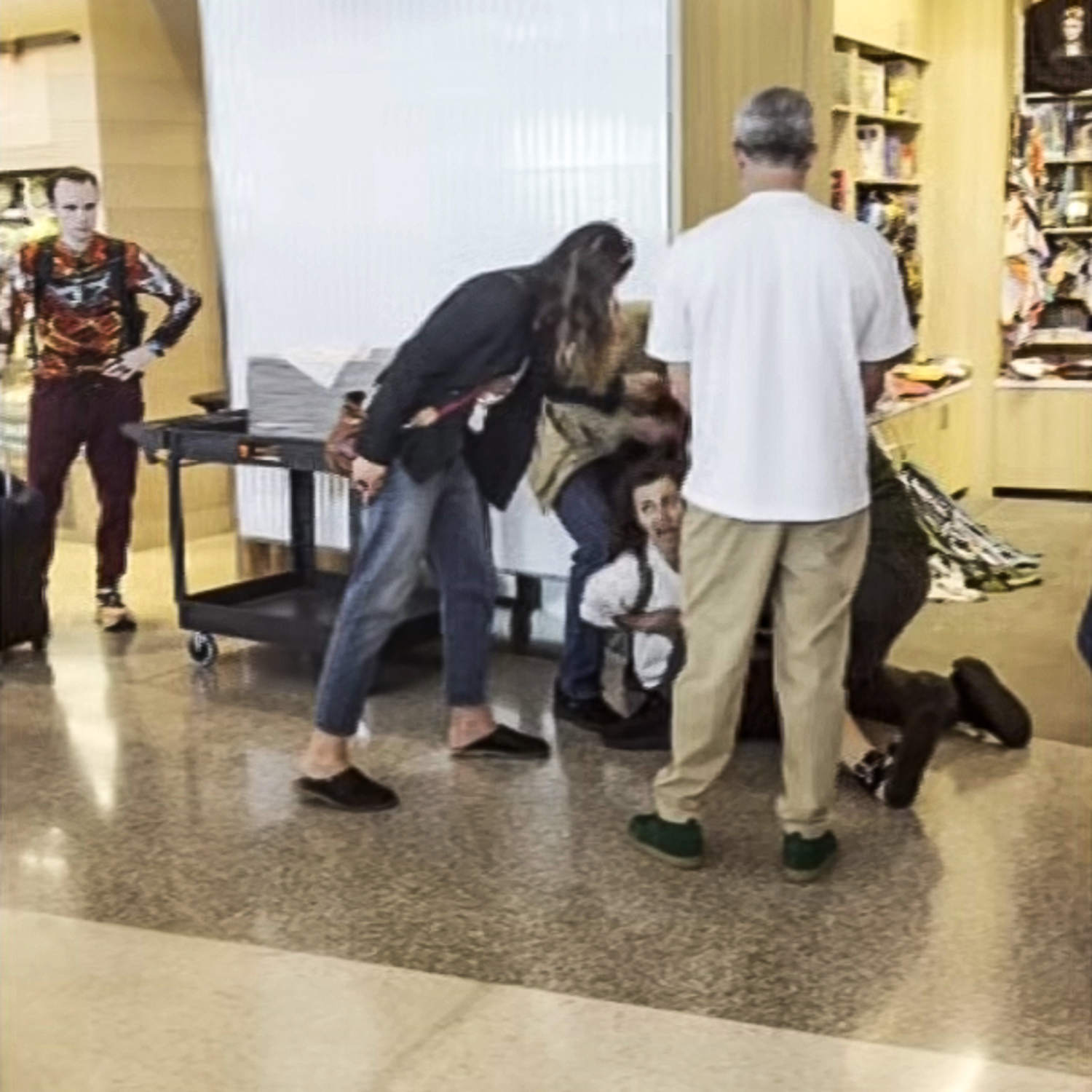
Videos spread fast on social media. A woman pinned to an airport terminal floor screams for help while plainclothes officers restrain her.
If you missed the footage coming out of San Francisco International Airport, it shows 38-year-old Ukrainian immigrant Iryna Gorb being taken into custody by U.S. Immigration and Customs Enforcement agents. Bystanders yelled questions. Officers handcuffed her to an airport wheelchair and rolled her away.
It looks chaotic. It feels sudden. But this kind of operation highlights a massive shift in how federal immigration enforcement handles long-term undocumented residents, particularly inside transit hubs.
Let's look at what actually happened, why it caught people off guard, and what it means for anyone with uncertain status navigating domestic flights right now.
The Breakdown of the SFO Detention
The details behind the arrest tell a specific story. Department of Homeland Security officials stated that Gorb entered the United States lawfully back in July 2010 on a visa that expired in May 2011. According to federal data, she remained in the country for 15 years, building a life in San Francisco as a professional photographer and local barista.
She wasn't pulled over during a routine traffic stop. She was walking through the terminal returning from a trip to Portland, Oregon.
When plainclothes federal agents approached her near a retail store in the terminal, the situation escalated instantly. Federal spokespersons claimed she attempted to flee and resisted arrest. Footage shared online by witnesses, including Richmond City Councilmember Doria Robinson who happened to be traveling at the time, captured Gorb shouting that she was being choked and pleading for assistance from onlookers.
Friends later confirmed she was transported to the Stockton field office before being moved to the California City Detention Facility in Kern County.
Why Airports Are Becoming Enforcement Hotspots
Travelers often assume domestic flights are safe zones. They aren't.
Federal immigration sweeps at airports have climbed noticeably as nationwide arrest numbers hit high marks. Immigration attorneys point out that airports operate under federal jurisdiction, making them prime territory for coordinated actions.
Security checkpoints, ticket counters, and boarding gates integrate heavy surveillance networks. Agencies share passenger manifests and data streams. When an individual with an active warrant or an expired visa triggers a flag, federal officers can stage an interception before a flight departs or immediately after a passenger lands.
This creates a high-risk environment. Local law enforcement agencies in progressive regions like San Francisco are barred by state sanctuary laws from assisting federal immigration operations. Yet, federal task forces bypass local constraints entirely because airports sit squarely outside local municipal control.
The Immediate Community and Legal Fallout
The public reaction was swift. Local politicians, including California State Senator Scott Wiener, strongly condemned the operation. Critics emphasized that Gorb had clean records locally and was facing potential deportation back to Ukraine, an active conflict zone.
Friends and supporters mobilized quickly to secure legal representation, setting up bonds and tracking her transfers through the detention system. Defense advocates stress that people often misunderstand their legal standing. Having deep community ties, working steady jobs, or paying taxes doesn't automatically confer legal protection against federal removal orders.
Immigration experts advise anyone with pending status issues or expired documents to evaluate the very real dangers of boarding commercial aircraft. Domestic travel still requires passing through federal security checkpoints where digital tracking systems operate continuously.
Knowing how federal agencies track movement changes the calculation for thousands of families living with similar paperwork gaps. If you or someone you know is navigating complex immigration proceedings, keep local rapid response network numbers saved directly in your phone, and consult a qualified immigration attorney before booking any travel that involves passing through federal checkpoints.