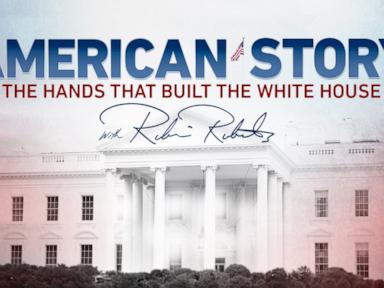
The White House stands as the ultimate symbol of American power, yet its foundational history remains anchored in a profound contradiction. Enslaved Black laborers did more than clear trees and haul stone for the executive mansion; they functioned as the literal backbone of its construction, working alongside white artisans under brutal conditions. While mainstream media often frames this history through a lens of simple commemoration, a closer look at the federal archives reveals a complex, commodified system of human exploitation. The government did not just use enslaved labor. It institutionalized it through a meticulous network of rental contracts, wage diversions, and corporate-style oversight that padded the pockets of slaveholders at the expense of human liberty.
Understanding how the nation's premier residence was built requires looking past the polished marble facades and examining the financial ledgers of the late 18th century.
The Commissioners and the Rental System
In 1792, the Commissioners of the District of Columbia faced a severe labor shortage. Washington was a swampy, undeveloped wilderness, and free white laborers, particularly skilled stonecutters and carpenters, demanded high wages and frequently walked off the job due to poor conditions. To solve this, the commissioners turned to the dominant economic engine of the Chesapeake region: the system of chattel slavery.
The government did not typically buy enslaved people outright for the construction project. Instead, they built a massive, state-sanctioned rental economy. They hired enslaved men from local plantation owners in Maryland and Virginia. This arrangement created a sinister economic dynamic. The federal government paid a monthly fee for the labor, but that money went directly to the slaveholders, not to the men doing the backbreaking work.
Archival payroll records from the Office of the Commissioners show names like "Negro Tom," "Negro Peter," and "Negro Ben" listed alongside monetary values. The records strip these men of their surnames and their humanity, converting their daily sweat into line items of federal expenditure. Slaveholders received roughly five dollars a month per worker, an amount that escalated as the timeline for completion grew tighter.
Blood and Quarry at Aquia Creek
The physical reality of building the White House was grueling. The primary building block of the mansion was Aquia Creek sandstone, quarried in Stafford County, Virginia, about 40 miles south of the capital.
Enslaved laborers dominated the workforce at Aquia Creek. Their days began before dawn, blasting solid rock with gunpowder, hammering iron wedges into stone seams, and hoisting massive blocks out of the earth. The work was lethal. Unstable quarry walls collapsed without warning, and the constant inhalation of silica dust destroyed the men's lungs.
Once extracted, the stone had to be hauled to the water's edge, loaded onto barges, and shipped up the Potomac River. At the construction site in Washington, another crew of enslaved workers met the boats. They dragged the stone up the banks of the river using primitive carts, ropes, and sheer muscle.
This was not unskilled labor. The narrative that enslaved workers only handled menial tasks is false. While many dug ditches and hauled timber, others became highly proficient in stone cutting, masonry, and carpentry. They worked side-by-side with European immigrants, particularly Scottish stonemasons who had been recruited to give the building its classical European aesthetic.
The Myth of Shared Prosperity
A persistent mischaracterization of this era suggests that the building of the capital was a collaborative effort where all workers benefited from the growing American economy. The financial records shatter this idea.
White workers received direct wages, housing allowances, and a daily ration of whiskey. Enslaved workers received bare-minimum sustenance, minimal clothing allotments, and temporary shelter in crowded, drafty shanties erected on the National Mall. The government viewed them as capital equipment rather than human beings. When an enslaved worker fell ill or suffered an injury from a falling timber, the commissioners did not worry about the man's well-being; they worried about the financial penalty they might owe the slaveholder for damaging his property.
The system also leveraged a cruel incentive mechanism known as "overwork" pay. On rare occasions, if the commissioners needed work done on Sundays or deep into the night, they offered small cash payments directly to enslaved laborers for working outside their required hours. While this allowed a few men to accumulate tiny sums of money—sometimes used to buy freedom for themselves or family members—it was a calculated business strategy to maximize output during critical construction phases, not an act of benevolence.
Bureaucracy as an Instrument of Exploitation
The construction of the White House provides an early look at how American bureaucracy normalized human bondage. The three commissioners appointed by George Washington—Thomas Johnson, David Stuart, and Daniel Carroll—were all substantial slaveholders themselves. They ran the federal city's construction with the same ledger-focused mentality they used on their private estates.
The bureaucratic machinery kept meticulous track of every dollar spent on feeding and housing the enslaved workforce. Receipts show purchases of cheap pork, cornmeal, and coarse textiles meant for "Negro clothing." This paper trail proves that the exploitation was not an accidental byproduct of a chaotic project. It was a planned, budgeted, and legally sanctioned operation managed by the highest levels of the United States government.
When John Adams moved into the unfinished executive mansion in November 1800, the smell of wet plaster and fresh paint filled the rooms. Enslaved domestic servants immediately took over the daily operations of the house, ensuring that the transition from constructing the building to occupying it maintained a seamless reliance on forced labor.
The Erasure and Recovery of the Archive
For nearly two centuries, the role of enslaved labor in constructing the symbol of American democracy was largely scrubbed from official narratives. Tour guides and history textbooks credited architects like James Hoban and statesmen like George Washington and Thomas Jefferson, while the thousands of Black hands that dug the foundations and laid the bricks remained invisible.
The push to correct this narrative did not come from federal initiatives, but from persistent historians, archivists, and journalists who demanded the release and close examination of the early records of the District of Columbia. In 2005, a congressional task force finally acknowledged the role of enslaved laborers in building the Capitol and the White House, leading to the installation of commemorative plaques.
A plaque, however, cannot fully capture the scope of the economic theft. The wealth generated by the labor of these men stayed with the prominent families of Maryland and Virginia, helping to fund plantations, businesses, and political campaigns that shaped the early republic. The workers themselves left no property, no inheritance, and in many cases, no recorded last names for their descendants to trace.
The White House stands today as a monument to architectural skill and political endurance, but its stones are forever stained by the economics of slavery. To look at the building without acknowledging the rental contracts, the brutal conditions at Aquia Creek, and the government-sanctioned theft of Black labor is to accept a sanitized version of history. The true story is found in the faded ink of the treasury ledgers, where human freedom was traded for federal infrastructure.