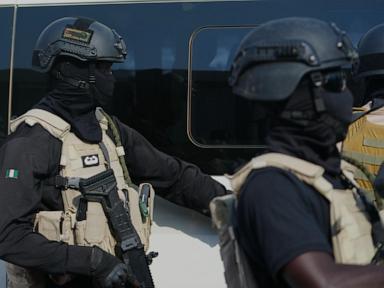
The massacre of at least 29 villagers in Borno State marks a grim escalation in the insurgent campaign to dominate northeastern Nigeria. Islamic State West Africa Province (ISWAP) fighters descended on the community with a level of coordination that suggests more than just a random raid for supplies. They arrived with intent. By the time the dust settled, a significant portion of the local population was dead, and the survivors were left to wonder why the security perimeter promised by the state remains a ghost on the horizon. This isn't just another statistic in a decade-long conflict; it is a signal that the insurgency has moved past hit-and-run tactics and is now actively policing the very people it seeks to rule.
The Strategy of Forced Compliance
For years, the narrative surrounding the conflict in the northeast focused on Boko Haram and its splinter factions as desperate bands of outcasts. That view is dangerously outdated. ISWAP has spent the last few years refining a governance model that is as brutal as it is calculating. When they strike a village like this, they aren't just looking for food or fuel. They are enforcing a "tax" or punishing what they perceive as collaboration with the Nigerian military.
The militants have realized that killing everyone is counterproductive to building a caliphate. Instead, they use targeted massacres to create a vacuum of authority. When the Nigerian Army cannot provide 24-hour protection, the local population is forced into a harrowing choice. They can either flee to overcrowded camps for internally displaced persons or strike a deal with the devil. This latest attack serves as a bloody reminder of the price for refusing that deal.
The Intelligence Failure in Borno
One cannot discuss these killings without addressing the persistent gaps in local intelligence. Borno State is one of the most heavily militarized regions in West Africa. There are checkpoints, forward operating bases, and drone surveillance programs. Yet, a force large enough to kill 29 people managed to mobilize, attack, and retreat without significant interference.
The disconnect lies in the relationship between the military and the rural populace. Decades of "scorched earth" tactics by various security forces have left many villagers wary of sharing information. If a farmer reports a militant sighting to the army, and the army fails to act or leaves the area shortly after, that farmer is a dead man. The insurgents know this. They exploit this fear to create "blind spots" that span hundreds of square miles of scrubland and forest.
Economics of the Insurgency
We often treat these groups as purely ideological entities, driven solely by a distorted religious vision. While that plays a part, the survival of the insurgency depends on cold, hard cash. The Lake Chad Basin is a hub for the trade of dried fish, peppers, and livestock. By controlling the roads and the water access points, ISWAP has effectively seized the means of production for an entire region.
The attack on the village was likely tied to these economic levers. Militants frequently demand a portion of every harvest or a cut of the profits from local markets. When a village resists these "protection fees," the response is total destruction. This creates a feedback loop where the insurgency grows wealthier as the formal economy of northeastern Nigeria collapses. The state loses tax revenue and control, while the militants build a war chest that allows them to buy better equipment and more sophisticated weaponry on the black market.
The Role of the Civilian Joint Task Force
In the absence of a consistent military presence, the burden of defense has fallen on the Civilian Joint Task Force (CJTF). These are local volunteers, often armed with little more than bolt-action rifles and machetes. They are the first line of defense and the primary targets of insurgent wrath.
The CJTF represents a double-edged sword for the Nigerian government. On one hand, they provide the ground-level intelligence that the regular army lacks. On the other, their presence justifies the insurgents' claims that certain villages are "combatant zones." By arming civilians, the state has blurred the line between the military and the public, often leaving these volunteers to face seasoned militants without the necessary heavy weapons or air support. It is a desperate measure for a desperate situation.
The Regional Spillover
What happens in a remote village in Borno does not stay there. The borders between Nigeria, Niger, Chad, and Cameroon are largely lines on a map, ignored by the tides of migration and the movement of militants. ISWAP uses these porous borders to move fighters and equipment with relative ease. When the Nigerian military ramps up pressure in the Sambisa Forest, the militants simply slip across the border into the Lake Chad marshes or the Mandara Mountains.
This regional fluidity makes a purely national solution impossible. While there is a Multinational Joint Task Force (MNJTF) designed to coordinate efforts between these four nations, it is often plagued by funding shortages and mutual distrust. Each country is fighting its own internal battles, and the coordination required to trap a mobile insurgent force remains elusive. The militants aren't just fighting Nigeria; they are exploiting the lack of a unified West African front.
The Humanitarian Cost of Inaction
The numbers are staggering. Millions have been displaced. An entire generation of children in the northeast has grown up knowing nothing but the sound of gunfire and the sight of burning thatch roofs. The latest 29 deaths are added to a ledger that has long since lost its ability to shock the international community.
This apathy is exactly what the insurgents rely on. As the world focuses on conflicts in Europe or the Middle East, the crisis in the Sahel and the Lake Chad Basin festers. Humanitarian aid is a sticking plaster on a gunshot wound. Providing bags of grain to displaced families is necessary, but it does nothing to stop the source of the displacement. The cycle of violence continues because the underlying causes—extreme poverty, climate change-driven resource scarcity, and a lack of state presence—remain unaddressed.
Equipment and Tactics
The nature of the weaponry used in these attacks has shifted. We are seeing more technicals—pickup trucks mounted with heavy machine guns—and more sophisticated improvised explosive devices (IEDs). The militants have become experts in asymmetrical warfare, using the terrain to their advantage. They don't seek to hold territory in the traditional sense; they seek to deny it to the state.
Their tactics are designed to embarrass the military. By hitting a "soft target" like a village, they force the army to spread its resources thin. If the military stays in the cities, the villages burn. If the military moves into the countryside, the cities become vulnerable to suicide bombings. It is a tactical stalemate that the insurgents are currently winning through sheer persistence and brutality.
The Nigerian government often claims the insurgents are "technically defeated." This phrase has become a bitter joke among those living in the northeast. You cannot claim victory when a village is wiped out in a single afternoon. You cannot claim victory when the main roads connecting regional capitals are too dangerous to travel without an armed convoy. True victory would look like a farmer being able to tend his crops without wondering if he will be the next one to fall to an insurgent's blade.
The path forward requires a fundamental shift in how the state views its role in the north. Military might alone has failed to end the conflict because the conflict is not purely military. It is a struggle for legitimacy, for economic survival, and for the basic right to exist without fear. Until the government can offer a more compelling future than the one offered by the militants, the villages of Borno will continue to burn.
The security architecture of the region needs to be rebuilt from the ground up, focusing on permanent rural presence rather than sporadic patrols. The intelligence apparatus must find a way to win back the trust of the local population, or it will continue to operate in the dark. Without these changes, the list of the dead will only grow longer, and the "technical defeat" of the insurgency will remain a hollow political slogan while the reality on the ground remains a bloody, unending siege.
The silence that follows an attack like this is the loudest part of the tragedy. It is the silence of a government that has run out of answers and a community that has run out of tears. The 29 victims in that village deserved better than to be another footnote in a war that has no end in sight. They deserved a state that could protect them and a world that cared enough to notice they were gone.
Stop waiting for the next headline to confirm what is already obvious.


