Salt crusts on the windshield of a battered Land Cruiser grinding its way through the hills of Viti Levu. Outside, the tropical air presses down like a hot wool blanket, heavy with the scent of wet ferns and woodsmoke. To a casual observer, this is the South Pacific of postcards. Turquoise lagoons. Palm-fringed shores. A place where time supposedly forgot to move.
Yet look closer at the weathered porch of a village community hall, or the dusty desk of an agricultural officer in Suva, and a different symbol catches the light.
A blue-and-white flag snapping in the trade winds.
It feels jarring. Thousands of miles of open ocean separate the shores of Fiji from the contested borders of the Levant. Geopolitically, they inhabit different universes. One is an archipelago of volcanic peaks and coral rings, defined by communal village life and island resilience. The other is a hyper-modern Mediterranean state forged in the crucible of ancient history and high-tech defense.
And yet, for decades, these two dots on the globe have shared an unbreakable thread.
The Distance That Never Was
To understand how a tropical republic in Oceania became one of the most steadfast diplomatic allies of Israel in the international arena, you have to strip away the maps. Maps lie about distance. They measure space in inches, ignoring the invisible lines drawn by shared histories, military service, and mutual survival.
Consider a hypothetical retired Fijian sergeant named Ratu Jone. (This is a composite portrait, drawn from dozens of real veterans who traded the lush green of the Rewa River Valley for the arid dust of the Sinai.) Jone was nineteen when he first boarded a commercial propeller plane bound for the Middle East. He had never seen snow. He had never heard the dull, concussive thud of artillery echoing off desert stone.
He was wearing a blue helmet.
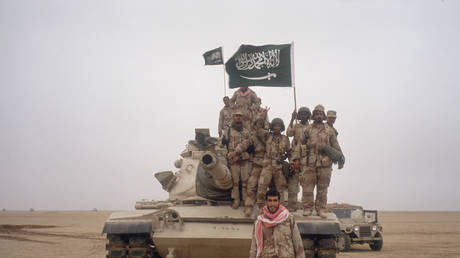
Since the late 1970s, thousands of Fijian soldiers have served in United Nations peacekeeping missions across the Middle East. They stood guard in the Sinai Peninsula, patrolled the volatile borders of Lebanon, and kept the peace in the Golan Heights. In places where world superpowers feared to tread, small contingents of Fijian troops earned a quiet reputation for calm courage, deep empathy, and an uncanny ability to de-escalate tension with a smile and a handshake.
For Israel, those peacekeepers were not just distant observers in blue berets. They were human shields against chaos. When local populations saw Fijian soldiers, they saw genuine neutrality combined with fierce integrity. That frontline bond forged in the desert heat created a well of goodwill that diplomatic cables could never fully capture.
When the World Turns Its Back
Diplomacy is often a cold calculation of national interest. Countries trade votes for loans, alliances for security guarantees. But the relationship between Fiji and Israel frequently defies such cynical arithmetic.
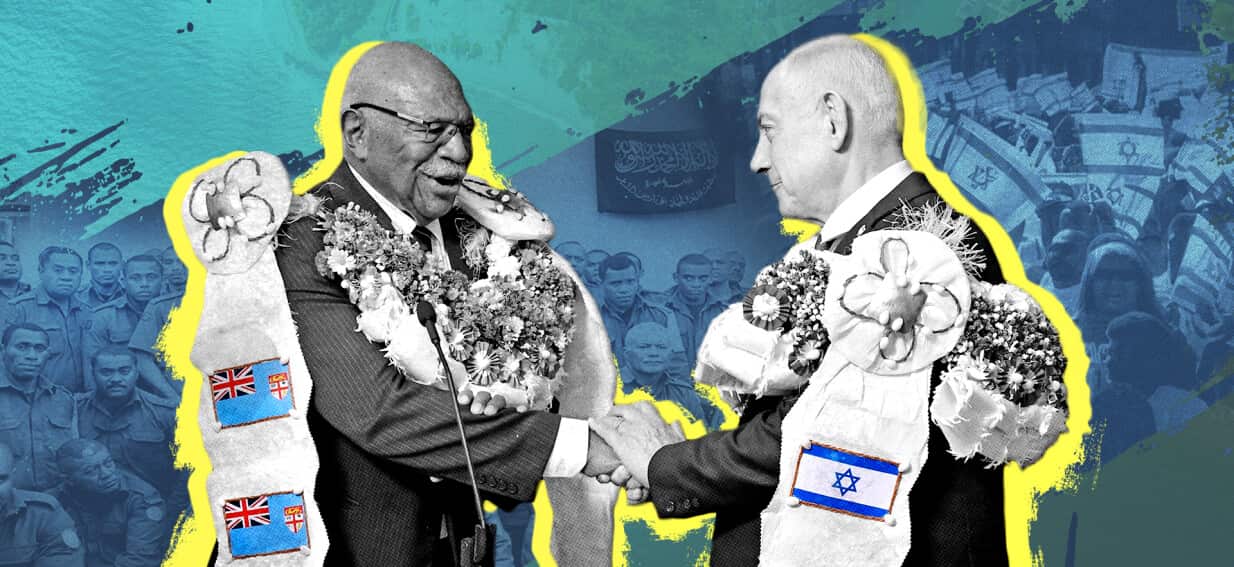
At the United Nations General Assembly, where resolutions condemning Israel flow like seasonal monsoon rains, Fiji has often stood apart from its regional neighbors. While many Pacific nations navigate complex geopolitical pressures by abstaining or voting with the majority, Fiji has consistently maintained a stance of steadfast support or nuanced independence that respects its historical ties with Jerusalem.
Why?
The answer lies deep within the Fijian cultural psyche. It is rooted in veisiko—the traditional practice of visiting, standing by one's neighbors, and refusing to abandon friends when the weather turns foul. In Fijian village life, loyalty is not transactional. You do not turn your back on someone who has shared your camp, eaten from your pot, or stood shoulder-to-shoulder with you when danger was close.
When Fijian leaders look at Israel, they do not merely see a distant nation embroiled in geopolitical strife. They see a fellow small nation that knows what it means to fight for survival, to cultivate barren earth into flourishing fields, and to defend a distinct cultural identity against overwhelming odds.
The Green Revolution in the Tropics
The partnership is not confined to the halls of the United Nations or the dusty checkpoints of the Sinai. It lives in the soil.
Drive up into the Sigatoka Valley, often called the salad bowl of Fiji, and you will see the practical manifestation of this alliance. The soil here is rich, volcanic, and stubborn. For generations, farmers relied on traditional slash-and-burn methods and unpredictable seasonal rains to grow cassava, taro, and tomatoes.
Then came the irrigation engineers and agricultural specialists, many of them trained through joint cooperation programs between the Fijian government and Israel’s MASHAV—the Agency for International Development Cooperation.
Imagine a farmer named Sunil standing in the midday sun, watching water drip with miraculous precision from a network of black plastic tubes directly to the roots of his bell peppers. No water is wasted. No drop surrenders to the thirsty tropical evaporation before it can do its work.
That drip irrigation technology didn't appear by magic. It was born in the Negev Desert, invented by Israeli farmers who had to coax life from sand and stone. Transferred across the globe to the tropical humidity of Fiji, those same clever pipes transformed subsistence farming into commercial enterprise.
It is a profound irony of modern globalization: techniques designed to conquer arid deserts end up saving crops in one of the wettest archipelagos on earth. Water conservation is universal. Survival requires ingenuity, whether your enemy is a lack of rain or the unpredictable fury of a warming ocean.
The Cultural Current
The connection runs deeper still, touching the spiritual and the cultural imagination of the islanders.
Christianity runs deep through the veins of modern Fiji. Sunday mornings transform the country into a cathedral of white dresses, woven mats, and soaring four-part harmonies that echo across hills and lagoons. In this deeply faithful society, the biblical narratives of ancient Israel are not dusty historical footnotes. They are living geographies.
When a Fijian child learns about Jerusalem, the Jordan River, and the hills of Judea, those places feel as familiar as the winding paths of their own ancestral lands. Pastors in Suva preach sermons that weave local village ethics together with biblical history, creating a seamless mental bridge between the South Pacific and the Middle East.
This creates a grassroots warmth that politicians can neither manufacture nor dismantle. When an Israeli tourist steps off a flight at Nadi International Airport, exhausted from a twenty-hour journey, they are often met not with the sterile efficiency of a global transit hub, but with a booming, heartfelt "Bula!" and a smile that reaches the eyes.
In a world increasingly fractured by cynicism, digital isolation, and ideological tribalism, that instinctive hospitality feels almost radical.
The Unseen Stakes Ahead
As the world shifts into an uncertain future defined by climate change, economic volatility, and shifting global superpowers, small nations face existential questions. Fiji battles rising sea levels that threaten to swallow ancestral coastal villages whole. Israel navigates an eternal tightrope of regional security and technological transformation.
On paper, they have little business being allies. One is an oceanic republic fighting for its physical existence against the tides; the other is a high-tech powerhouse fighting for its political existence against hostile neighbors.
Yet their enduring bond offers a quiet lesson to a noisy world. It reminds us that alliances do not have to be born in smoke-filled back rooms or sustained solely by cold economic utility. Sometimes, they are forged in the mud of a peacekeeping camp, in the shared sweat of agricultural innovation, and in the stubborn refusal of small peoples to forget one another across the vast, indifferent blue of the world's great oceans.
The Land Cruiser down in Viti Luvú rounds a bend, kicking up a cloud of red dust that settles slowly on the broad leaves of the banana trees. Far away, across oceans, deserts, and time zones, another vehicle negotiates a similarly rocky road. The dust is different. The language is different.
The human heartbeat driving them forward is the exact same.