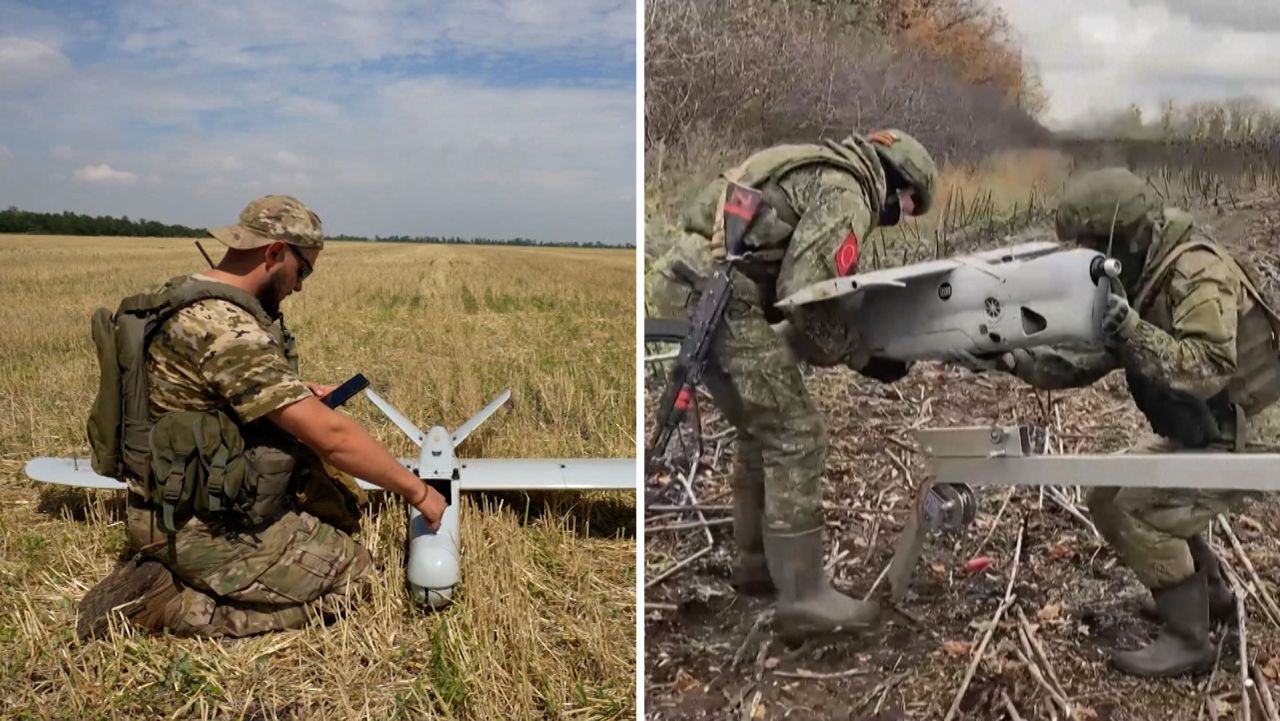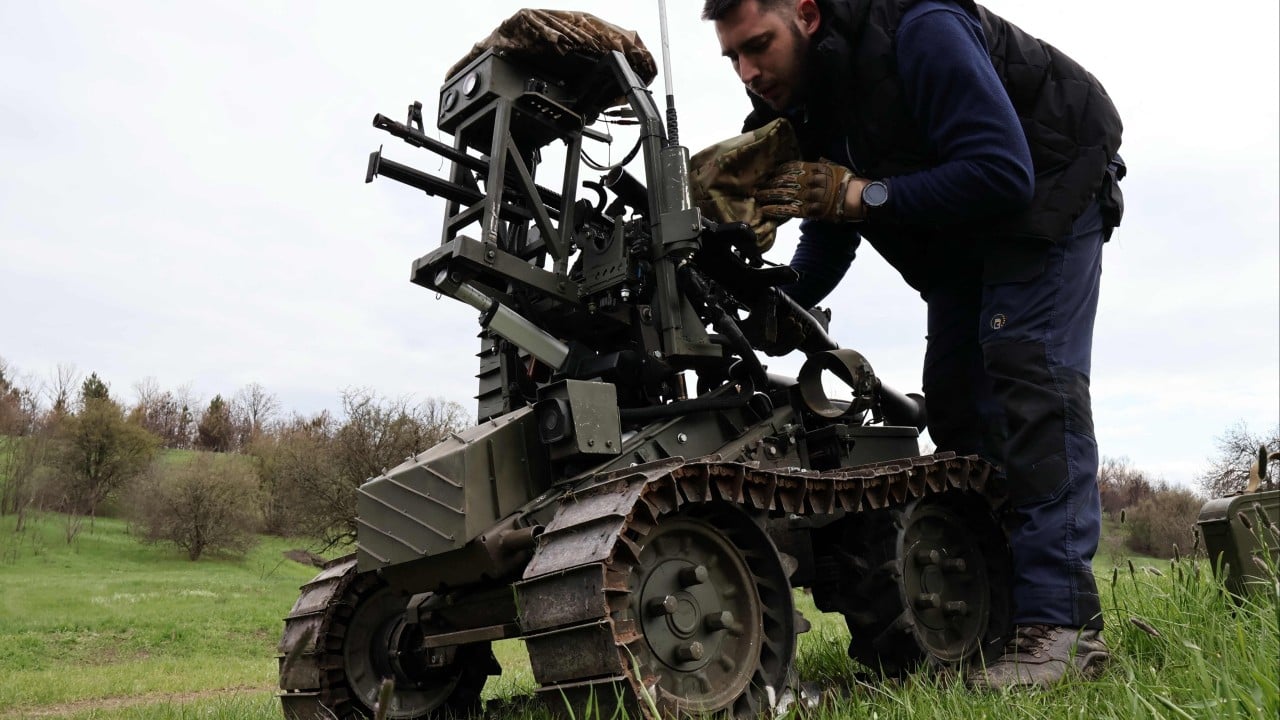
Ground robots aren't just a sci-fi experiment anymore. They're actively holding trenches and clearing paths through the Russian lines while keeping Ukrainian soldiers out of the line of fire. I’ve seen the shift from aerial drones to ground-based platforms over the last year, and what’s happening right now in Ukraine is a total pivot in how we think about infantry warfare.
A specialized unit within Ukraine's 3rd Assault Brigade, known as the NC-13 company, just confirmed it has carried out over 100 combat operations using unmanned ground systems (UGVs). This isn't just about driving a remote-controlled car with a camera. We’re talking about machine-gun-equipped platforms and "kamikaze" robots that can roll right into a Russian bunker and detonate.
The First Trench Capture Without a Single Human
A massive milestone happened just recently in April 2026. President Zelenskyy highlighted an operation where a Russian position was captured entirely by robots. Not a single Ukrainian soldier set foot in the "zero line" during the assault.
How did they do it? It was a coordinated dance. Aerial drones provided the overhead view, spotting Russian movements and guiding the ground robots. The UGVs moved in, suppressed the defenders with mounted machine guns, and basically forced a surrender.
"For the first time in this war's history, an enemy position was taken exclusively by unmanned platforms and drones." — Volodymyr Zelenskyy
This isn't an isolated stunt. The numbers are staggering. In March 2026 alone, Ukrainian forces logged over 9,000 UGV missions. If you look at the first quarter of this year, that number jumps to nearly 24,500. Ukraine has built an ecosystem where 167 different military units are now using these machines as part of their daily routine.
The Real Workhorse Is Logistical
While the combat clips get the views, the real value is in the boring stuff: hauling water, ammo, and wounded soldiers. It's estimated that ground robots now handle 70% of the logistics for some brigades.
Think about the math. The 3rd Assault Brigade moved 200 tonnes of supplies in a single month using robots. To do that with people, you’d need 10,000 soldiers each carrying 45 pounds through a zone littered with mines and snipers. Instead, they sent the machines.
- Ratel S: A kamikaze robot often loaded with anti-tank mines to blow up bridges or bunkers.
- TerMIT: A versatile platform that can be swapped from a supply hauler to a medical evac unit.
- Zmiy: This one is a beast for mine clearing, capable of clearing 7,000 square meters a day.
Ground robots are reducing personnel casualties by as much as 30%. In a war of attrition where manpower is everything, that 30% is the difference between holding a line and losing a city.
Why Ground Robots Are Harder Than They Look
You might think it’s just like playing a video game, but it's much more brutal. Unlike aerial drones that have a clear line of sight to a signal tower, ground robots have to deal with hills, mud, and ruins that block radio waves.
Electronic warfare (EW) is the biggest hurdle. The Russians use "jammers" that create a "dome" of interference. If the robot loses its signal, it becomes a multi-thousand-dollar paperweight in the middle of a field.
To beat this, Ukrainian engineers are getting creative. They’re using fiber-optic cables—literally a wire trailing behind the robot—so it can’t be jammed. They’re also using "relay drones" in the sky that act as a middleman for the signal, allowing the operator to hide in a basement several kilometers away while steering the robot through a Russian trench.
The Strategy Shift You Should Watch
We're moving toward a "Drone Line" doctrine. Ukraine has grouped its five most effective unmanned units into a specialized command. The goal is to reduce the number of human "grunts" needed in a trench by 80% over the next few years.
If you’re following this, don’t just look for the big explosions. Look for the reports of "casualty evacuation" or "automated mining." That’s where the war is being won. The NC-13 unit’s 100 missions are just the tip of the spear.
If you want to track this progress, keep an eye on the Brave1 platform. It’s where the Ukrainian government fast-tracks these inventions from a garage prototype to the front line in weeks, not years. The era of the "human wave" is dying, and the era of the circuit board is here.