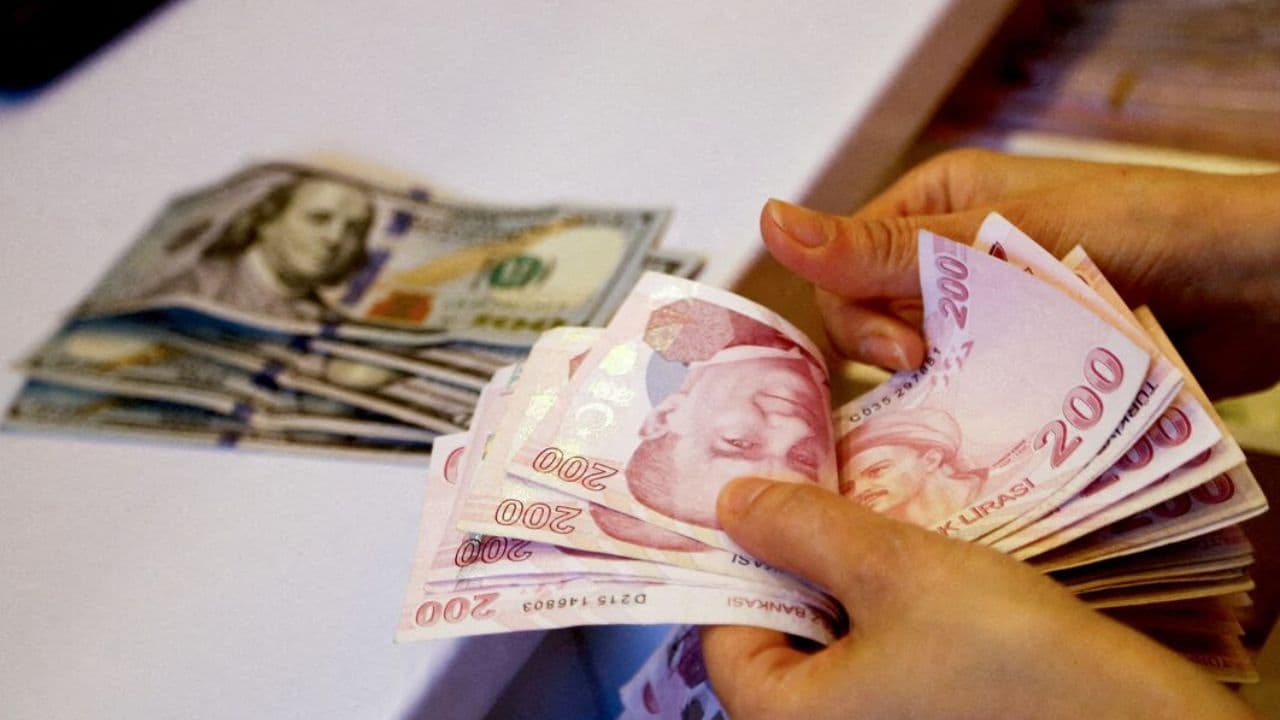
The collapse of the Turkish lira is often quantified by a single staggering metric: the currency has lost over 98 percent of its value against the US dollar since 2010. This long-term freefall reflects a fundamental unraveling of purchasing power that has reshaped Turkey’s economy, driven by years of unconventional monetary policies that resisted basic economic math. While a recent return to orthodox finance under a 37 percent central bank policy rate aimed to stabilize the slide, a massive 43 billion dollar foreign reserve drain in early 2026 and an escalating regional conflict in the Middle East have reignited the crisis. The problem is no longer just historical depreciation; it is an active structural emergency.
The Mechanics of a Self Inflicted Currency Collapse
To understand how a major G20 economy permits its currency to lose nearly all its value, one must look at the years leading up to the current policy shift. For nearly a decade, Ankara operated under the unorthodox thesis that high interest rates cause inflation rather than cure it. When consumer prices began climbing, the central bank was directed to cut borrowing costs instead of raising them.
The mathematical consequence was swift. Real interest rates—the nominal interest rate minus inflation—plunged deep into negative territory. Depositors realized that keeping money in lira meant watching their life savings evaporate in real-time.
A mass exodus followed. Citizens rushed to convert their local currency into US dollars, euros, or physical gold. This process, known as dollarization, fundamentally broke the local demand for the lira. To keep the currency from collapsing entirely during this period, the central bank spent hundreds of billions of dollars in foreign currency reserves to artificially prop up the exchange rate. It was a temporary dam holding back an ocean of market pressure.
The Geopolitical Shockwave of 2026
The structural vulnerabilities left behind by those years of experimentation have made Turkey highly vulnerable to external shocks. The outbreak of the Iran conflict has dealt a severe blow to Ankara's stabilization timeline.
Turkey imports nearly three-quarters of its total energy requirements. When global oil prices spiked toward 110 dollars per barrel due to regional hostilities, Turkey’s import bill exploded. The central bank was forced to radically adjust its economic assumptions, raising its 2026 oil price projection from 60.90 dollars to 89.40 dollars a barrel.
Every extra dollar spent on a barrel of oil requires selling more lira to buy foreign currency. This dynamic rapidly widened the country's current account deficit to 24 billion dollars in the first quarter of 2026 alone—roughly 4 percent of annual gross domestic product. This gap cannot be sustainably financed by existing foreign direct investment or foreign appetite for local bonds. The math simply does not balance.
The Great Reserve Drain
The strain became fully visible in March 2026, when Turkey suffered a record 43 billion dollar decline in foreign reserves as global investors pulled capital out of emerging markets. Central Bank Governor Fatih Karahan has maintained a policy of allowing the lira to appreciate in real terms by letting it depreciate more slowly than the domestic inflation rate. The objective is to use the exchange rate as an anchor to cool domestic price increases.
The strategy is high-stakes. If the central bank runs out of usable foreign reserves to manage this slow glide path, the market could force a sharp, chaotic devaluation. Net reserves, excluding complex currency swaps, hovered at 39 billion dollars in early May, leaving little margin for error if capital flight accelerates.
The Divergence in Lived Inflation
The headline numbers from the Turkish Statistical Institute showed annual consumer inflation climbing to 32.37 percent in April 2026. This figure is high enough to strain any household budget, but independent researchers argue the true damage is much worse. The independent Inflation Research Group estimates actual inflation at closer to 54.62 percent.
The divergence between official metrics and reality is most visible in the food sector. Local economists point out that Turkish food prices have skyrocketed nearly 733 percent since 2021.
- Global vs Domestic Factors: While international supply chain disruptions and climate issues affected global food costs, the domestic price explosion in Turkey vastly outpaced global trends.
- Agricultural Structural Failures: Decades of rising input costs for fertilizer, fuel, and seeds—all tied to foreign currencies—have eroded Turkey's domestic agricultural capacity.
- Permanent Inflation Expectations: When businesses expect prices to rise by 33 percent and households expect a 52 percent jump over the coming year, pricing behavior shifts permanently. Retailers hike prices preemptively, cementing inflation into the system.
A weak currency creates an inescapable feedback loop. A depreciated lira makes imported raw materials, fertilizers, and energy more expensive. These higher production costs are passed down to consumer goods, driving inflation higher and forcing the currency down yet again.
The Overvaluation Dilemma
Turkish policymakers are trapped in an economic vice. On one side, domestic exporters are complaining loudly that the central bank’s strong-lira policy has made Turkish goods too expensive on the global market, damaging manufacturing and trade balances. On the other side, if the bank relaxes its grip and lets the lira drop to satisfy exporters, the cost of imported energy and food will surge, destroying any progress made on taming inflation.
In mid-May 2026, the central bank officially capitulated on its medium-term targets, raising its end-of-year inflation target for 2026 from 16 percent to 24 percent, while forecasting an actual finish of 26 percent.
Raising a target without immediately tightening monetary policy through higher interest rates risks damaging market credibility. While the main policy rate remains high at 37 percent, holding it steady in the face of rising inflation expectations suggests a political limitation on how far economic tightening can go. The current policy mix is testing the absolute limits of foreign investor patience. Without deep structural adjustments to reduce energy dependence and rebuild agricultural independence, the 98 percent loss in value since 2010 will not be a historical rock bottom, but a continuing baseline.