Donald Trump wants to rewrite the geopolitical map of the Middle East, and he's dragging Islamabad right into the center of it. In a characteristically sweeping Truth Social post, the US President tied a potential breakthrough deal with Iran to a massive expansion of the Abraham Accords. He didn't just ask Arab states to sign on. He explicitly named Pakistan, demanding that countries involved in mediating the US-Iran crisis simultaneously normalize ties with Israel.
The immediate reaction from Islamabad? A blunt, public rejection. Defense Minister Khawaja Asif didn't mince words, stating that joining any such agreement completely clashes with the country's fundamental ideologies.
But beneath the fiery rhetoric lies a fascinating, highly specific bureaucratic reality that perfectly encapsulates this decades-long diplomatic freeze. It's written right on the cover of every single Pakistani travel document.
The Passport Dilemma and the Ultimate Ideological Red Line
If you hold a Pakistani passport, you already know the phrase by heart. Printed clearly on the inside booklet is a strict, uncompromising declaration: "This passport is valid for all countries of the world except Israel."
Pakistan remains the only nation on earth that retains this exact, explicit wording on its travel documents. While other Muslim-majority nations maintain diplomatic boycotts or refuse entry to Israeli citizens, Pakistan chose to codify its refusal to recognize the Jewish state directly into its national identity and citizen documentation.
If Islamabad ever buckled under Washington's pressure and accepted Trump's proposal, it wouldn't just be a shift in foreign policy. It would require a massive, historic logistical overhaul. Every single passport in circulation—millions of books held by citizens at home and overseas—would instantly become obsolete or require a complete legal redesign.
For Pakistan, the passport isn't just a travel tool. It's a physical manifesto of its statehood. The country's foundational narrative is deeply tied to the Palestinian cause, insisting on a viable, independent Palestinian state based on pre-1967 borders with East Jerusalem as its capital. Stripping that warning from the passport booklet would signal a psychological defeat that no ruling government in Islamabad could survive domestically.
The High-Stakes Geopolitical Trap
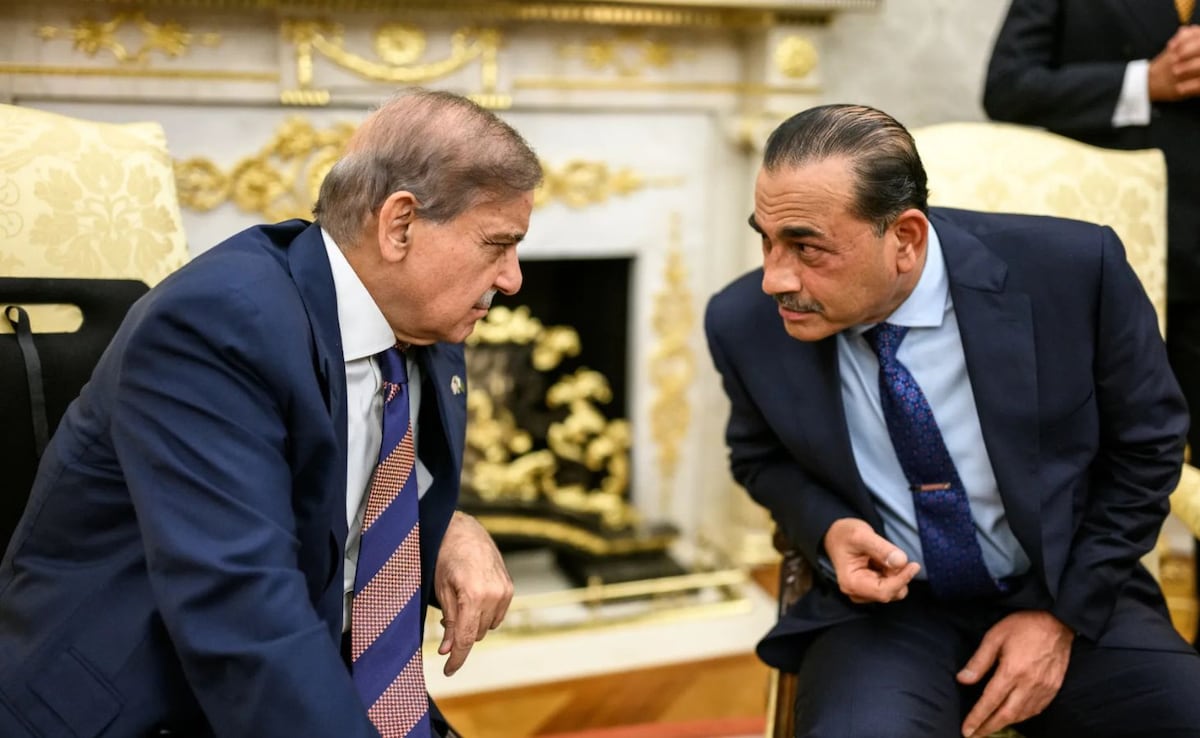
Trump's sudden pressure campaign puts Pakistan in an incredibly awkward spot. Right now, Islamabad is playing a vital, sensitive role as a backchannel mediator between Washington and Tehran. Army Chief Field Marshal Asim Munir and Interior Minister Mohsin Naqvi have been actively shuttling messages, attempting to secure a final understanding to de-escalate the volatile US-Iran crisis.
Trump is trying to use this leverage to force a package deal. His logic is simple: if you want the prestige and stability of brokering a historic peace deal with Iran, you must accept the broader regional integration that includes Israel.
But this creates a dangerous paradox for Pakistani leadership. Look at how the regional dynamics stack up:
- The Iranian Backlash: Tehran has made its position crystal clear. It views the Abraham Accords not as a peace initiative, but as a hostile, US-backed security alliance designed to encircle Iran. If Pakistan even hints at entertaining Trump's demand, its relationship with its immediate neighbor, Iran, would instantly disintegrate, ruining any chance of mediation.
- The Public Fury: Public sentiment inside Pakistan is overwhelmingly sympathetic to the Palestinian population, especially following the massive regional escalations over the last few years. Mainstream political groups and powerful religious parties would easily weaponize any diplomatic shift, sparking widespread civil unrest that could destabilize the current government.
- The Saudi Factor: While Trump is also breathing down the neck of Saudi Crown Prince Mohammed bin Salman to sign the accords, Riyadh has consistently demanded a concrete pathway to Palestinian statehood as a non-negotiable prerequisite. Pakistan simply cannot afford to jump ahead of its primary financial benefactor on such a sensitive issue.
What Happens Next for Islamabad
Don't expect Pakistan to blink. The cost of capitulating to Trump's social media diplomacy is vastly higher than the penalty of refusing him. Defense Minister Asif openly questioned the very credibility of engaging with Israel, asking how Islamabad could sit down with a state whose word can't be trusted for a single day.
For the immediate future, Pakistani diplomats will try to separate the issues. They will continue to offer their services as a neutral bridge between the US and Iran while remaining completely immovable on the question of Israeli recognition.
If you're watching this space, keep your eyes on the official statements coming out of the Foreign Ministry in the coming weeks. Pakistan will likely double down on its traditional benchmarks for recognition, using the absolute rigidity of its passport policy as a convenient shield against Washington's heavy-handed arm-twisting. Trump might love the art of the deal, but he's running straight into an ideological brick wall that a simple social media post cannot shatter.