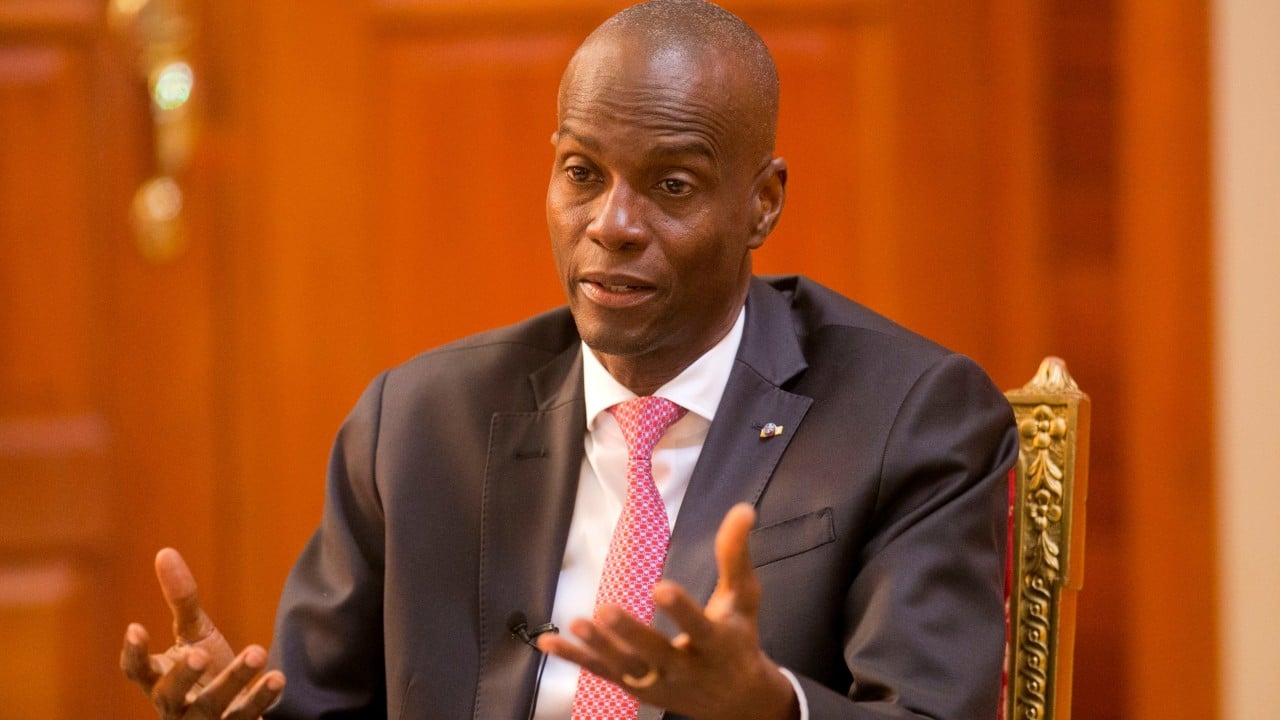
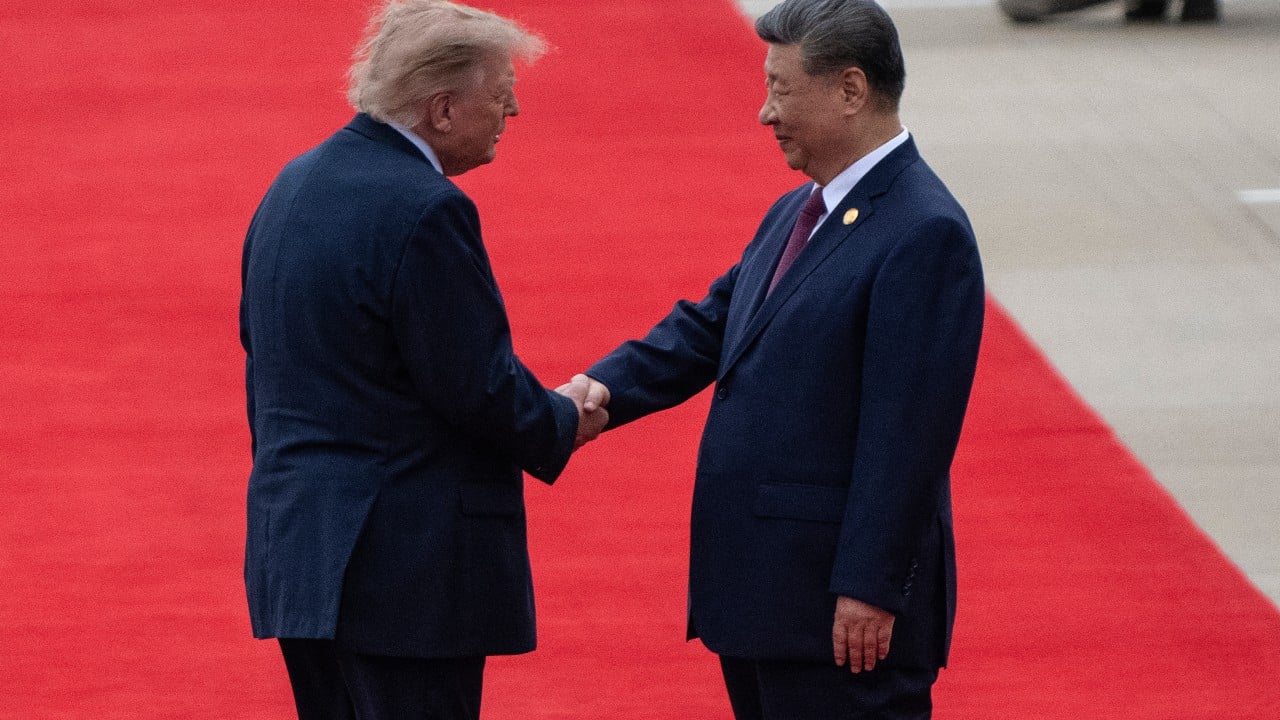
A trilateral summit between Donald Trump, Xi Jinping, and Vladimir Putin will not produce a modern Yalta Conference because the structural conditions of global power have fundamentally inverted since 1945. The historical comparison collapses under basic geopolitical scrutiny. At Yalta, three allied victors carved up the ruins of defeated empires into rigid, enforceable spheres of influence. Today, Washington, Beijing, and Moscow are not war-weary partners dividing spoils; they are nuclear-armed competitors locked in asymmetric friction, with neither the military monopoly nor the diplomatic trust required to redraw the map of the world by fiat.
Observers often reach for the Yalta analogy whenever great powers discuss spheres of influence or territorial settlements. The appeal is obvious. It offers a clean, dramatic narrative in which three strongmen sit around a polished table, trade away the sovereignty of smaller nations, and emerge with a grand bargain that settles global order for a generation. Yet foreign policy analysts, historians, and diplomatic practitioners consistently point out that this framing misunderstands both what happened in Crimea in February 1945 and how modern statecraft actually operates.
The Myth of the Grand Bargain
At the original Yalta Conference, Franklin D. Roosevelt, Winston Churchill, and Joseph Stalin met while their armies were physically occupying the territories under discussion. The Red Army already held most of Eastern Europe. Western Allied forces were advancing across Germany from the west. The agreements signed at Livadia Palace largely ratified facts already established on the ground by millions of troops.
A modern meeting involving Trump, Xi, and Putin operates under entirely different mechanics. None of these three leaders commands an uncontested military occupation of the disputed regions at the center of their rivalries. Moscow has struggled for years to achieve total control in Ukraine, expending massive resources for incremental territorial gains. Beijing exercises immense economic and military pressure in the Indo-Pacific, yet it does not physically control Taiwan or the entirety of the South China Sea. Washington maintains a global network of alliances, but it faces severe domestic constraints and competing strategic priorities that limit its appetite for open-ended foreign entanglements.
You cannot trade what you do not hold. Without the decisive leverage of total military victory, any grand bargain struck in a summit room would lack an enforcement mechanism. If Trump and Putin were to discuss terms regarding Eastern Europe, neither could compel European allies or Kyiv to accept an arrangement that threatens their existential security without triggering massive political and economic fallout. Similarly, Xi cannot simply sign away Beijing's core territorial claims, nor can Washington unilaterally trade away the security architecture of East Asia without dismantling its own credibility with treaty allies like Japan and South Korea.
Why Asymmetry Kills Three-Way Deals
The Yalta framework assumed a rough parity of immediate wartime necessity among the Big Three. Today, the relationship among the United States, China, and Russia is defined by sharp economic and strategic asymmetry.
- Economic Divergence: The United States and China are economic superpowers whose economies remain deeply, if uncomfortably, intertwined through global supply chains, capital markets, and trade flows. Russia, by contrast, operates a resource-dependent economy heavily shaped by war mobilization and Western sanctions, with a gross domestic product roughly comparable to that of a single mid-sized Western European nation or a major American state.
- Divergent Time Horizons: Beijing plays a multi-decade game focused on technological self-sufficiency, industrial dominance, and gradual regional displacement of American influence. Moscow operates on a much shorter, more acute timeline, driven by regime security, immediate battlefield realities in Europe, and the need to break out of diplomatic isolation. Washington's strategic horizon frequently shifts with electoral cycles, creating abrupt changes in tariff policy, alliance commitments, and diplomatic posture.
- Lack of Shared Adversary: Roosevelt, Churchill, and Stalin were bound together by the existential threat of Nazi Germany. Once that common enemy collapsed, the Yalta consensus disintegrated almost immediately into the Cold War. Trump, Xi, and Putin share no unifying external threat. To the extent that any two of them align, it is usually to balance against the third.
The Illusion of the "Reverse Nixon"
A recurring theory in Washington policy circles suggests that an American administration could use a trilateral or bilateral summit to pull Russia away from China, executing a modern version of Richard Nixon's 1972 opening to Beijing. This premise ignores the structural reality of the Sino-Russian partnership.
During the Cold War, the Soviet Union and Maoist China were bitter ideological rivals fighting border skirmishes along the Ussuri River. Nixon did not create the Sino-Soviet split; he exploited a deep, pre-existing fracture. Today, no comparable rift exists between Moscow and Beijing. On the contrary, Western sanctions and diplomatic pressure have driven Russia into unprecedented economic dependence on China.
China buys Russian crude oil and natural gas at discounted rates, supplies Russia with dual-use microelectronics and machine tools essential for its defense industrial base, and provides vital diplomatic cover at the United Nations. Putin knows that Washington's foreign policy can pivot every four years. Abandoning a reliable, contiguous superpower neighbor like China in exchange for temporary sanctions relief or verbal assurances from a single American president would be a catastrophic strategic gamble for the Kremlin.
At the same time, Xi Jinping has no incentive to let Putin strike a separate peace with Washington that frees up American military and economic bandwidth to focus exclusively on the Indo-Pacific. From Beijing's perspective, a distracted United States bogged down in European security crises serves Chinese strategic interests. Any three-way meeting would therefore feature competing, mutually exclusive agendas rather than a shared desire for systemic stability.
Middle Powers Refuse to Be Pawns
Perhaps the greatest flaw in the Yalta comparison is its erasure of middle powers. In 1945, European nations were physically devastated, financially bankrupt, and militarily exhausted. Poland, Germany, and the Baltic states had no seat at the table and no capacity to resist the decisions made by Washington, London, and Moscow.
The geopolitical environment of 2026 bears zero resemblance to that post-war vacuum. Middle powers today possess advanced militaries, massive sovereign wealth funds, critical supply chain monopolies, and independent diplomatic agency.
Consider Europe. While European nations still rely on the American nuclear umbrella and intelligence capabilities, the European Union represents one of the world's largest single markets. Countries like Poland, France, Germany, and the Nordic states have dramatically increased defense spending and integrated their military industrial bases. They will not passively accept a backroom territorial settlement dictated over their heads.
The same dynamic holds across Asia and the Middle East. Nations like India, Japan, South Korea, Saudi Arabia, and Brazil actively hedge between great powers. They refuse to be locked into rigid Cold War-style blocs. If Washington, Beijing, and Moscow attempted to announce a top-down division of global spheres of influence, middle powers would immediately exploit the friction, play the superpowers against one another, and build regional coalitions to protect their own sovereignty.
What a Trilateral Summit Would Actually Accomplish
If a meeting between Trump, Xi, and Putin cannot produce a new world order, what is the actual point of holding one? Diplomatic historians and international relations scholars emphasize that summits between rivals serve specific, transactional functions that have nothing to do with grand historical resets.
- Crisis Management and Guardrails: Direct leader-to-leader communication reduces the risk of accidental escalation. When nuclear-armed states operate in close proximity—whether in the Black Sea, the Baltic, or the Taiwan Strait—established hotlines and clear red lines prevent tactical miscalculations from spiraling into direct military conflict.
- Transactional Bilateral Trade-Offs: Even inside a trilateral setting, the real business happens in bilateral pull-asides. Washington and Beijing might negotiate narrow adjustments to tariffs, agricultural purchases, or fentanyl precursor enforcement. Washington and Moscow might discuss prisoner exchanges, embassy staffing levels, or the expiration of strategic arms control treaties.
- Domestic Political Theater: High-stakes summits generate powerful imagery for domestic audiences. For Putin, sitting as an equal alongside the leaders of the world's two largest economies shatters the narrative that Russia is a global pariah. For Xi, hosting or participating in a major global forum reinforces China's status as an indispensable architect of international affairs. For Trump, a high-profile gathering showcases a personal, deal-making approach to foreign policy that contrasts sharply with traditional multilateral diplomacy.
The Structural Reality of Modern Power
The desire to compare contemporary diplomacy to Yalta stems from a nostalgia for clarity. During the Cold War, the rules of the game were dangerous, but they were legible. Two superpowers controlled distinct blocs, maintained predictable deterrence doctrines, and rarely allowed proxy conflicts to breach established boundaries.
We no longer live in a bipolar world, nor are we returning to a nineteenth-century concert of powers. The international system is fragmented, multipolar, and driven by technological and economic competition that cannot be settled with lines drawn on a paper map. Supply chains for semiconductors, critical minerals, and artificial intelligence infrastructure cross borders in ways that defy traditional spheres of influence.
When Trump, Xi, and Putin eventually sit in the same room, the cameras will capture an extraordinary tableau of twenty-first-century power. Analysts will dissect every handshake, seating arrangement, and joint communique for signs of a historic shift. Yet once the motorcades depart and the press briefings conclude, the underlying structural rivalries will remain intact. Great powers can manage their competition, trade narrow concessions, and temporarily lower the temperature of regional crises, but they can no longer divide the world among themselves.