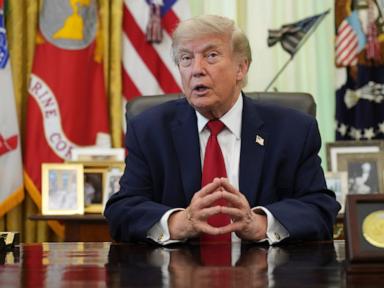
Donald Trump doesn't play by standard Washington rules. We know this. But his latest move takes political norm-shattering to a new level. On Tuesday, Trump announced that Republicans will hold a first-of-its-kind national convention ahead of November's midterm elections. The two-day event will storm into Dallas on September 9 and 10, completely bypassing the traditional four-year presidential cycle.
It's a massive gamble. Historically, the president’s party takes a beating during the midterms. Trump wants to break that pattern by essentially putting himself on the ballot when he isn’t actually on it. Without his name explicitly listed, the Republican base has historically been tough to mobilize. This gathering, which RNC Chairman Joe Gruters already dubbed a "Trump-a-palooza," aims to inject presidential-year energy into low-propensity voters who usually sit out midterm cycles.
If it works, Trump protects his razor-thin congressional majorities. If it flops, it's an incredibly expensive rally that could sink vulnerable swing-seat candidates by anchoring them to a controversial figure. Let's look at exactly what's happening and why this reshapes the 2026 political map.
The High Stakes Of Losing Congress
House Speaker Mike Johnson didn't mince words at the recent Faith and Freedom Coalition conference. He made it clear that if Democrats flip Congress, impeachment isn't even the biggest worry. Committees will turn into investigative machines targeting the administration's allies, donors, and cabinet members.
Right now, Republicans hold incredibly slim majorities in both chambers. A midterm convention is a direct response to that vulnerability. The entire event is designed to give maximum visibility to candidates in tight races. By giving them a national stage right before early voting begins, the RNC hopes to create a permanent polling bump.
Trump laid out his vision on Truth Social, promising a mix of working-class Americans, innovators, and "lots of Great Entertainment." It’s a rally on steroids, meant to remind voters of his administration's legislative goals and economic platform since 2024.
Why Dallas Matters
Choosing Texas wasn't an accident. The state is currently home to one of the most volatile and expensive Senate matchups in the country. Republican Attorney General Ken Paxton is facing off against charismatic Democratic state Representative James Talarico.
Paxton grabbed the nomination after a brutal primary where, backed by Trump, he unseated long-serving Senator John Cornyn. But Paxton carries serious political baggage. His past legal fights, including an impeachment trial and securities fraud cases, have Republican strategists terrified that a normally safe Texas seat could turn into an expensive defense operation.
Recent polling shows the Paxton-Talarico race is a neck-and-neck toss-up. By placing the national convention right in Dallas, Trump is forcing national GOP donors to dump resources into Texas while trying to supercharge local conservative turnout. It also draws attention to recent Republican redistricting efforts in the state, where the GOP wants to secure five additional U.S. House seats.
The Financial Divide Between RNC And DNC
The Democratic National Committee toyed with organizing its own midterm convention earlier this year but quietly killed the idea. Frankly, they couldn't afford it. The DNC has struggled with sluggish fundraising and millions in debt, choosing instead to save its cash for local party infrastructure and the 2028 presidential race.
DNC Executive Director Roger Lau argues that the Republican convention is a tactical blunder. In his view, the event will force moderate Republican candidates in swing districts to stand right next to Trump, tying them to deeply polarized national policies rather than letting them campaign on local kitchen-table issues.
Democrats are already planning to weaponize the convention in their ad campaigns. They plan to show moderate voters that every down-ballot Republican candidate is completely aligned with Trump’s federal agenda.
How To Track The Convention’s Impact
If you want to see if this historic experiment actually works, don't just watch the speeches in September. Look at the data points that matter.
First, track the post-convention polling in competitive suburban districts, specifically in Texas, Arizona, and Georgia. If vulnerable Republicans see a boost after September 10, the gamble paid off.
Second, watch the RNC’s small-dollar fundraising metrics during the broadcast. If the event fails to spark a massive wave of small donations, it means the base is fatigued.
Finally, monitor early voting turnout numbers in Texas once October rolls around. That will be the ultimate test of whether Trump's Dallas spectacle successfully woke up the low-propensity voters he needs to keep control of Capital Hill.