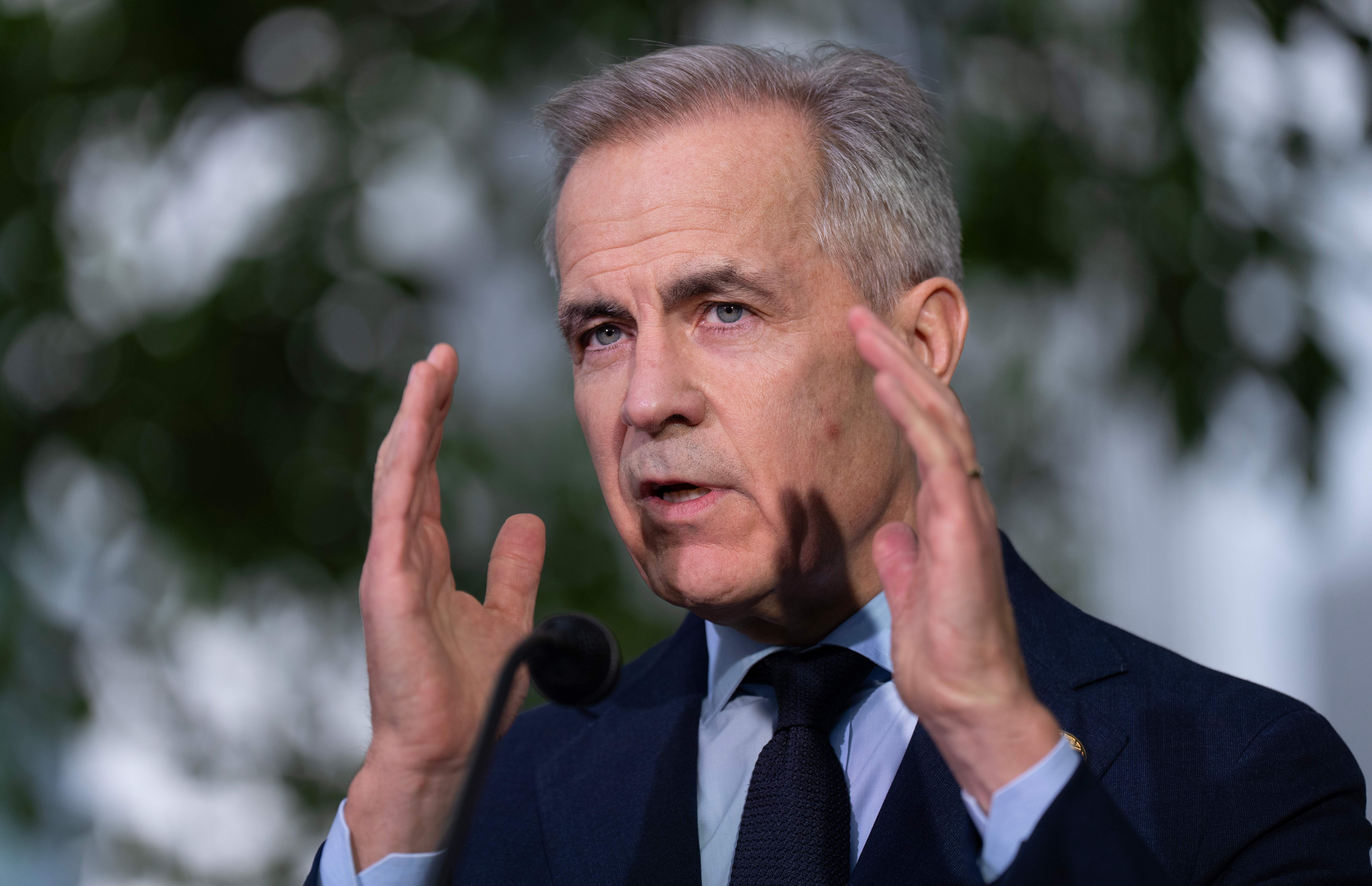
Canadian Prime Minister Mark Carney’s November 18, 2026, bilateral meeting with U.S. President Donald Trump on the margins of the Asia-Pacific Economic Cooperation (APEC) summit in Shenzhen exposes a structural rupture in North American commercial integration. While surface-level reporting frames the 20-minute encounter as an update on "complex" tariff negotiations, the underlying reality is an exercise in geopolitical arbitrage. Ottawa is actively executing a dual-track trade policy: extracting rapid, linear tariff relief from Beijing on primary commodities while absorbing prolonged friction with Washington over high-value industrial supply chains.
To evaluate whether this strategy strengthens Canada’s negotiating position or triggers severe retaliatory blowback, analysts must strip away diplomatic rhetoric and examine the mechanics of comparative advantage, rules-of-origin enforcement, and asymmetric economic leverage.
The Structural Divergence Linear Commodity Deals Versus Integrated Supply Chains
The core mechanism driving Carney’s characterization of U.S. talks as "more complex" than Chinese negotiations lies in the fundamental difference between inter-industry trade and intra-industry trade.
Canada’s commercial relationship with China operates primarily as an inter-industry exchange. Canada exports raw and lightly processed inputs—specifically canola, pork, halibut, lobster, crab, steel, liquefied natural gas, and crude oil. China exports finished consumer goods and capital equipment. Because these value chains rarely cross the same border multiple times during assembly, tariff reductions act as simple binary switches. In Shenzhen, Carney secured a $400-million relief package reducing tariffs on Canadian pork and seafood, extended tariff relief on canola and shellfish, and resolved over 90 percent of bilateral trade irritants. When neither party shares an integrated manufacturing floor, concessions carry minimal structural spillover.
Conversely, the Canada-U.S. relationship operates on deeply integrated intra-industry trade governed by the Canada-U.S.-Mexico Agreement (CUSMA). A single automotive transmission or aerospace component crosses the 49th parallel multiple times before final assembly. Modifying tariff schedules or regulatory standards in this environment does not merely adjust the price of an end product; it alters the cost structure of intermediate inputs across North American factories.
This structural distinction explains why Ottawa can close agreements with Beijing in days while negotiations with Washington stall over three specific bottlenecks:
- Automotive Manufacturing: U.S. trade negotiators, led by U.S. Trade Representative Jamieson Greer, remain focused on preventing excess global manufacturing capacity from entering the North American market. While bilateral trade in auto parts and agricultural products remains largely duty-free, final vehicle assembly and electric vehicle (EV) supply chains face stringent domestic content demands.
- Primary Metals (Steel and Aluminum): Washington’s imposition of tariffs on Canadian steel and aluminum directly increases input costs for U.S. downstream sectors—including aerospace, shipbuilding, and general manufacturing—yet remains a core pillar of White House industrial protectionism.
- Rules of Origin and Transshipment: Washington’s overarching trade doctrine in late 2026 centers on blocking Chinese industrial inputs from using neighboring economies as export platforms into the United States.
The Economics of Geopolitical Arbitrage and the Auto Sector Threat
During his Shenzhen press briefings, Carney introduced an explicit counterfactual to North American integration: if Canadian autoworkers are not fully utilized within a North American framework, Ottawa will pivot toward Chinese automakers. In game-theoretic terms, Carney attempted to establish a credible outside option—a Best Alternative to a Negotiated Agreement (BATNA)—to raise the cost of U.S. intransigence.
However, evaluating this threat through operational supply chain economics reveals a severe vulnerability. North American automotive plants are capital-intensive facilities engineered specifically for U.S. safety standards, North American consumer preferences, and continental logistics networks. Re-tooling Canadian assembly lines for Chinese original equipment manufacturers (OEMs) introduces three immediate operational friction points:
- Market Access Severance: Any vehicle assembled in Canada utilizing Chinese battery technology, software architecture, or significant Chinese components would immediately fail CUSMA rules-of-origin thresholds. Worse, under Washington’s November 2026 proposed tariff framework targeting excess capacity—which stacks additional duties onto existing Section 301 tariffs—such vehicles would face prohibitive border taxes upon attempting to enter the U.S. market. Without access to the American consumer base, Canadian automotive plants lack the domestic scale required to operate profitably.
- Infrastructure and Export Bottlenecks: Redirecting heavy industrial output away from north-south rail and highway corridors toward Pacific ports requires massive capital expenditure. While Ottawa has moved to fast-track projects like doubling the capacity of the Port of Vancouver and expanding West Coast pipeline infrastructure, physical port bottlenecks cannot be resolved on the timeline of a trade negotiation cycle.
- Retaliatory Spillover: White House trade adviser Peter Navarro publicly labeled Carney’s remarks an attempt to play China off the United States, warning that Beijing’s state-subsidized industrial base would overwhelm Canadian domestic manufacturing. In Washington, signaling alignment with Chinese industrial capacity transforms a technical tariff dispute into a national security issue, hardening congressional and executive resistance against granting Canada exemptions from Section 232 or excess-capacity duties.
Deconstructing the Hierarchy of Issues Hypothesis
Following his 20-minute meeting with Trump, Carney stated that Canada’s expanding commercial ties with China do not rank near the top of the U.S. president’s hierarchy of issues. A rigorous assessment of Washington’s concurrent trade actions suggests this conclusion conflates tactical distraction with strategic indifference.
In November 2026, the U.S. Trade Representative formally proposed additional tariffs ranging from 15 percent to 35 percent across 14 economies—including China and the European Union—explicitly citing unreasonable excess manufacturing capacity. Simultaneously, Washington delayed tariff determinations on Mexico and Norway specifically to negotiate terms that curb bilateral trade surpluses and stop Chinese industrial inputs from routing through Mexican factories into the United States.
Trump’s lack of immediate pushback during a brief summit pull-aside does not indicate American approval of a deeper Ottawa-Beijing nexus; rather, it reflects sequential prioritization. Washington’s trade apparatus is currently executing a staged containment strategy:
- Stage One: Establish baseline tariff walls against primary excess-capacity producers (China, the EU, and major Asian exporters) while carving out narrow bilateral exemptions, such as the $30-billion U.S.-China consumer goods exemption tied to rare earth concessions.
- Stage Two: Seal the southern perimeter by pressuring Mexican President Claudia Sheinbaum to restrict Chinese input transshipment.
- Stage Three: Enforce northern perimeter compliance during the pursuit of an interim U.S.-Canada trade agreement targeted for the end of 2026.
Carney’s assertion that Canada exports "canola, pork, and halibut" rather than "cutting-edge semiconductors" accurately describes historical trade flows, yet it ignores Ottawa’s newly announced pivot. By approving a full-service Canadian branch for the Agricultural Bank of China, launching a 2027 Canada-China Year of e-Commerce, and targeting bilateral cooperation in financial services, clean energy, and technology, Ottawa is moving directly into sectors that trigger U.S. national security reviews. Once Canadian financial and digital infrastructure integrates with Chinese state-backed institutions, Washington will treat the northern border as a leak in its economic containment perimeter.
The Diversification Fallacy Accounting Identity Versus Market Gravity
Ottawa’s broader strategic narrative rests on trade diversification. By signing two new free trade agreements and expanding ties across Asia, Canada now boasts 20 free trade agreements covering 60 countries, theoretically granting preferential access to two billion consumers and two-thirds of global GDP.
In international economics, this is a classic misapplication of market size metrics over the Gravity Model of Trade. The gravity model demonstrates that bilateral trade volume is proportional to the economic mass of two countries and inversely proportional to the distance and friction between them. Treaties eliminate statutory tariffs, but they do not repeal geography, time zones, regulatory alignment, or supply chain inertia.
APEC’s 21 member economies account for 80.6 percent of Canada’s total merchandise trade, yet that figure is overwhelmingly skewed by a single APEC member: the United States. Removing tariffs on Canadian financial technology or clean energy exports to Southeast Asia does not create immediate demand capable of offsetting a 10 percent to 25 percent tariff shock in the American market. Furthermore, expanding commodity exports to China increases Canada’s exposure to monopsony risk—a market condition where a single dominant buyer dictates prices and weaponizes market access during diplomatic disputes, as Canadian canola and pork producers experienced during previous bilateral freezes.
Operational Vulnerabilities in Ottawa's Dual-Track Playbook
Executing a simultaneous rapprochement with Beijing and an interim tariff relief negotiation with Washington creates three distinct operational risks for Canadian policymakers and corporate leaders:
- The Asymmetric Leverage Trap: Beijing understands that Ottawa is using China deals to demonstrate independence from Washington. This visibility weakens Canada’s bargaining power in China, allowing Chinese negotiators to extract institutional concessions—such as banking licenses and tech partnerships—in exchange for reversible agricultural tariff relief.
- Domestic Political Fracture: While U.S. industrial unions—including the International Association of Machinists (IAM)—oppose Trump’s steel and aluminum tariffs due to rising domestic manufacturing costs, political consensus in Washington remains firmly anti-Beijing. Even incoming Congressional Democrats who prioritize ending the trade war with Canada will refuse to defend Ottawa if Canadian policy appears to facilitate Chinese market entry into North America.
- Capital Allocation Paralysis: Private sector capital requires regulatory certainty. When a prime minister suggests pivoting the automotive sector toward Chinese OEMs while simultaneously pursuing an interim CUSMA stabilization deal by year-end, corporate boards freeze capital expenditure. Neither North American nor Asian manufacturers will commit multi-billion-dollar investments to Canadian facilities until rules-of-origin permanence is established.
Strategic Execution for Navigating North American Trade Friction
To prevent the dual-track diplomacy displayed in Shenzhen from resulting in punitive U.S. tariffs, Ottawa must separate its commodity trade expansion from its industrial and technological alignment.
First, Canadian negotiators must codify a strict sector firewall ahead of the year-end interim U.S. trade talks. Ottawa should explicitly cap its Chinese commercial expansion to non-strategic primary commodities—agriculture, seafood, forestry, and conventional energy—while halting state-backed joint ventures in automotive manufacturing, critical minerals processing, and digital infrastructure. Offering Washington verifiable, joint customs enforcement on Chinese industrial inputs will eliminate the primary pretext for U.S. tariffs on Canadian steel, aluminum, and vehicles.
Second, corporate supply chain managers operating across the Canada-U.S. border must immediately audit their Tier 2 and Tier 3 component sourcing. With U.S. Trade Representative public hearings on excess-capacity tariffs scheduled for January 25, 2027, any Canadian exporter utilizing Chinese-origin metals, chemicals, or electronic sub-assemblies faces imminent duty stacking. Firms must ring-fence North American production lines from Asian supply inputs now, treating CUSMA rules-of-origin compliance not as a customs formality, but as the sole mechanism preserving duty-free access to the United States.


