Whenever American munitions begin detonating across the desert outposts of the Middle East, a predictable pattern emerges in the diplomatic corridors of Muscat, Geneva, and Tehran. The bombs fall, dust rises, and almost immediately, a senior Iranian diplomat signals that the Islamic Republic is ready to talk.
To the casual observer in Washington, this looks like a triumph of military deterrence. The narrative is simple: pressure works, and raw power has forced a stubborn adversary back to the negotiating table.
This interpretation is not just wrong; it is dangerous. Tehran’s sudden willingness to engage in diplomacy during periods of intense military pressure is not a sign of surrender, but a sophisticated defense mechanism designed to neutralize the impact of Western military action. By offering a diplomatic off-ramp precisely when tensions reach a boiling point, Iran successfully splits Western coalitions, halts momentum for sustained military campaigns, and buys the necessary time to reconstitute its asymmetric capabilities on the ground. This is the double game of Persian Gulf diplomacy, a playbook refined over four decades of survival.
The Mirage of Capitulation
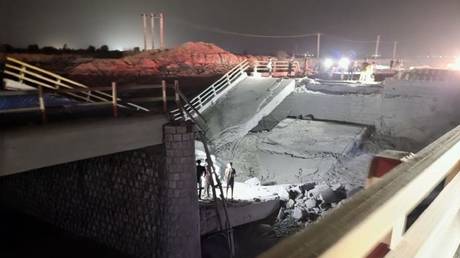
For weeks, American and allied air forces have hammered infrastructure linked to Iran's network of regional allies. Missile storage facilities, command nodes, and logistics hubs have been turned to rubble. Yet, even as the smoke cleared, Iran's chief negotiator made it known through backchannels that the country remains open to resolving long-standing disputes, including the nuclear file and regional security frameworks.
The timing is exquisite. By projecting an image of diplomatic flexibility at the exact moment of military vulnerability, Tehran appeals directly to the deep-seated aversion in Western capitals toward another endless war.
It is a calculated play on the internal political vulnerabilities of the United States. No American president wants to slide into a direct conflict with a regional power during an election cycle or a domestic economic transition. Tehran understands this political anxiety intimately. By offering a sliver of hope for a peaceful resolution, they hand Western leaders a domestic political justification to cease military strikes. The message is clear: we can talk, or we can fight, but if you keep bombing, the responsibility for the wider war rests on your shoulders.
This strategy works because it exploits the fundamental mismatch in goals between Washington and Tehran. The United States uses military force to establish deterrence, a temporary state of quiet. Iran uses asymmetric warfare and diplomatic theater to achieve long-term survival and regional hegemony. For Tehran, a tactical pause under the guise of diplomacy is a small price to pay for safeguarding its broader strategic goals.
The Muscat Backchannel and the Art of Tactical Retreat
To understand how this mechanism operates, one must look at the quiet capital of Oman. Muscat has long served as the primary diplomatic pressure valve between Washington and Tehran. It is here, far from the glare of television cameras, that messages are passed through Swiss intermediaries or during quiet, low-level meetings in seaside hotels.
When American bombs strike targets in Syria or Yemen, the traffic on the Muscat backchannel does not stop. It intensifies.
During these quiet exchanges, Iranian negotiators do not beg for mercy. Instead, they present a carefully curated list of grievances, framed in the language of international law and sovereign rights. They argue that their actions, and those of their regional partners, are purely defensive measures triggered by Western aggression.
[Western Military Strike]
         │
         ▼
[Tehran Signals "Readiness to Talk" via Oman]
         │
         ▼
[Western Capitals Debate De-escalation]
         │
         ▼
[Military Operations Pause / Scale Back]
         │
         ▼
[Iran Rebuilds Proxy Stocks & Fortifies Positions]
This framing is highly effective. It shifts the international conversation from Iran's regional destabilization to the legality of Western military strikes. By the time diplomats finish debating the merits of a cease-fire or a new round of talks, the immediate military momentum of the United States has withered. The opportunity to deliver a decisive blow is lost, replaced by the tedious, slow-moving machinery of international diplomacy.
Why Military Pressure Fails to Alter the Core Calculus
The fundamental flaw in the Western doctrine of "peace through strength" when applied to Iran is the assumption that the regime in Tehran operates on the same cost-benefit analysis as a Western democracy.
A Western government must answer to voters, protect its economy, and justify military casualties. The ruling elite in Tehran answers to a highly ideological core, maintains an economy specifically structured to withstand sanctions, and views regional influence not as a foreign policy choice, but as an existential requirement.
Consider the structure of Iran’s regional network. The groups making up this network are not mere puppets controlled by a string from Tehran. They are deeply embedded local actors with their own domestic political agendas. When the United States strikes a facility in Iraq or Syria, it may disrupt logistics for a few weeks, but it does not erase the social, political, and religious ties that bind these groups to their communities.
Furthermore, the financial cost of this network is remarkably low. Asymmetric warfare is cheap. A drone that costs twenty thousand dollars to manufacture can tie down a multi-billion-dollar Western naval task force for months. When the United States launches millions of dollars' worth of air-defense missiles to intercept cheap ordnance, the economic math favors Tehran. Therefore, military strikes do not bankrupt the Iranian state or deplete its strategic depth. They merely force a temporary shift in tactics.
The Eastern Safety Net
Tehran's diplomatic confidence under fire is bolstered by a shifting global order. The era of isolated, unilateral Western sanctions dictating the behavior of middle powers is drawing to a close.
Today, Iran is backed by a quiet but powerful economic and strategic partnership with Beijing and Moscow. This alignment provides a critical safety net that immunizes Tehran against the worst consequences of Western pressure.
- The Oil Lifeline: Despite heavy Western sanctions, Iranian crude oil continues to flow to independent refineries in China. Paid for in yuan through regional banks, this trade bypasses the dollar-dominated global financial system entirely.
- Military Technology Exchange: The supply of Iranian drones to Russian forces has created a reciprocal relationship. In return, Tehran seeks advanced air defense systems, fighter jets, and cyber intelligence capabilities that complicate any Western military planning.
- Diplomatic Shielding: In the United Nations Security Council, China and Russia consistently use their veto power to block, dilute, or delay punitive resolutions targeting Iran or its regional activities.
With its eastern flank secured, the Iranian leadership knows that a Western military campaign cannot isolate them completely. The diplomatic offers made to the West are not born of desperation; they are made from a position of relative geopolitical stability.
The Fractured Western Strategy
While Tehran executes a unified strategy that seamlessly integrates military action, proxy operations, and diplomacy, the Western response remains deeply fractured.
Washington, London, and Paris rarely agree on the ultimate objective of their Iran policy. Is the goal regime change? Is it a return to a modified nuclear deal? Or is it simply containment?
Without a clear, unified objective, military strikes become an end in themselves rather than a tool to achieve a specific political outcome. This strategic vacuum plays directly into Iran's hands. When the United States launches strikes, European allies often urge restraint, fearing regional spillover, energy supply disruptions, or a surge in migration. Tehran senses this hesitation immediately.
By offering a diplomatic opening, Iran provides European capitals with the ammunition they need to pressure Washington to halt its military campaign. The alliance fractures, the strikes stop, and the status quo ante is restored, with Iran's influence intact and its nuclear program advanced just a little bit further.
The Danger of the Quiet Status Quo
The greatest risk of falling for Tehran's diplomatic overtures under fire is the normalization of a highly volatile status quo.
Each time the United States accepts a temporary lull in hostilities in exchange for vague promises of diplomatic progress, it implicitly accepts a new, higher baseline of regional instability. The red lines of yesterday become the accepted realities of today.
A policy that relies on periodic military strikes followed by immediate diplomatic retreats does not solve the Iranian challenge; it manages it at an increasingly unaffordable cost. It allows Tehran to dictate the tempo of conflict, turning the faucet of violence on and off to suit its strategic needs. If the West continues to mistake tactical retreat for genuine diplomatic readiness, it will eventually find itself facing an adversary that has used the cover of negotiations to cross the nuclear threshold and cement its hold over the region's shipping lanes and sovereign states. The choice is not between war and diplomacy, but between a clear-eyed strategy that recognizes Iranian diplomatic overtures for what they are, and a policy of self-delusion that mistakes a pause in the fighting for a path to peace.