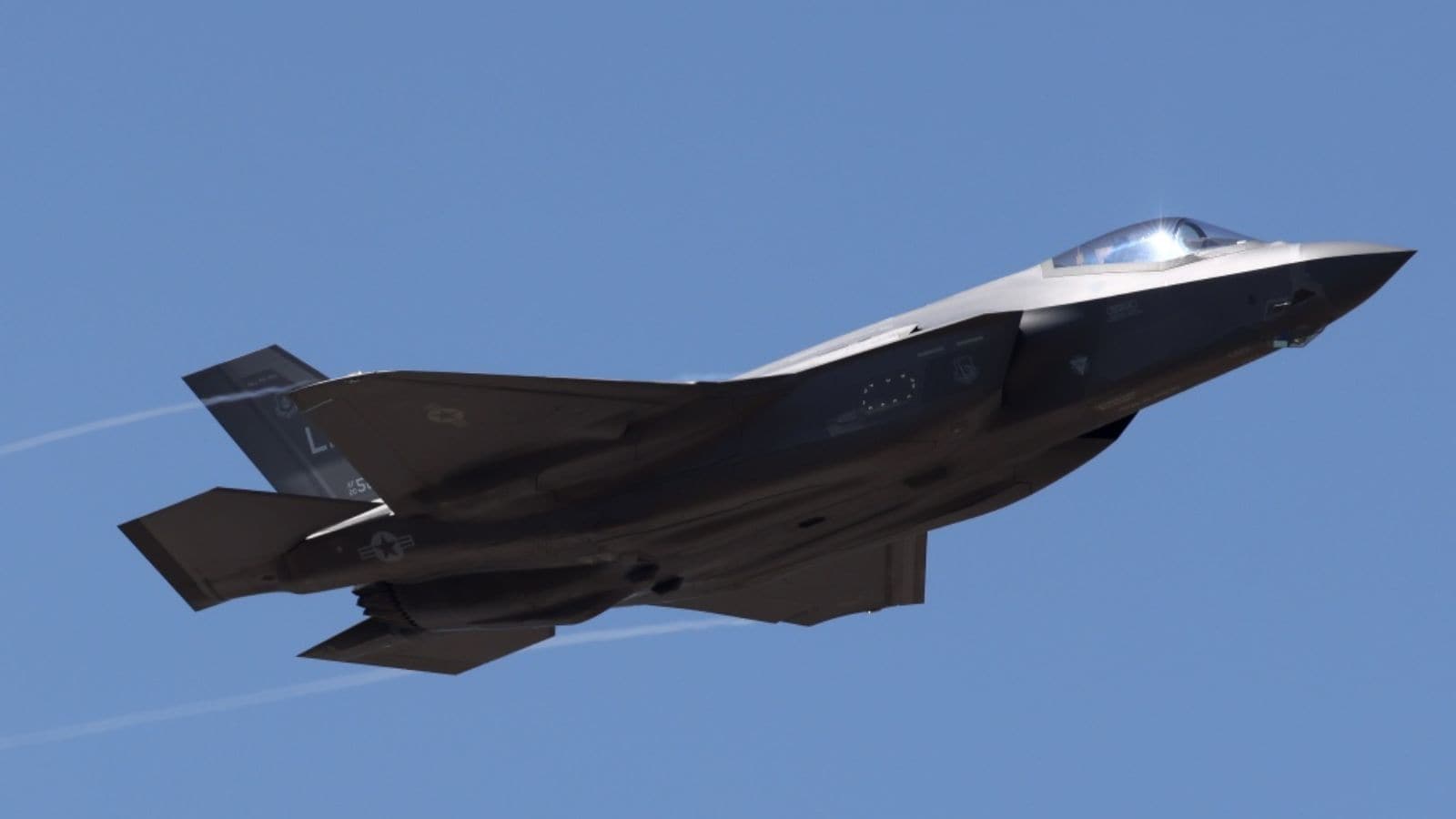
The Pentagon and Lockheed Martin have locked in a ten-year plan to build 850 F-35 fighter jets, a move framed as industrial stability that actually binds taxpayers to a fragile, high-cost airpower model for decades.
On paper, a multi-year commitment covering 850 F-35 jets looks like a triumph of defense procurement. Predictable volume is supposed to keep factory lines humming, prevent sudden layoffs among skilled machinists, and give suppliers the confidence to invest in tooling. I have watched defense buyers promise those exact efficiencies for thirty years. Rarely do they arrive on schedule or at the advertised discount.
A ten-year production horizon sounds reassuring when you sit inside a conference room in Arlington or Fort Worth. Out on a flight line, ten years is an eternity of software patches, engine wear, shifting threat maps, and spare-parts shortages. When the Pentagon commits to hundreds of additional F-35 jets over a decade, it is not merely buying airframes. It is locking in a massive sustainment bill that dwarfs the initial sticker price.
Why Multi-Year Volume Rarely Lowers Real Costs
Defense contractors love long-term volume commitments because backlog equals valuation. Wall Street rewards steady multi-year order books with higher multiples, and executives can walk into board meetings pointing to a decade of guaranteed work.
Yet unit cost savings in complex aerospace programs rarely behave like they do in consumer electronics. Building more F-35 jets does not automatically strip out labor hours when engineering changes keep arriving mid-production. Every block upgrade, radar refinement, or cooling fix introduces out-of-station work on the assembly floor. Out-of-station work is where manufacturing margins and schedules go to die.
Consider a hypothetical example to see how the math bends against buyers. Suppose a prime contractor agrees to shave five percent off the flyaway cost of an airframe in exchange for a ten-year order guarantee. If depot maintenance, engine overhaul intervals, or mission-capable rates lag behind projections, the operating cost over the aircraft's service life can easily exceed the upfront savings by orders of magnitude.
Procurement officials often treat production volume as a cure-all for industrial fragility. It is not. Volume spread across an overextended supply chain can simply mask bottlenecks until a single tier-two vendor misses a delivery window and stalls dozens of jets at once.
The Illusion of Supply Chain Certainty
Aerospace supply chains are pyramids built on narrow points. A specialized alloy forging, a custom actuator, or a rare-earth magnet assembly might come from one or two qualified facilities.
Signing up to build 850 F-35 jets over ten years does not magically create backup suppliers overnight. Qualifying a new aerospace component takes years of testing, metallurgical verification, and airworthiness sign-offs. Until those secondary sources exist, a long production schedule simply stretches a single point of failure across a decade.
- Single-source tooling leaves assembly lines exposed to localized labor strikes, equipment breakdowns, or cyber disruptions.
- Inflation adjustments written into long contracts can quietly erode initial price assumptions when raw material and wage pressures spike.
- Software and avionics integration frequently paces delivery readiness more than sheet metal or composite skins.
Sustainment Is the Real Battlefield
Ask any veteran logistics officer what keeps them awake at night, and they will talk about sustainment costs long before they mention top speed or stealth coatings. A fighter jet is a rolling data center wrapped around a high-temperature turbine engine. Without spare parts, test gear, and trained technicians, even the sharpest airframe sits idle on the ramp.
For years, Pentagon oversight reports have warned that operating and support expenses represent the lion's share of total program ownership over a multi-decade lifecycle. Committing to another 850 F-35 jets expands the fleet footprint that depots and forward bases must feed. Every additional aircraft requires depot bays, supply chain inventory, and technical manuals kept current across multiple variants.
Here is how the strategic trade-offs look when you weigh upfront production certainty against long-term operational reality.
| Dimension | Ten-Year Production Push | Incremental Modernization |
|---|---|---|
| Industrial Predictability | High visibility for primes and major tiers | Higher risk of boom-bust order cycles |
| Fleet Flexibility | Locks in large numbers of current-standard jets | Leaves room to pivot toward newer concepts |
| Sustainment Burden | Grows substantially with every delivered hull | Scales more gradually, though unit overhead persists |
| Upgrade Friction | Retrofitting hundreds of jets becomes costly | Fewer hulls mean easier baseline alignment |
That table highlights a tension procurement leaders rarely state plainly. Buying at scale helps keep the industrial base intact, yet every hull added to the inventory expands the long-term maintenance tail.
Readiness Versus Fleet Size
Size on paper does not equal sorties in the air. A smaller fleet with high mission capable rates can generate more combat power per dollar than a larger fleet stuck waiting on parts or depot turnarounds.
When F-35 jets wait for specialized components or software clearance, squadrons feel the squeeze in pilot flight hours. Fewer flight hours mean less muscle memory for pilots and steeper training curves for junior maintainers. Over a ten-year span, those small readiness drags compound into real operational limits.
What Competitors and Drones Change About the Equation
No ten-year aircraft plan exists in a vacuum. Air warfare has shifted sharply toward distributed sensing, long-range stand-off munitions, and unmanned combat systems operating alongside crewed fighters.
Even the most capable stealth fighter faces a brutal cost-exchange ratio if it is tasked with routine patrols or high-risk saturation missions that cheaper autonomous platforms could handle. Putting hundreds of high-value crewed F-35 jets into the production pipeline over a decade raises an uncomfortable question: are we buying the right mix of platforms for the fights of the 2030s, or are we funding yesterday's force structure at maximum scale?
Critics of heavy crewed commitments argue that money tied up in large airframe buys crowds out experimentation in attritable drones, resilient communications links, and dispersed munitions production. Defenders counter that crewed stealth remains indispensable in contested airspace where complex command-and-control decisions cannot be handed over to autonomous systems.
Both sides have a point, and pretending the choice is simple is dishonest. Autonomous wingmen still need mature teaming software, rugged datalinks, and proven doctrine before they can replace crewed fighters at scale. At the same time, treating a ten-year crewed production run as untouchable risks leaving too little room for rapid adaptation.
The Political Gravity of Defense Programs
Once a program reaches the scale of the F-35, it develops its own political gravity. Subcontractors operate in dozens of states, jobs are tied to steady deliveries, and allied nations rely on shared logistics pipelines.
That political weight is a double-edged sword. It gives the program durability that smaller defense initiatives envy. It also makes course corrections painfully slow when operational needs shift or cost overruns flare up.
I have seen plenty of defense programs billed as the final word in air dominance, only to discover that no single platform solves every tactical problem. A ten-year commitment to 850 F-35 jets gives Lockheed Martin and its partners a powerful runway, and it gives the Pentagon a clear production target. It does not, by itself, fix spare-parts bottlenecks, guarantee affordable flight hours, or settle how crewed fighters will fit alongside autonomous systems a decade from now.
The real test of this agreement will not happen at the signing ceremony or on the factory floor in Fort Worth. It will happen every month on the flight line, where the Pentagon has to prove it can actually fly, maintain, and upgrade the fleet it insists on building.