The sky above Tehran does not turn dark all at once. It fades through a bruised purple before settling into a nervous, suffocating blackness. For nine straight days, the city waited for the same sound. On the tenth night, it came precisely when the teacups were being cleared from low wooden tables.
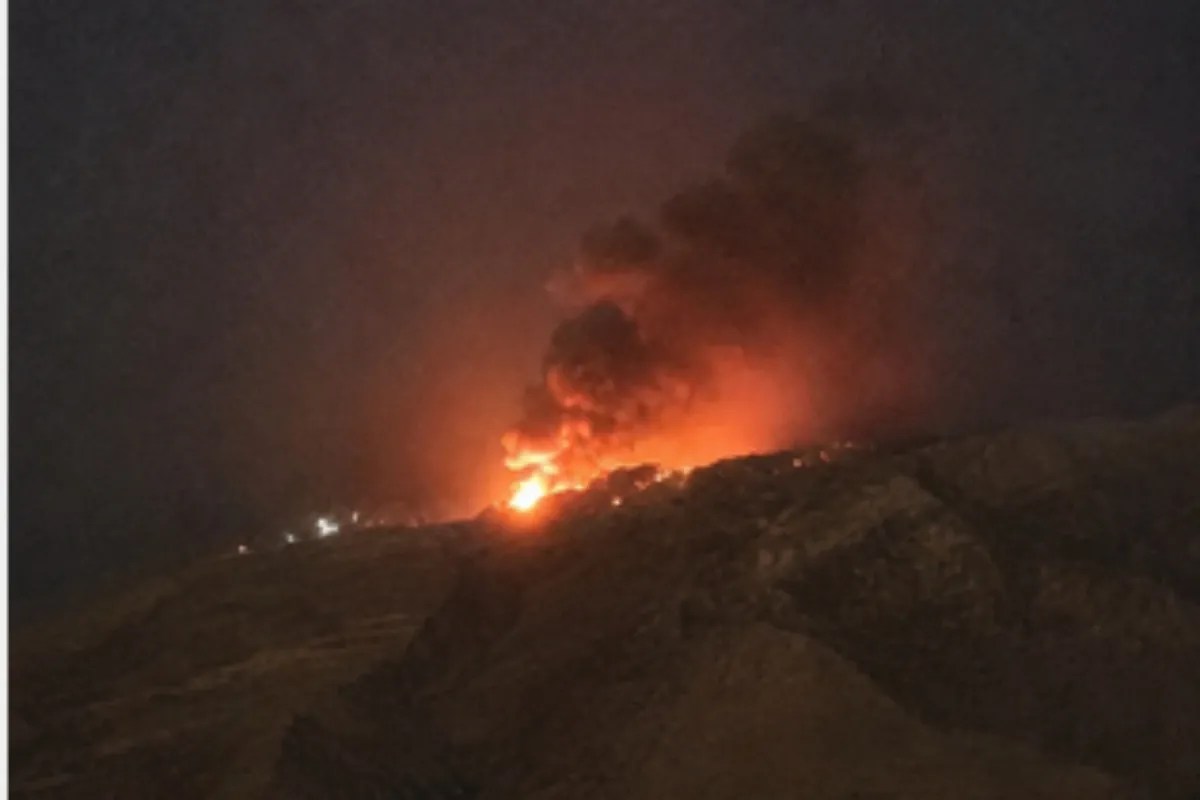
A low vibration began deep within the earth before it reached the ear. Windows rattled softly in their aluminum frames. Then came the tearing sky, followed by the dull, thumping concussions of air strikes along the horizon.
Military briefings will later log this as an operational cycle. They will speak of strategic targets, targeted munitions, and military asset neutralization. But on the ground, war is never measured in acronyms or casualty reports. It is measured in the sudden, violent rattling of a kitchen door. It is measured in the way a mother reaches for her son's forearm in total silence, waiting to hear whether the next impact lands two miles away or twenty yards.
The Rhythm of Escalation
Conflict has a tempo. When two military superpowers clash across hundreds of miles of open desert and sea, the opening hours are defined by shock. By the tenth consecutive night, shock gives way to a grim routine.
Sirens no longer bring panic; they bring a dull, mechanical fatigue. Families keep their bags packed by the front door. A flashlight, two bottles of water, deed papers folded in plastic wrap, and warm jackets.
Across the Persian Gulf and into the command centers of Washington, maps glow with red and green coordinates. To the planners, these ten nights represent a measured pressuring campaign. The goal is simple on paper: disrupt command networks, neutralize missile sites, and force a political retreat.
Yet physics and human pride rarely honor neat tactical plans. Every missile that lands leaves behind a crater filled with anger.
When the retaliatory barrages began, Iranian forces launched salvoes of ballistic missiles and armed drones toward offshore assets and regional outposts. The response was immediate, predictable, and escalating.
Consider what happens next when two forces convince themselves that backing down is equivalent to annihilation. Neither side can afford to absorb the final hit without returning it. The math becomes brutal. Strike leads to counterstrike. Counterstrike demands retribution.
What Strategic Maps Hide
Strip away the geopolitical jargon for a moment. Look at what happens inside a neighborhood under a sustained campaign.
Electricity dies in waves. First, the streetlights flicker and fail as sub-stations go offline to protect the main grid. Then the cell towers lose power, dropping signals mid-sentence. A voice saying "We are safe in the..." turns into dead static.
In the dark, rumors move faster than shrapnel.
Is the port hit? Did the fuel depots explode? Is the water safe to drink?
In hypothetical scenarios analyzed in think-tank papers, civil populations are treated as static variables. They are assumed to stay put, obey curfews, and endure until diplomatic channels reopen. In reality, people run. They fill old sedans with extra gasoline cans. They drive toward the mountains or rural villages where there are no radar stations, no command bunkers, and no strategic value.
The roads out of major hubs become choked with headlights. A quiet panic takes hold. Drivers don't honk. They just stare straight ahead through windshields covered in fine particulate dust kicked up by distant explosions.
The Illusion of Surgical Precision
Modern warfare sells a promise of precision. We are told that smart weapons hit only military infrastructure, sparing the civilian grid around them.
That promise ignores the collateral damage of fear.
A strike on an airbase three miles outside city limits still shatters the windows of a primary school. The shockwave of a bunker-busting payload still cracks the foundation of an apartment complex built half a century ago. The air still smells of scorched earth, burnt wiring, and ozone for hours afterward.
When a government announces retaliatory actions, it framed the move as national defense. When the opposing power responds, it calls it deterrence.
In the middle sits the city.
Markets run low on fresh flour and kerosene. Banks limit cash withdrawals because the networks are down. Pharmacists hand out heart medication in half-doses to stretch their inventory through the end of the week.
The true toll of ten nights of bombardment is not just the destroyed radar installations or burnt-out missile launchers. It is the slow, steady grinding down of daily life until survival becomes the only remaining objective.
The Long Road After the Tenth Night
Diplomats in European capitals issue urgent calls for restraint. Emergency sessions are requested. Statements are drafted in cautious, neutral language, urging all parties to de-escalate immediately.
Words ring hollow when the ground is still warm from high-explosive ordnance.
When dawn breaks after the tenth night, the sky turns a pale, chalky gray. Smoke trails from burnt industrial zones linger in the upper atmosphere, catching the morning light before drifting slowly out toward the water.
People step out onto their balconies. They sweep broken glass off the concrete. They test the kitchen tap to see if the pressure has returned. They look at their neighbors, nod once, and say nothing at all.
The strikes may stop for a day, or they may double in intensity by nightfall. Nobody knows. The only certainty left in the morning chill is the knowledge that once a conflict reaches this momentum, stopping it requires far more courage than continuing it.
A boy sits on the curb holding a radio tuned to state broadcasts. Static washes over the speaker, punctuated by brief bursts of urgent commentary and marching music. He turns the dial slowly, looking for music, or a weather report, or anything that sounds like yesterday.
There is only the static.