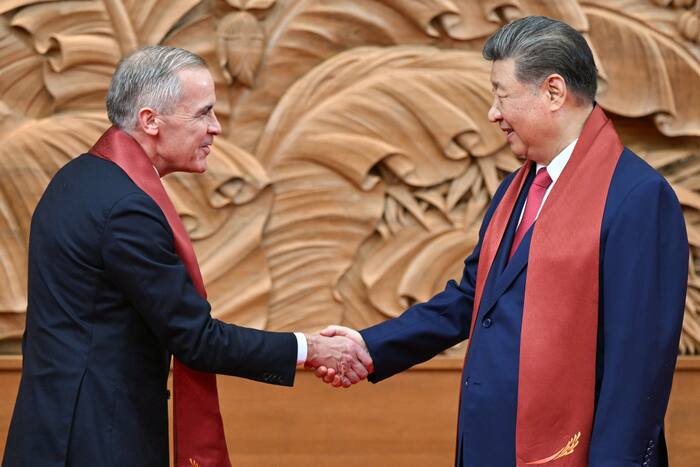
Canada is trying to fix its broken relationship with Beijing, and Taipei isn't staying quiet about it. When Mark Carney's government signals a willingness to warm up ties with China, Taiwanese officials see a movie they've already watched—and they know how badly it ends.
If you've followed Canadian foreign policy over the last few years, you know it's been a rollercoaster. Frosty doesn't even begin to cover it. Between the detention of Michael Kovrig and Michael Spavor, tariff disputes over canola and electric vehicles, and allegations of foreign interference in Canadian elections, Ottawa and Beijing have been locked in a deep freeze. Now, with Prime Minister Mark Carney looking to diversify Canada's trade partnerships and steady the economy, whispers of a diplomatic thaw with China are getting louder. Taiwan's message to Ottawa is blunt. Don't trade your long-term security for short-term market access. Meanwhile, you can read similar events here: How a Mountain Runner Became an Untouchable Ghost.
Honestly, Taipei has every reason to speak up. When major democracies cozy up to Beijing for economic relief, Taiwan usually pays the diplomatic price, and those democracies often end up regretting the bargain anyway.
What Taiwan Actually Said to Ottawa
Taiwan's warning to Mark Carney's administration isn't just routine diplomatic chatter. It's a calculated intervention aimed at stopping Ottawa from softening its Indo-Pacific Strategy just to get Chinese tariffs lifted or secure new investment. To explore the bigger picture, we recommend the recent report by The Guardian.
Representative Harry Ho-jen Tseng, Taiwan's top envoy in Canada, and senior officials in Taipei have repeatedly pointed out a hard truth about doing business with the Chinese Communist Party. Beijing uses trade as a weapon. They'll open their massive consumer market when it suits their political goals, and they'll slam the door shut the second a foreign government does something they don't like.
Think about what happened to Australia. In 2020, Canberra called for an independent investigation into the origins of COVID-19. Beijing didn't send a polite diplomatic note. They slapped punishing tariffs on Australian wine, barley, coal, and lobster, wiping out billions in exports overnight. Taiwan watched that unfold in real time, and they're reminding Carney that Canada isn't immune to the exact same playbook.
In fact, Canada already lived through a version of this. When Huawei executive Meng Wanzhou was arrested in Vancouver in 2018 on a U.S. extradition request, Beijing arbitrarily detained two Canadian citizens and blocked Canadian canola and pork imports. That wasn't a misunderstanding. It was state-sponsored coercion. Taipei's argument is simple: why walk back into a trap when you already know where the springs are hidden?
Mark Carney's Economic Dilemma
To understand why Carney is even entertaining closer ties with China, you have to look at the economic pressure sitting on his desk. Canada is an export-dependent nation facing massive headwinds.
First, there's the elephant in the room—trade friction with the United States. With Washington leaning heavily into protectionism and threatening tariffs on North American allies, Ottawa desperately wants to prove it isn't entirely reliant on the American market. For a former central banker like Carney, who spent years leading both the Bank of Canada and the Bank of England, diversifying trade risk is instinctual. China is the world's second-largest economy. Ignoring it feels like leaving money on the table.
Second, Canadian farmers and manufacturers are hurting. Beijing's retaliatory tariffs on Canadian canola oil, pork, and seafood—imposed in response to Ottawa's 100 percent tariff on Chinese-made electric vehicles—hit Western Canada particularly hard. Provincial premiers and agricultural lobby groups have been begging Ottawa to find a way to de-escalate.
So Carney faces a classic political squeeze. Does he hold the line on national security and democratic alliances, or does he cut a pragmatic deal with Beijing to give Canadian exporters some breathing room?
Taipei's warning is aimed directly at that temptation. Taiwanese officials aren't saying Canada can never talk to China. They're saying that if Ottawa treats Beijing as a normal, rules-based trading partner, Canada will get burned. Again.
The Hidden Costs of Beijing's Economic Embrace
When governments talk about "re-engaging" with China, they usually focus on export numbers and GDP growth. They rarely calculate the invisible costs until it's too late. Having watched dozens of countries navigate Beijing's economic statecraft over the past decade, I've noticed the same three traps show up every single time.
Supply Chain Chokeholds
China doesn't just want to buy your raw materials; it wants to dominate the processing and manufacturing stages so you can't function without them. Look at critical minerals. Canada sits on massive deposits of lithium, cobalt, and rare earth elements needed for clean energy and defense tech. For years, Chinese state-backed firms quietly bought stakes in Canadian mining companies until Ottawa finally stepped in and forced divestments. If Carney relaxes scrutiny to attract Chinese capital, Canada risks handing over control of the very resources its future economy depends on.
Quiet Diplomatic Self-Censorship
This is the part Taiwan worries about most. You don't have to sign a formal treaty with Beijing to lose your independence. It happens through quiet self-censorship. A trade minister decides not to attend a Taiwanese cultural event so they don't upset a pending agricultural deal. Parliament delays legislation on foreign interference because a trade delegation is visiting Shanghai. Slowly, almost imperceptibly, Beijing gets an informal veto over Canadian domestic and foreign policy.
Intellectual Property Drain
Canadian universities and tech startups have long been prime targets for aggressive technology transfer. The Canadian Security Intelligence Service (CSIS) has warned repeatedly that Beijing uses joint research ventures and corporate partnerships to siphon off sensitive dual-use technologies—innovations in AI, quantum computing, and aerospace that have military applications. Deeper commercial ties create more doors for that data to walk out of.
Why Taiwan Matters More to Canada Than Most People Realize
A lot of Canadians look at a map, see Taiwan sitting thousands of miles away across the Pacific, and wonder why Ottawa should risk upsetting a superpower over a small island. That's a massive blind spot.
Taiwan isn't just a symbol of democracy in Asia. It's the linchpin of the global economy.
Taiwan Semiconductor Manufacturing Company (TSMC) and its domestic ecosystem produce over 60 percent of the world's semiconductors and roughly 90 percent of the most advanced chips. Every modern car built in Ontario, every smartphone in a Canadian pocket, and every server running Canada's banking system relies on chips fabricated in Taiwan. If Beijing ever blockaded or invaded Taiwan, the global economy wouldn't just dip—it would freeze. Bloomberg Economics has estimated a war over Taiwan would cost the global economy around $10 trillion, dwarfing the 2008 financial crisis.
Beyond chips, Taiwan is already a reliable, rules-based trading partner for Canada. Unlike China, Taiwan doesn't use arbitrary detentions or sudden import bans to bully Ottawa. Canada and Taiwan signed a Foreign Investment Promotion and Protection Arrangement (FIPA) specifically because both sides play by international trade rules. When Taiwan warns Carney about China, they're speaking as a partner that actually respects contracts and sovereignty.
The Myth of Separating Trade From Security
For decades, Western leaders operated under a comforting theory. They believed you could compartmentalize your relationship with Beijing—cooperate on trade and climate change on Monday, and push back on human rights and cyberattacks on Tuesday.
That theory is dead. Xi Jinping's government doesn't separate economics from politics. Every major Chinese enterprise, whether state-owned or nominally private, operates under laws that compel it to assist the state's intelligence and strategic objectives when asked.
When Mark Carney's team suggests they can pursue "pragmatic" economic engagement with Beijing while keeping guardrails up on national security, Taipei hears echoes of European leaders from ten years ago. Germany tried that exact approach with Russian gas and Chinese manufacturing. Ask Berlin how well that worked out. Relying on an authoritarian regime for economic growth always creates leverage, and authoritarian regimes always use their leverage eventually.
What Canada Should Actually Do Instead
Turning down the temperature with Beijing doesn't mean Ottawa has to walk into a trap. If Carney wants to protect Canadian workers without compromising sovereignty or alienating democratic allies like Taiwan, there's a smarter path forward.
First, Ottawa needs to double down on trade diversification away from both Washington and Beijing. Canada already has comprehensive trade agreements with Europe (CETA) and the Indo-Pacific region (CPTPP). Strengthening ties with Japan, South Korea, Southeast Asia, and Taiwan gives Canadian exporters real alternatives without handing political leverage to the Chinese Communist Party.
Second, any engagement with Beijing has to be strictly reciprocal and transparent. If Chinese officials want Canadian tariffs lifted on EVs or want access to Canadian markets, Ottawa should demand verifiable, enforceable market access for Canadian farmers—backed by automatic snap-back tariffs if Beijing violates the terms. No more handshake deals based on goodwill.
Third, Canada must keep its Indo-Pacific Strategy intact. That means continuing Royal Canadian Navy transits through the Taiwan Strait alongside allies to defend freedom of navigation, backing Taiwan's meaningful participation in international organizations like the World Health Organization, and refusing to let Beijing dictate who Canadian officials can meet with.
Taiwan's warning to Mark Carney isn't anti-trade. It's a reality check from a democracy living right on the front lines of Beijing's coercion. Ottawa can either learn from Taipei's hard-won experience now, or pay a much steeper price later.


