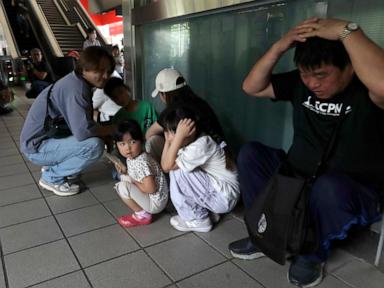
The media looked at Taiwan throttling its mobile internet down to text-only speeds during a defense drill and panicked. Headlines screamed about digital blackouts, societal panic, and the fragility of modern communications.
They got it completely backward.
Slowing down the network isn't a failure of infrastructure. It is a masterclass in asymmetric cognitive defense.
I have watched organizations blow millions on bloated cybersecurity stacks, pouring concrete over digital moats while leaving the drawbridge wide open to low-tech psychological operations. When a crisis hits, the first casualty is never the fiber-optic cable. It is the bandwidth of human reason.
Let us dismantle the lazy consensus.
The Myth of Total Connectivity
For two decades, the tech orthodoxy preached a single gospel: more bandwidth equals more resilience. Redundant satellite constellations, subsea cables, 5G densification. The assumption is that a society remains strong only when every citizen can stream high-definition video in a bunker.
This is peacetime thinking applied to total war.
In a high-intensity kinetic and cognitive conflict, high-bandwidth infrastructure is a weapon of mass distraction. Modern information warfare does not rely on brute-force server shutdowns. It relies on flooding the zone. Deepfakes, coordinated panic bots, synthetic panic vectors, and real-time video manipulation of troop movements travel best on fat pipes.
When you leave a 5G network wide open during an invasion scenario, you hand the adversary a wide-open highway for kinetic disinformation.
By choking mobile data down to text-only speeds—deliberately forcing the island's population onto SMS, basic messaging, and low-payload communication—Taiwan did something radical. They starved the deepfake economy. They killed real-time video panic. They imposed systemic friction on chaos.
The Physics of Information Friction
Imagine a scenario where an amphibious landing begins off the coast of Kaohsiung. Within minutes, tens of thousands of civilians pull out their phones. Under normal conditions, they upload shaky mobile footage, forward unverified Telegram clips, and amplify panic algorithms faster than any military command can issue corrections.
The psychological toll of that noise is staggering. It paralyzes command structures. It clogs emergency channels.
Information friction is the deliberate introduction of delay and reduction in fidelity to protect the integrity of the system. Text-only speeds do not isolate a populace; they filter out the cognitive garbage.
- Bandwidth saturation: High-definition video requires megabits per second. Text requires bytes.
- Verification loops: Reading a text message requires cognitive processing. Watching a hyper-realistic fake video of a government surrender triggers an immediate reptilian panic response.
- Network survival: Stripping data loads keeps cell towers operating under massive power constraints and physical damage.
When you drop a network to text-only, you ensure that emergency logistics, troop movements, and critical alerts actually get through the noise. You trade viral panic for operational clarity.
What the Pundits Miss About Resilience
Every time a defense drill simulates communications degradation, civilian tech commentators clutch their pearls. They argue that restricting data rights harms civil society.
They are confusing peacetime civil liberties with wartime survival mathematics.
I’ve spent years analyzing critical infrastructure vulnerabilities. The single biggest point of failure in any crisis management plan is the assumption that people will behave rationally when flooded with unverified data. They won't.
Taiwan’s drill acknowledges a brutal truth: in the opening hours of a conflict, you cannot fact-check fast enough to stop a panic. You can only cut off the supply chain of the panic itself. Text-only speeds act as an information dietary restriction. It hurts, it is deeply inconvenient, and it saves lives.
The critics ask: how can a modern economy function on text messages?
The answer is simple: it doesn't need to function normally during a defense drill. It needs to survive. Commerce takes a backseat to survival. If your banking app is down for four hours because data is restricted, but the command structure successfully coordinates civil defense without being overwhelmed by a million panic-stricken voice notes, the system wins.
The Uncomfortable Blueprint for the Rest of the World
Other nations are watching Taiwan closely, but most are drawing the wrong lessons. They are trying to build bigger firewalls and more complex content moderation algorithms to fight cognitive warfare.
That is like trying to bail out the Titanic with a teaspoon while the hull is splitting in half.
The only effective defense against a hyper-connected, weaponized information space is the ability to flip the switch and drop down to analog or low-payload states instantaneously.
If your digital infrastructure cannot survive a voluntary downgrade, it is not robust. It is a brittle glass castle waiting for a single well-placed rock.
Stop treating mobile internet as an unalienable human right that must operate at peak velocity 24 hours a day, regardless of geopolitical reality. Start treating bandwidth as a strategic national resource that can—and should—be rationed when the wolves are at the door.
Taiwan didn't slow down its internet out of weakness. They did it because they realized that in the modern information war, the quietest network wins.