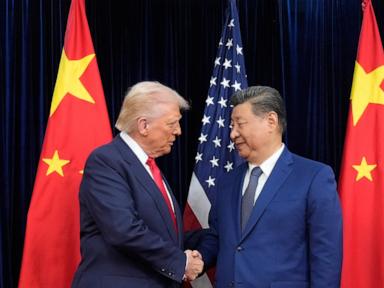
The upcoming summit in Beijing between Donald Trump and Xi Jinping is not a standard diplomatic exchange. It is a liquidation sale. For decades, the United States maintained a delicate, frustrating, and effective balance known as strategic ambiguity, a policy of keeping Beijing guessing whether Washington would actually fight for Taiwan. That era died the moment Trump suggested he might pause a $14 billion arms package to Taipei as a "discussion point" with Xi.
The primary question hanging over this meeting is whether the U.S. is prepared to trade its security guarantees for Taiwan in exchange for trade concessions or Chinese cooperation in the Middle East. Taipei is bracing for the impact. They have watched as the "Silicon Shield"—the idea that Taiwan’s dominance in chip manufacturing makes it too valuable to let fall—shows signs of hairline fractures.
The $14 Billion Poker Chip
In the world of high-stakes geopolitics, timing is everything. Trump arrives in Beijing with a massive arms sale on his desk, one that includes advanced asymmetric capabilities designed to make a Chinese invasion too costly to attempt. By signaling that this package is negotiable, the administration has shifted Taiwan from a strategic partner to a transactional asset.
Xi Jinping sees an opening that hasn't existed since 1979. His goal is not just a reduction in arms sales; it is a fundamental shift in American language. China wants the U.S. to move from "not supporting" Taiwan independence to "opposing" it. This might seem like semantic hair-splitting to a casual observer, but in the coded language of the State Department, it would be a total capitulation.
The internal logic of the Trump administration appears to be driven by a desire for a "Phase Two" trade deal and help stabilizing a global economy rocked by the recent conflict in Iran. To Xi, these are temporary economic headaches. Taiwan, however, is a matter of historical legacy. He is looking for a "win" that places him alongside Mao Zedong in the pantheon of Chinese leaders, and he is willing to trade a lot of soybeans and rare earth minerals to get it.
The Fragility of the Silicon Shield
For years, policymakers in Taipei felt safe behind their semiconductor foundries. TSMC produces over 90% of the world's most advanced logic chips. If those factories are destroyed or captured, the global economy stops. This was the ultimate insurance policy.
However, the "Silicon Shield" is being dismantled by the very ally that built it. The U.S. push to onshore chip production through the Pax Silica Declaration and massive subsidies for Arizona-based plants has sent a clear message: Washington wants the chips, but it's increasingly nervous about the island they come from.
- TSMC's Arizona Expansion: While one fab is operational, it produces only a fraction of the necessary volume.
- The AI Race: The demand for high-end AI chips has made Taiwan more important than ever, yet more vulnerable as China fears being permanently locked out of the next industrial revolution.
- The Helium Crisis: The war in Iran has choked off global helium supplies, a critical component in chip lithography, proving that the supply chain is fragile even without a shot being fired in the Pacific.
The 2027 Deadline and the New Military Reality
Military analysts have long pointed to 2027—the centenary of the People’s Liberation Army (PLA)—as the year Xi wants his forces ready to take the island. We are now in the shadow of that window. The PLA has not just been building ships; it has been reorganizing its entire command structure for a "joint" operation that would combine cyber warfare, space-based assets, and a massive amphibious assault.
The U.S. response has been the Balikatan drills in the Philippines, which recently saw 17,000 troops practicing counter-landing exercises. But drills are a show of force, not a guarantee of intervention. The "First Island Chain" is currently held together by a patchwork of alliances that are looking increasingly shaky as they watch Trump’s transactional approach to NATO and other long-standing treaties.
If the U.S. pulls back its naval presence or limits the sale of Javelin and Harpoon missiles to Taiwan, the military balance shifts instantly. Taiwan’s defense strategy relies on being a "porcupine"—too prickly to swallow. If the U.S. stops providing the quills, the porcupine becomes a snack.
The Quiet Resistance in Taipei
Taipei is not sitting idle while its fate is discussed in a gilded hall in Beijing. The Lai administration has launched the "Ten AI Initiatives," a desperate attempt to automate their economy and defense as birth rates plummet and the threat of a blockade looms. They are also investing heavily in their own domestic submarine program and drone swarms.
But Taiwan’s deputy foreign minister, Chen Ming-chi, is playing a dangerous game of public optimism. Calling the U.S. a "dependable ally" while the U.S. President is literally putting your defense budget on the bargaining table is a move born of necessity, not confidence. There is a deep, quiet fear in the streets of Taipei that they are about to be "Kurded"—abandoned after their strategic utility has been exhausted.
The Cost of the Deal
What does a "successful" summit look like for the Trump-Xi duo? For Trump, it’s a massive purchase agreement for U.S. agricultural goods and a stabilization of the rare earth supply chain. It’s a headline he can take to the midterm elections to show he is the ultimate dealmaker who stopped a war.
For Xi, the price is Taiwan's future. If he can secure a commitment to end the $14 billion arms deal and a change in diplomatic phrasing, he has effectively won without firing a single missile. He will have neutralized the American threat in his backyard.
The danger is that a "peace for our time" deal in 2026 often leads to a much larger conflict in 2028. If the U.S. signals it is no longer willing to defend the democratic outpost of Taiwan, it doesn't just lose an island; it loses the entire post-WWII security architecture of the Pacific. Japan, South Korea, and the Philippines will have no choice but to seek their own nuclear deterrents or cut their own deals with Beijing.
The "Taiwan Bargain" currently being discussed in Beijing isn't just about one island. It is about whether the United States is still an Indo-Pacific power, or merely a merchant looking for the best price on its way out the door. The definitive action now isn't found in the joint statements or the handshakes, but in the signature on that $14 billion arms package. If that pen doesn't move, the island moves closer to Beijing.