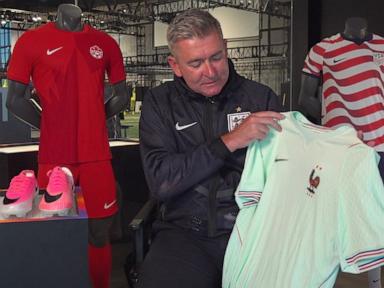
Every four years, apparel giants claim they have engineered a fabric that defies biology. They call it revolutionary. They promise optimal thermal regulation and advanced aerodynamic advantages. But beneath the marketing jargon and the vibrant national crests lies a high-stakes corporate chess game where margins matter more than minutes on the pitch. The modern World Cup kit is no longer just a piece of sportswear. It is a highly engineered, mass-produced commodity designed to balance elite performance with brutal manufacturing economics.
The public sees national pride knitted into breathable polyester mesh. The industry sees a frantic race to shave fractions of a cent off production costs while charging fans upwards of a hundred dollars for a piece of plastic.
The False Promise of Perfect Poly-Mesh
Sportswear brands heavily market the concept of zoned ventilation. They map sweat glands, deploy laser-cut perforations, and weave variable-density mesh into the areas where players perspire most. The goal is simple. Keep the athlete dry and light.
But synthetic fibers have inherent limitations. Polyester is hydrophobic. It repels water rather than absorbing it. Advanced kits rely on chemical finishes or specific yarn structures to pull sweat away from the skin and push it to the outer surface where it can evaporate.
The system works beautifully in a controlled laboratory setting. It falls apart under intense humidity and torrential downpours. Once a synthetic knit becomes completely saturated, the surface tension of the water traps air against the skin. The fabric clings. The weight increases significantly. Instead of cooling the athlete, the jersey becomes a heavy, wet blanket that hinders performance.
Brands know this. They accept it as an acceptable failure rate because the alternative material options are too costly or lack the durability required for 90 minutes of physical combat.
The Replica Disconnect
There is a massive structural gap between what the players wear and what the public buys.
- Player Issue Kits: These feature tight, athletic cuts, bonded seams instead of stitching to reduce chafing, and the highest concentration of specialized knit patterns. They are designed to last for exactly one match.
- Replica Jerseys: These are built for standard retail distribution. The complex, variable-density weave is replaced by a uniform, flat-knit fabric. The crests are heavy embroidery rather than heat-applied plastic.
This creates a distinct corporate paradox. The garment marketed as a triumph of high-performance engineering is, in its most widely distributed form, a simplified imitation optimized for durability in household washing machines. The consumer pays a premium for the aesthetic of performance, not the actual technology.
The Logistics Crisis Behind the Kits
Designing a jersey is the easy part. Manufacturing millions of them and distributing them across the globe to meet unpredictable tournament results is a supply chain nightmare.
Production timelines require brands to lock in designs and inventory numbers nearly a year before the tournament begins. Brands must guess which teams will qualify, which players will become overnight sensations, and which nations will exit in the group stage.
If a dark-horse team makes an unexpected run to the semi-finals, the demand for their jersey spikes instantly. Fabric mills cannot simply spin up new technical mesh overnight. The specialized looms required to weave variable-density polyester are often booked months in advance.
[Design Freeze] -> 12 Months Out
[Fabric Milling] -> 9 Months Out
[Cut and Sew]    -> 6 Months Out
[Global Shipping]-> 3 Months Out
[Tournament Kickoff]
When stock runs out during a tournament, brands lose tens of millions in potential revenue. To mitigate this risk, they rely on standardized fabric blanks. They weave massive quantities of basic white and grey technical material ahead of time, delaying the final dyeing and printing processes until the last possible moment. This operational compromise limits true design innovation. It forces teams into homogenized templates where the only real differentiator is the sublimated print on the front.
Environmental Accounting and the Recycled Polyester Myth
Almost every major apparel brand now boasts that its tournament kits are made from 100% recycled polyester, often derived from ocean-bound plastic bottles. This is a brilliant marketing narrative. It positions multi-billion-dollar corporations as stewards of the environment.
The reality of textile recycling is far less clean. Turning a clear plastic bottle into a high-performance yarn requires massive amounts of energy, chemical purification, and fossil-fuel-driven processing.
Furthermore, a jersey made from recycled polyester cannot easily be recycled again. The blending of different polymers, elastane components, and heat-applied crests makes it nearly impossible to shred and re-spin the fabric into new garments at scale. The current lifecycle of a World Cup jersey is almost entirely linear. It moves from a plastic bottle to a football pitch, to a consumer's closet, and ultimately to a landfill.
True sustainability in sportswear requires circularity. It requires biodegradable fibers or monomaterial construction where every element of the jersey—from the thread to the badges—can be melted down together. The industry is nowhere near achieving this at a commercial scale because the performance demands of elite athletes take absolute priority over end-of-life garment recycling.
The Weight Game
Every gram matters when an athlete runs over ten kilometers per match. Over the last two decades, the average weight of a match jersey has dropped from roughly 200 grams to under 100 grams.
To achieve this, brands stripped away everything. Collars disappeared. Heavy stitched logos were replaced by thin, heat-pressed polyurethane transfers. Even the seams were targeted, with sonic welding replacing traditional thread in critical zones.
This weight reduction creates a fragile garment. Players frequently tear jerseys during standard shirt-pulling incidents on the pitch. This is not a manufacturing defect. It is an intentional design choice. A shirt that tears easily alerts the referee to a foul, turning a material failure into a tactical advantage on the field.
The obsession with weight has pushed fabric density to its absolute limit. If the yarn is spun any thinner, the fabric becomes sheer, losing its structural integrity and failing to hold its shape when wet. The industry has reached the nadir of weight reduction within the framework of traditional knitting.
The next shift will not come from tweaking the percentage of mesh holes or adjusting the blend of polyester. It will require a fundamental departure from woven and knitted textiles entirely, moving toward non-woven web structures and direct-to-body polymer spraying. Until then, teams will continue to step onto the pitch wearing variations of the same synthetic formula, wrapped in narratives of national heritage to justify the retail price tag.