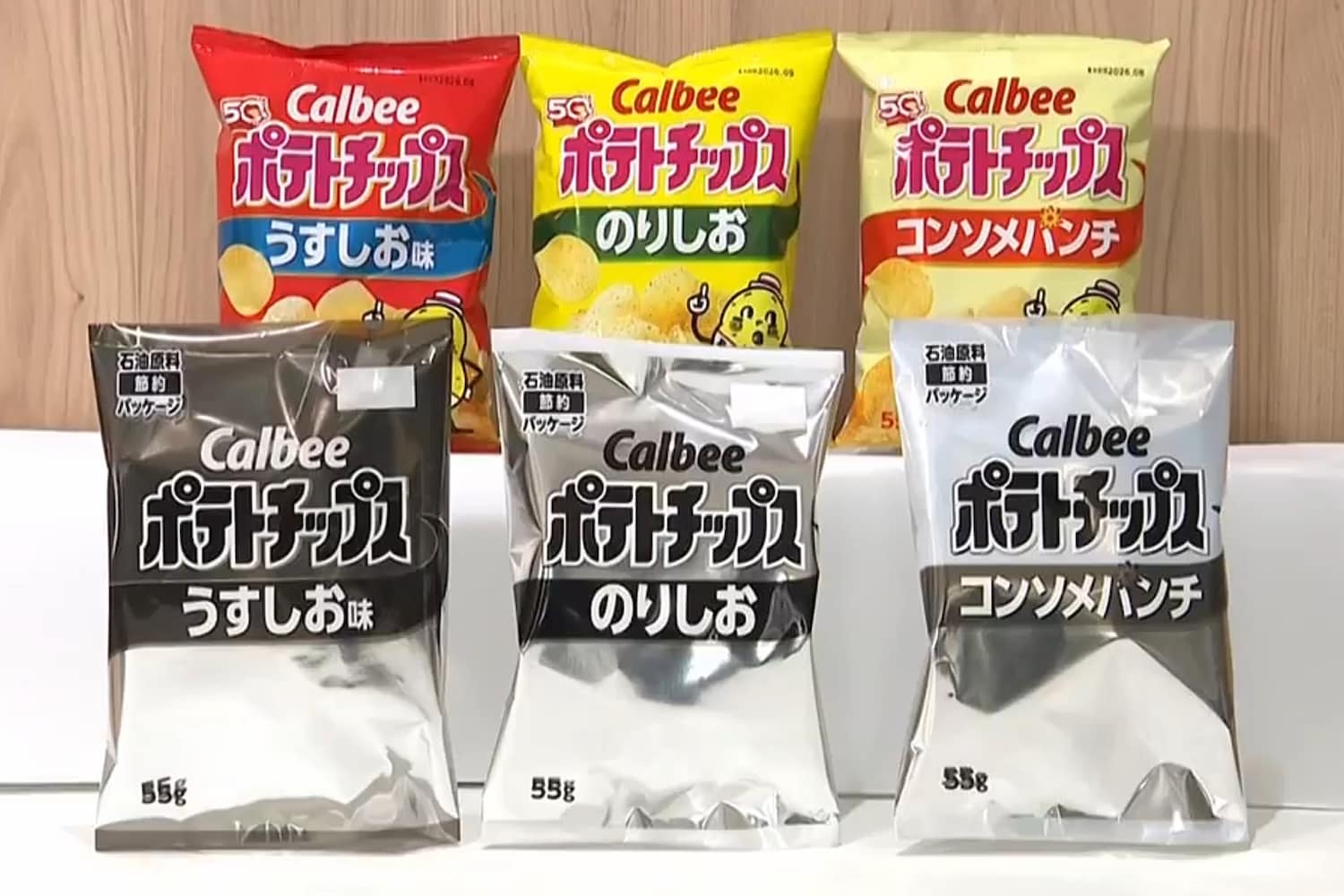
The transition of Japanese snack packaging from multi-chromatic vibrance to binary black-and-white is not a stylistic choice; it is a forced capitulation to a broken global supply chain. When geopolitical instability in the Middle East—specifically a conflict involving Iran—disrupts the flow of petroleum-based chemical precursors, the ripple effect reaches the grocery aisles of Tokyo within weeks. This shift exposes the extreme vulnerability of the "Just-in-Time" manufacturing model when applied to secondary production components like industrial inks.
The Carbon Black Dependency and Petrochemical Chokepoints
Industrial printing relies on a sophisticated chemical stack. The move to black-and-white packaging indicates a strategic retreat to the most resilient and least complex component of the CMYK (Cyan, Magenta, Yellow, Key/Black) spectrum. Most industrial inks require specialized resins, solvents, and pigments derived from crude oil refining.
The disruption in the Iranian theater impacts the supply of heavy naphtha and specific aromatics (benzene, toluene, xylene) that serve as the building blocks for organic pigments. While "Carbon Black"—the primary pigment for black ink—is also a petroleum byproduct, its production is more geographically diversified and its chemical synthesis less energy-intensive than the complex organic molecules required for cyan or magenta.
The decision by Japanese manufacturers to strip color from their branding reveals a hierarchy of necessity:
- Structural Integrity: The physical plastic or foil barrier must remain intact to ensure food safety.
- Regulatory Compliance: Mandatory labeling (ingredients, expiration dates, barcodes) must remain legible.
- Brand Equity: Visual identity is the first sacrificial layer when the cost-to-acquire pigments exceeds the marginal profit of the unit.
The Cost Function of Chromatic Complexity
In a stable economy, the cost of ink is a negligible fraction of a product's total unit cost, often calculated at less than 1%. However, the volatility of the current market has transformed ink from a commodity into a critical bottleneck. The economic logic driving the "black-and-white" pivot can be broken down into three distinct pressure points.
The Pigment Scarcity Threshold
Pigment manufacturing is concentrated in specific clusters, largely in Asia and the Middle East. When shipping lanes in the Persian Gulf or the Red Sea are compromised, the lead times for specialized chemical shipments extend from 30 days to 90 or 120 days. Manufacturers face a binary choice: stop production because a specific shade of "Brand Red" is unavailable, or retool the printing plates for a single-color run that utilizes more abundant carbon-based inks.
Solvent Inflation and Volatility
It is not merely the pigment that fails; it is the carrier. Modern high-speed rotogravure and flexographic printing require high-purity solvents to ensure quick drying times on non-porous plastic surfaces. These solvents are direct derivatives of the refining process. As war premiums drive up the price of Brent Crude, the price of methyl ethyl ketone (MEK) and ethyl acetate spikes proportionally. By reducing the number of "hits" or layers of ink, a factory reduces its total solvent consumption, effectively lowering the break-even point of the production run.
Maintenance and Downtime Economics
Multi-color printing requires multiple stations, each needing precise calibration, cleaning, and chemical balancing. In a resource-constrained environment, running a single-color line simplifies the mechanical requirements. It reduces the frequency of "wash-ups"—the solvent-heavy process of cleaning ink fountains—thereby conserving dwindling chemical stocks for a longer duration of the crisis.
Strategic Rebranding as a Defensive Moat
The shift to minimalist packaging serves a dual purpose: it manages the supply chain crisis while attempting to frame a logistical failure as a "premium" or "eco-friendly" aesthetic choice. This is a classic move in crisis management where operational constraints are rebranded as intentional design.
However, the risks to brand recognition are significant. The "Mental Availability" of a product, a concept popularized by the Ehrenberg-Bass Institute, relies heavily on distinctive brand assets—specifically color. A consumer scans a shelf for a red bag or a blue box. When all products revert to a monochromatic baseline, the "distinctive asset" is neutralized, and the purchase decision reverts to price and shelf position.
Japanese firms are currently calculating that the risk of losing "shelf standout" is lower than the risk of empty shelves. An out-of-stock event (OOS) is a permanent loss of revenue, whereas a monochromatic package is a temporary devaluation of the brand experience.
The Logistics of the Petro-Chemical Feedback Loop
The relationship between Middle Eastern conflict and Japanese snacks is mediated by the global shipping industry's reliance on the Strait of Hormuz.
- Upstream: Iranian and regional petrochemical plants produce the raw monomers and polymers.
- Midstream: These are shipped to specialized chemical processors in China, India, or Japan, where they are synthesized into industrial pigments and resins.
- Downstream: Printing houses mix these components into finished inks for the FMCG (Fast-Moving Consumer Goods) sector.
The bottleneck occurs at the midstream level. When the upstream flow is throttled, midstream processors prioritize high-margin industries such as automotive coatings or electronics over the relatively low-margin food packaging sector. This creates a "trickle-down scarcity" where the snack industry is the first to lose access to complex color palettes.
Tactical Response and the Post-Color Era
The immediate response for procurement officers in the FMCG space must be a radical simplification of the Bill of Materials (BOM). The "Japan Model" provides a blueprint for survival in an era of deglobalization and regional conflict.
- Audit Chromatic Dependencies: Identify every product SKU that relies on a "sole-source" pigment. If a specific brand color can only be produced using a chemical derived from a single refinery, that SKU is a high-risk liability.
- Retool for Monochromatic Flex: Design "emergency packaging" templates that maintain brand typography and layout but function entirely in black-and-white. This allows for an instantaneous switch in production without needing a new design cycle.
- Transition to Water-Based Systems: While more difficult to use on plastics, water-based inks reduce the dependency on petroleum solvents. The current crisis serves as a catalyst for R&D into soy-based and bio-synthetic pigments, moving the supply chain away from the volatility of the oil market.
The era of cheap, infinite color is a byproduct of an era of cheap, infinite oil and stable maritime borders. As both those conditions erode, the visual landscape of the retail environment will continue to flatten. The black-and-white snack pack is the early warning system for a broader contraction in global manufacturing complexity.
Companies that fail to map their chemical dependencies down to the molecular level will find themselves unable to print even the barcodes necessary to sell their products. The strategy is no longer about "standing out" on the shelf; it is about the structural ability to exist on the shelf at all. The move to black-and-white is a signal of operational maturity—an admission that in a resource-war economy, the only color that matters is the color of the ink you can actually buy.
Shift procurement focus from "lowest cost" to "lowest chemical complexity." This requires an immediate audit of packaging design to ensure that brand identity is tied to shape, texture, and typography rather than specific hues. Any brand whose survival is predicated on the availability of a specific magenta pigment is, by definition, a brand with an expiration date tied to the next missile launch in the Persian Gulf.