The footwear manufacturing cluster in Agra, India, serves as a textbook study in the vulnerability of hyper-localized production nodes to distant geopolitical disruptions. While the conflict in West Asia is often framed through the lens of humanitarian crisis or energy price volatility, its impact on Agra represents a specific failure of the "informal-global" supply chain model. This model relies on high-volume, low-margin exports to price-sensitive markets, primarily in the Middle East and North Africa (MENA) region. When regional stability collapses, the shock propagates through three distinct channels: immediate demand evaporation, logistical cost escalation, and the freezing of trade credit.
The Concentrated Export Dependency Framework
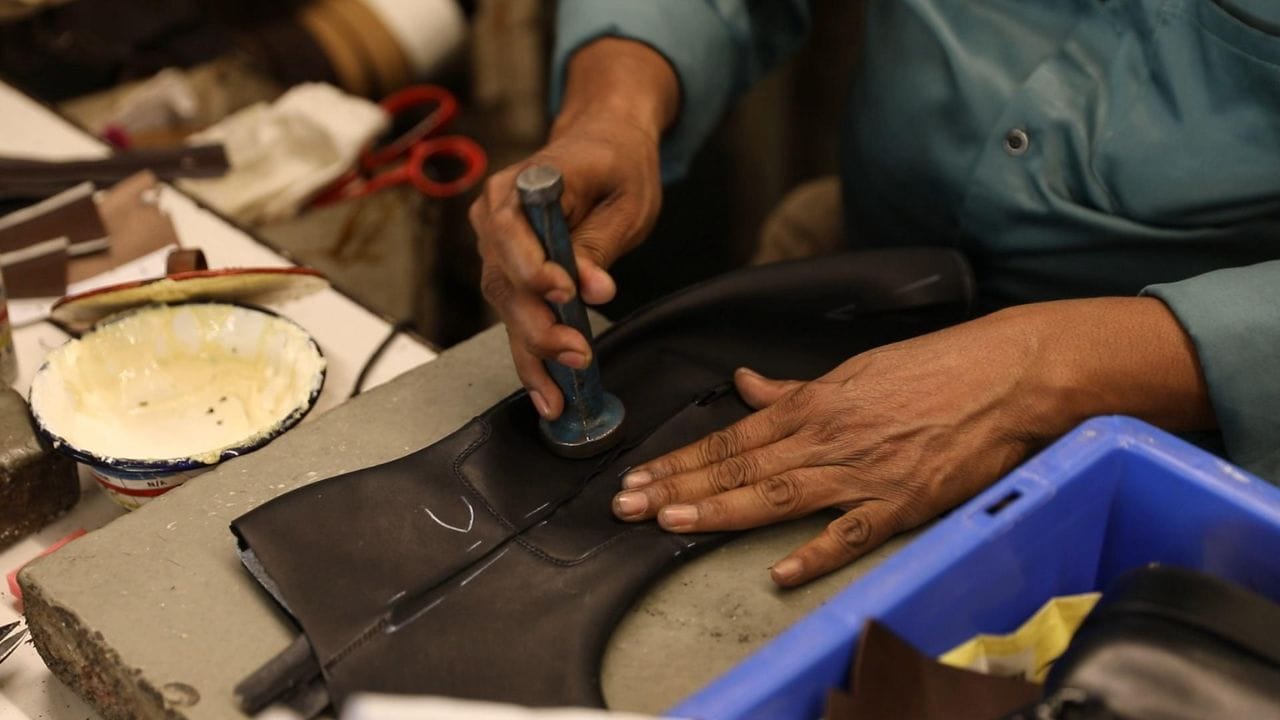
Agra’s footwear industry operates on a high degree of specialization, with approximately 40% of its total output destined for international markets. Within this export segment, the MENA region functions as a primary sink for mid-to-low-tier leather goods. The structural dependency is not merely a matter of sales volume; it is a qualitative alignment. The aesthetic preferences, sizing standards, and price points of the West Asian consumer have dictated the tooling and raw material procurement of Agra’s micro-clusters for decades.
This concentration creates a "single-point-of-failure" risk. Unlike diversified multinational corporations that can reroute inventory to hedge against regional downturns, Agra’s artisans are locked into specific product specifications that lack fungibility. A sandal designed for the souks of Riyadh or the boutiques of Beirut cannot be easily liquidated in domestic Indian markets or pivoted toward European retailers without significant capital reinvestment in design and manufacturing processes.
The Cost Function of Conflict-Driven Logistics
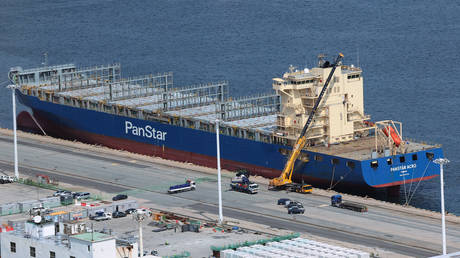
The escalation of hostilities in West Asia triggers an immediate shift in the economics of maritime transport. The primary mechanism is the War Risk Surcharge (WRS) and the physical redirection of shipping lanes away from the Red Sea and Suez Canal.
- Transit Time Inflation: Rerouting vessels around the Cape of Good Hope adds roughly 3,000 to 3,500 nautical miles to the journey. For an Agra-based exporter, this extends the lead time by 15 to 20 days.
- Working Capital Trapped: In an industry where "cash is king," an extra three weeks at sea is not just a delay; it is a liquidity crisis. Payment cycles are tethered to Bill of Lading (BoL) triggers. When goods are stuck in transit, the manufacturer’s capital is immobilized, preventing the purchase of leather and adhesives for the next production cycle.
- Freight Rate Volatility: Spot rates for containers typically double or triple during periods of acute regional tension. Since most Agra exporters operate on thin margins (often between 5% and 8%), a $1,500 increase in container costs can turn a profitable order into a net loss.
The Trade Credit Contraction
The most lethal aspect of the West Asia war for the Agra artisan is the invisible collapse of the trust-based credit system. A significant portion of trade between India and the Middle East operates on "Open Account" terms or informal hawala-adjacent credit networks rather than formal Letters of Credit (LCs).
When a destination market enters a state of war, the local currency often devalues rapidly. A distributor in a conflict zone who agreed to pay in USD finds their local purchasing power decimated. This leads to widespread payment defaults or "forced renegotiations" where the Agra manufacturer is asked to take a 30% to 50% haircut on already shipped goods. Because these artisans lack the legal resources to pursue international debt recovery, these losses are absorbed directly into their personal net worth, often leading to the permanent closure of family-owned workshops.
Material Input Disruption and Domestic Cannibalization
Conflict in West Asia does not just stop the flow of finished shoes; it disrupts the global market for raw hides and chemical components. The leather industry is inherently linked to global livestock and meat processing cycles, which are sensitive to regional energy costs and trade embargoes.
When export orders vanish, Agra’s manufacturing capacity does not simply sit idle. It pivots aggressively to the domestic Indian market. This creates a supply glut. The sudden influx of high-quality export-reject or diverted inventory into local markets drives down prices for domestic-focused producers. This "cannibalization effect" ensures that even artisans who do not export directly to West Asia suffer from depressed margins as the entire cluster competes for a finite pool of local buyers.
Structural Vulnerabilities of the Artisan Model
The "artisanal" nature of Agra’s production, while culturally significant, is its greatest strategic weakness in the face of macro shocks. The lack of institutionalization manifests in three specific ways:
- Absence of Hedging: Small-scale manufacturers do not have access to currency forward contracts or fuel price hedges. They are 100% exposed to market fluctuations.
- Labor Elasticity Limits: Unlike a modern factory that can scale down shifts, Agra’s workshops rely on specialized hereditary labor. When production stops, these skilled workers migrate to other industries (like construction), leading to a permanent "brain drain" of craftsmanship that cannot be easily recovered when the war ends.
- Infrastructure Deficits: The reliance on middleman exporters means the actual producer is insulated from market intelligence. They continue to produce based on six-month-old forecasts, only realizing the market has collapsed when the middleman refuses to pick up the finished inventory.
The Geographic Arbitrage Fallacy
There is a common misconception that Agra can simply "shift" its focus to the West (USA or EU) to mitigate Middle Eastern volatility. This ignores the Regulatory and Compliance Barrier. European and American markets demand stringent environmental, social, and governance (ESG) certifications, including REACH compliance for chemicals and LWG (Leather Working Group) certification for tanneries.
Agra’s informal clusters, often operating out of cramped urban quarters with legacy machinery, cannot meet these standards without a complete overhaul of their production environment. The cost of compliance is a fixed cost that the current revenue model cannot amortize. Thus, they remain trapped in the "instability corridor" of emerging markets.
Strategic Redesign of the Agra Footwear Cluster
To survive the current and future geopolitical shocks emanating from West Asia, the Agra footwear cluster must move away from its role as a passive price-taker. The following maneuvers represent the only viable path toward resilience:
Immediate Aggregation of Export Entities
Individual workshops must form Producer Companies or Co-operatives to gain the scale necessary for formal Letters of Credit. This shifts the risk of non-payment from the artisan to the banking sector and provides a buffer against currency devaluation in destination markets.
Diversification into Technical Footwear
The reliance on "fashion" or "casual" leather goods is a liability. Shifting a portion of the cluster’s capacity to safety shoes, military boots, or specialized workwear creates a "counter-cyclical" revenue stream. Demand for technical footwear often increases during periods of regional instability or increased domestic infrastructure spending.
Digital Direct-to-Consumer (DTC) Integration
By bypassing the traditional export-import middleman through global e-commerce platforms, Agra brands can capture the "retail spread." This provides the necessary margin cushion to absorb increased shipping costs. A manufacturer selling a shoe for $10 to a wholesaler who retails it for $80 is far more vulnerable than a manufacturer selling that same shoe for $45 via an online marketplace.
Inventory Buffer and Raw Material Pools
The cluster requires a state-subsidized or co-operative-owned raw material bank. By stockpiling chemicals and high-grade hides during periods of low volatility, the cluster can maintain stable production costs when global supply chains are disrupted by war.
The current crisis in West Asia is not a temporary "sand in the shoe" for Agra; it is a structural warning. The survival of the world's largest handmade footwear hub depends on its ability to industrialize its financial logic while preserving its artisanal output. Failure to decouple from high-risk regional dependencies will result in the gradual attrition of Agra’s manufacturing base, as capital seeks more stable, albeit less skilled, production environments elsewhere in Southeast Asia.