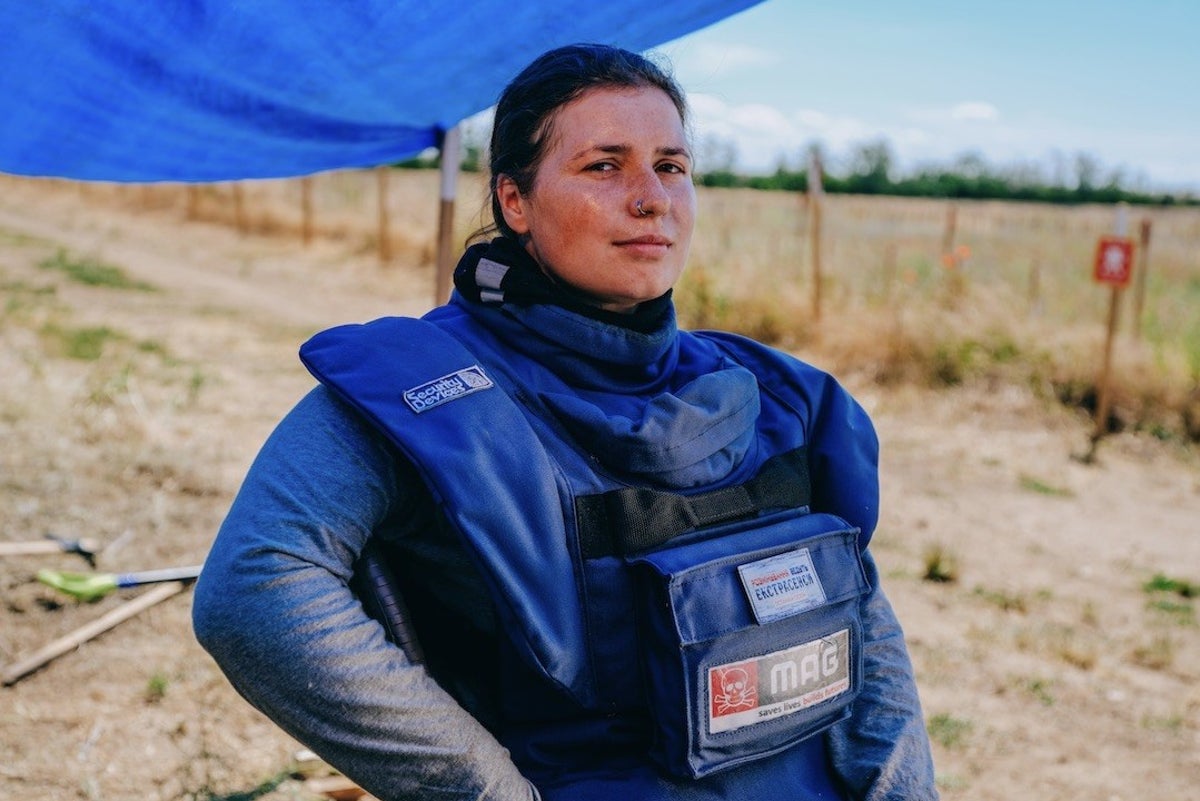
The media loves a poetic narrative. Show them a field of bright yellow flowers blooming over a scraped patch of earth, and they will write poetry about resilience. They will tell you that where there were once cluster munitions and anti-personnel traps, nature heals itself through agriculture. They will write profiles of heroic individuals hand-clearing lethal iron with a kitchen knife and a prayer, framing demining as a quaint community gardening project with higher stakes.
It is a comforting lie. And it is actively keeping millions of hectares of arable land dangerous.
I have spent years watching humanitarian efforts fail because donors prefer romanticism over cold engineering. When you romanticize landmine removal as an artisanal act of courage, you get well-meaning features about brave women planting sunflowers where bombs used to sit. What you do not get is square-kilometer throughput. You do not get industrial scale. You get a country crippled by statistical backlogs that will take centuries to clear at the current rate of manual probing.
Stop buying the sunflower narrative. The romanticization of manual clearance is the single biggest bottleneck in modern post-conflict recovery.
The Math of Human Probing Is Broken
Let us look at the baseline physics and economics of how land is cleared. Manual demining teams use metal detectors and prodders. They crawl on their bellies or crouch in protective gear, inching forward centimeter by centimeter.
When you have a backyard garden contaminated by a single ordnance, manual prodding works. When you have a contamination footprint spanning roughly one-quarter to one-third of a nation's sovereign territory, manual crawling is a statistical absurdity. At current speeds, manual clearance of Ukraine will take hundreds of years. Every month spent waiting for a guy with a stick to check a hectare is a month of lost GDP, inflated global food prices, and preventable civilian casualties.
The lazy consensus says we just need more boots on the ground, more metal detectors, and more crowdfunding campaigns to buy protective vests for volunteers. That is a systemic failure of imagination. You cannot solve an industrial-scale contamination crisis with cottage-industry labor.
The Industrial Reality Nobody Wants to Fund
Real demining looks less like a gardening documentary and more like open-cast mining or heavy civil engineering. It involves massive armored flails, remote-controlled heavy excavators, and multi-spectral aerial drone mapping that can detect subterranean anomalies based on soil density shifts and thermal signatures before a single human ever steps foot in a field.
I have seen organizations blow millions on piecemeal manual training programs that look great on Instagram while leaving massive grain corridors blocked because heavy mechanical assets were underfunded or tied up in bureaucratic red tape. Heavy assets are expensive. They break down. They require logistics, spare parts, and specialized mechanics. They are not photogenic. A Caterpillar excavator retrofitted with blast-resistant steel plating does not make for a heartwarming human-interest feature. But it clears twenty hectares in the time it takes a manual crew to clear a quarter of a fenced-off cow pasture.
If you want to fix the problem, you stop celebrating the slow manual grind and start demanding automated, high-throughput heavy clearance pipelines.
The Danger of the Sunflower Fallacy
There is a dark irony to the popular imagery of sunflowers growing over explosive remnants of war. Sunflowers are heavy metal hyperaccumulators. They draw toxins, lead, and various chemical residues out of the soil. That makes them great for post-industrial brownfields. It makes them a terrible proxy for actual safety.
A field can be covered in thick, blooming vegetation, and still conceal a high-explosive bounding fragmentation mine just beneath the root system, waiting for the pressure of a harvest combine. When farmers see green growth, they take risks. They rush the timeline because hunger and economic collapse do not wait for bureaucratic clearance certificates.
Every time a journalist publishes a piece praising organic post-war rebirth through agriculture, a local farmer reads it, assumes the local area is safer than it is, and loses a limb running a tractor over an unmapped TM-62 anti-tank mine. The aestheticization of war zones creates a false sense of security that kills people.
What Real Recovery Demands
If we are serious about returning land to production, we have to flip the economics upside down.
First, we must decouple demining from charity. Charity operates on emotional storytelling. Infrastructure restoration operates on return on investment. Insuring agricultural land and treating demining as an infrastructure utility—funded by sovereign bonds and international development banks—changes the velocity of the work overnight.
Second, we must accept the collateral cost of mechanical speed. Heavy flails and rollers detonate or destroy ordnance violently. They churn up topsoil. They disrupt the pristine, romantic aesthetic of the landscape. Good. Soil can be regenerated, fertilized, and tilled back into health in a season. A human life cannot.
Third, we must abandon the notion that every square meter needs to be hand-inspected like a crime scene. Risk management in agriculture is probabilistic, not absolute. Industrial farming uses data layers, yield maps, and deep-soil imaging to optimize inputs. We should use those exact same remote-sensing layers to triage and clear production zones systematically, rather than waiting for zero-risk clearance certificates that will take generations to issue.
The war in Ukraine will not be won by sunflowers. It will be won by heavy machinery, cold data, and the ruthless prioritization of speed over sentimentality. Put down the gardening shears. Bring in the heavy metal.