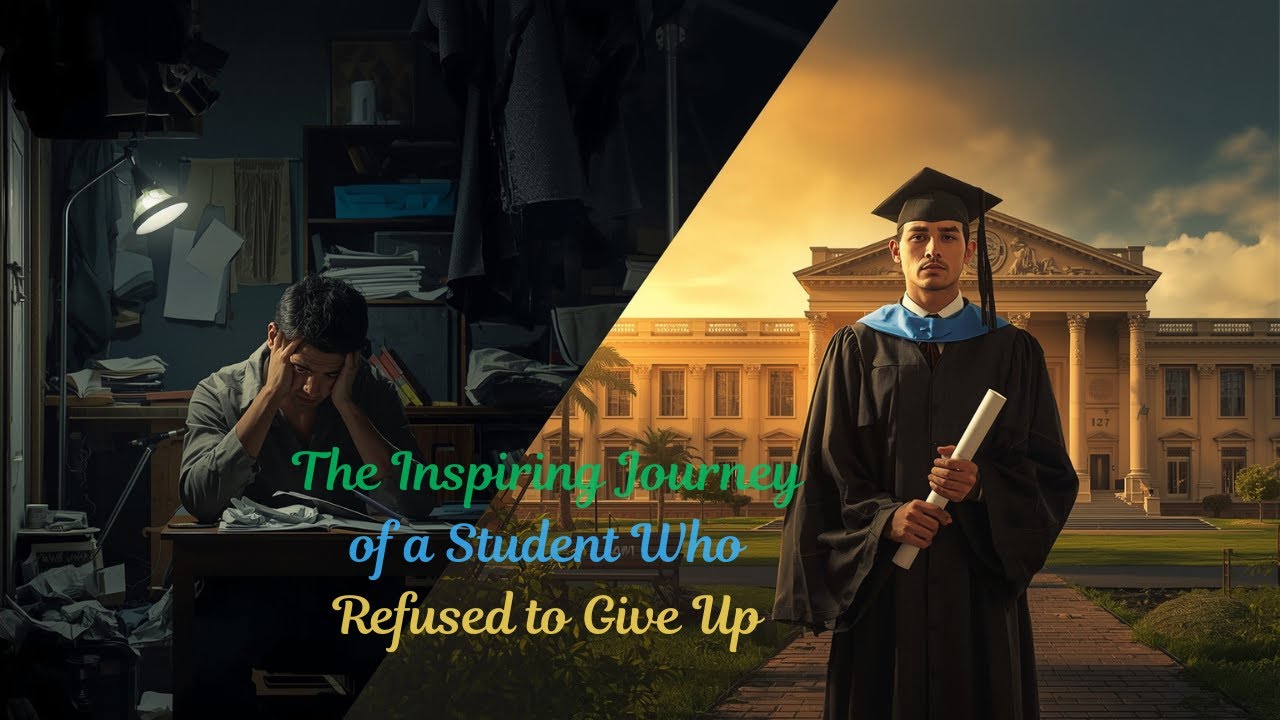
The hunger doesn't start with a roar. It begins with a hollow, persistent ache that eventually turns into a silence so heavy it fills a classroom.
Wawira Njiru knew that silence. She didn't just study it in textbooks while pursuing her food science degree in Australia; she felt the weight of it every time she thought of her home in Ruiru, Kenya. She knew that for a child sitting at a wooden desk under a corrugated metal roof, the difference between a future and a dead end wasn't just a textbook or a dedicated teacher. It was a plate of food.
In 2012, Njiru was twenty years old. She was thousands of miles away from the dusty playgrounds of her childhood, but the distance only sharpened her focus. She looked at her life—the relative abundance of her surroundings—and then she looked at the statistics that most people glance at and promptly forget. She saw the faces behind the numbers. She saw the children who walked miles to school only to find their stomachs too empty to hold a single lesson.
She decided to host a dinner.
It wasn't a grand gala with red carpets and corporate sponsors. It was a grassroots effort, a gathering of friends and strangers in an Australian community who were moved by a young woman’s conviction. She charged $20 a plate. She cooked. She spoke. She raised $1,260.
In the high-stakes world of international NGOs, $1,000 is a rounding error. It is a drop in an ocean of bureaucracy. But in Ruiru, that money was a seed. Njiru didn't wait for a five-year plan or a government grant. She sent the money home, hired a local team, and built a kitchen.
Food for Education was born in a space no larger than a backyard shed.
The Mathematics of Hope
To understand why this mattered, you have to understand the invisible tax that hunger levies on a developing nation. When a child is hungry, their brain prioritizes survival over syntax. Their body leashes their potential. If a family has to choose between buying a notebook or a bag of maize, the notebook loses every time.
Njiru realized that the problem wasn't a lack of food in the world; it was a breakdown in the delivery of dignity.
She started small. Twenty-five children. Then forty. Then a hundred.
The logistics were a nightmare. How do you move thousands of meals across broken roads? How do you ensure the food is hot, nutritious, and safe without the luxury of massive refrigerated fleets? Most importantly, how do you make it sustainable?
She looked at the technology in everyone's pocket. In Kenya, mobile money isn't just a convenience; it is the heartbeat of the economy. Njiru and her team developed "Tap2Eat," a digital platform linked to NFC-enabled wristbands. Imagine a six-year-old walking into a lunch line. There is no fumbling with cash. No stigma of being the "poor kid" with a voucher. They simply tap their wristband against a sensor.
The parents, many of whom work irregular jobs as day laborers, can top up these accounts with as little as a few cents via their phones. The system costs about 15 cents per meal. It is a masterpiece of efficiency disguised as a piece of plastic jewelry.
Scaling the Impossible
Growth usually brings a loss of soul. As organizations get bigger, the distance between the CEO and the person being served usually expands until the "human element" is just a photo in an annual report.
Njiru fought that gravity.
She scaled the operation by treating it like a high-tech supply chain but staffing it with the community’s heart. She built "Giga-kitchens"—centralized hubs capable of churning out tens of thousands of meals in a single morning. These aren't just kitchens; they are cathedrals of logistics.
By 2024, the numbers shifted from inspiring to staggering. What started with eighty Australian dollars and a dream had expanded to serving over 600,000 children every single school day.
Think about that number.
Six hundred thousand.
That is more than the population of many major European cities. It is a sea of children who, because of a decentralized network of kitchens and a 20-year-old’s refusal to accept the status quo, no longer have to worry about where their next meal is coming from.
The impact ripples outward in ways that don't always show up on a balance sheet. When you feed a child, you aren't just filling a stomach; you are supporting a mother who can now spend her day working instead of worrying. You are supporting a farmer who has a guaranteed buyer for his kale and sweet potatoes. You are supporting a teacher who no longer has to compete with the sound of a growling stomach for a student’s attention.
The Invisible Stakes
There is a temptation to see this as a "feel-good" story. A young woman did a good thing, and it worked out. But that narrative ignores the grit required to stare down systemic failure.
Every morning, long before the sun hits the Nairobi skyline, the fires are lit in the Food for Education kitchens. Massive vats of githeri—a traditional, protein-rich mix of maize and beans—begin to steam. Workers in hairnets and aprons move with the precision of clockwork. This isn't charity. It is an industrial-scale intervention against poverty.
The stakes are found in the quiet moments. They are found in the eyes of a girl who can now stay in school through puberty because her family doesn't have to pull her out to save money on food. They are found in the boy who wants to be an engineer and now has the caloric fuel to actually learn the math required to become one.
Njiru’s journey suggests that the most effective solutions aren't usually imported from glass towers in Geneva or New York. They are grown in the soil where the problem exists. She didn't try to "disrupt" a culture; she empowered it. She took a local tradition of communal support—the "harambee" spirit of pulling together—and digitized it.
Beyond the Plate
We often treat poverty as a puzzle to be solved with more data, more white papers, and more committees. We talk about "food insecurity" as if it’s a weather pattern we can’t control.
Njiru proved it is a choice.
By the time she reached thirty, she had been named the UN Person of the Year in Kenya. She had received the Global Citizen Prize. But if you watch her walk through one of the schools her program serves, you don’t see a decorated executive. You see a woman who remembers what it’s like to see a child go without.
The system she built is now being looked at as a blueprint for the entire continent. It turns out that when you remove the friction of corruption and the waste of inefficient transport, feeding a nation is surprisingly affordable. It costs less than the price of a fancy coffee in the West to feed a child for a week.
But the real lesson isn't about the money.
It’s about the audacity of starting. It’s about the realization that you don't need a million dollars to change a life—you just need the courage to cook for twenty-five people and the stubbornness to never stop.
As the school bell rings across thousands of playgrounds in Kenya, the sound is no longer followed by the hollow silence of hunger. It is followed by the clatter of plastic plates and the roar of a generation that is finally, mercifully, full.
The steam rises from the bowls. The children tap their wrists. The future sits down to eat.


