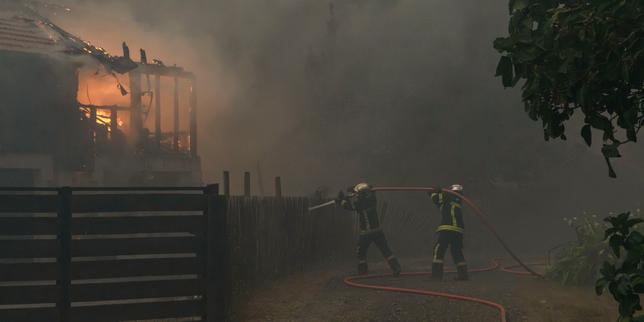
European crisis management operates under a structural paradox. The European Union Civil Protection Mechanism was designed as an instrument for mutual assistance during low-frequency, high-impact events. Climate volatility has transformed these discrete shocks into a continuous baseline of concurrent emergencies. When multiple member states experience simultaneous agricultural, hydrological, and meteorological catastrophes, the principle of voluntary solidarity hits a mathematical ceiling. Assets cannot be deployed to multiple jurisdictions at once.
Understanding the operational reality of this system requires deconstructing the architecture of trans-national crisis response, the friction points of resource allocation, and the economic externalities of relying on shared reserves for national defense against natural hazards.
The Operational Mechanics of the Union Civil Protection Mechanism
The baseline function of the instrument relies on voluntary pooling rather than standing federal capacity. Member states contribute assets—such as Canadair firefighting aircraft, specialized pumping modules, and medical teams—to a central reserve known as rescEU.
Operationally, the system triggers when a national emergency exceeds domestic response capacity. The affected state submits a request through the Emergency Response Coordination Centre. The centre acts as a broker, matching the demand signal against the inventory of uncommitted assets pledged by other member states.
This model introduces two distinct operational vulnerabilities.
The Latency Gap
The time elapsed between a crisis escalation and asset deployment depends entirely on domestic political calculations in donor states. If a contributing country faces rising domestic hazard indexes, its government will exercise a veto on asset export to preserve internal security. The mechanism lacks a binding priority algorithm. Voluntary contributions mean that capability availability fluctuates inversely with regional need. When Southern European forests ignite simultaneously, the scarcity of aerial firefighting assets creates a zero-sum allocation problem.
The Friction of Interoperability
Pooled assets from diverse jurisdictions introduce administrative and technical friction. Communications protocols, fuel requirements, technical specifications for maintenance, and crew certifications vary across national borders. While standardization efforts attempt to harmonize these inputs, operational friction degrades the efficiency coefficient during high-stress deployments. A firefighting aircraft grounded due to a lack of certified replacement parts or mismatched fueling connections represents a systemic failure of supply chain resilience.
The Economic and Logistical Cost Function
Crisis management within the European framework is constrained by a rigid cost-sharing model. Historically, the European Commission co-financed transportation and operational costs, while the owner state retained capital depreciation and maintenance burdens. The scaling up of the rescEU reserve shifts capital expenditure toward the Union budget, but the velocity of asset acquisition fails to match the acceleration of climate-driven hazard frequencies.
The cost function of disaster response exhibits diminishing marginal returns. Deploying external assets to suppress late-stage mega-fires is orders of magnitude more expensive than investing in localized prevention, forest management, and infrastructural hardening. Yet, European funding mechanisms have traditionally skewed toward reactive deployment rather than proactive structural mitigation.
The financial exposure can be modeled through three distinct tiers:
- Direct Asset Replenishment: The capital cost of purchasing specialized hardware, such as amphibious firefighting aircraft, which suffer from long manufacturing lead times and concentrated global supply chains.
- Operational Friction Costs: The logistics of moving heavy equipment across vast geographic distances, including carbon penalties, transit fuel consumption, and crew rotation expenses.
- Opportunity Cost of Depletion: The vulnerability window created when a member state strips its own territory of frontline assets to fulfill a European solidarity mandate, leaving itself exposed to secondary shocks.
The Limits of Solidarity Under Concurrent Stress
When Hadja Lahbib characterizes the civil protection architecture as under tension while functioning, she describes an administrative survival state rather than an optimal equilibrium. A system functions when it meets its design parameters. If the design parameters assumed non-overlapping regional emergencies, the current climate reality invalidates the baseline assumptions.
Concurrent shocks break the assumption of mutual aid. In a scenario where Greece, Spain, Portugal, and France require aerial firefighting capacity on the exact same July afternoon, the European coordination centre cannot solve a linear programming problem where total demand exceeds total supply by a factor of four. The response defaults to triage. Triage in emergency management is an admission of resource inadequacy.
This dynamic exposes the friction between national sovereignty and collective security. Member states retain exclusive competence over civil protection and land-use planning. The Union provides a coordination overlay and a financial backstop, but it holds no command authority over national civil defense ministries. When domestic political survival demands keeping assets at home, European solidarity frameworks face immediate paralysis.
Reengineering the Response Architecture
To transition from fragile coordination to structural resilience, the institutional framework requires specific mechanical adjustments.
First, the procurement model must shift from national voluntary pooling to permanent, centrally managed standing capacity. Relying on the goodwill of capitals during a continent-wide crisis introduces unacceptable latency. Dedicated fleets must be positioned at strategic geographic hubs, owned directly by the Union, and dispatched via automated algorithms based on real-time hazard telemetry rather than political negotiation.
Second, the definition of emergency response must expand to include mandatory cross-border preventive investments. Financial transfers from Brussels should be strictly conditional on member states meeting specific structural risk-reduction metrics, such as controlled burn programs, infrastructure hardening, and watershed management. Subsidizing the cleanup without enforcing structural prevention creates a moral hazard that distorts national budgetary priorities.
Third, logistics must be decoupled from ad-hoc transport arrangements. Establishing a permanent logistics backbone—including standardized fuel depots, pre-positioned mobile command units, and unified digital communication layers—will eliminate the interoperability drag that currently delays deployment vectors by critical margins.
The future of European crisis management does not hinge on rhetorical appeals to solidarity. It depends on the cold calculus of asset availability, logistical velocity, and the elimination of political veto points in the architecture of collective survival.


