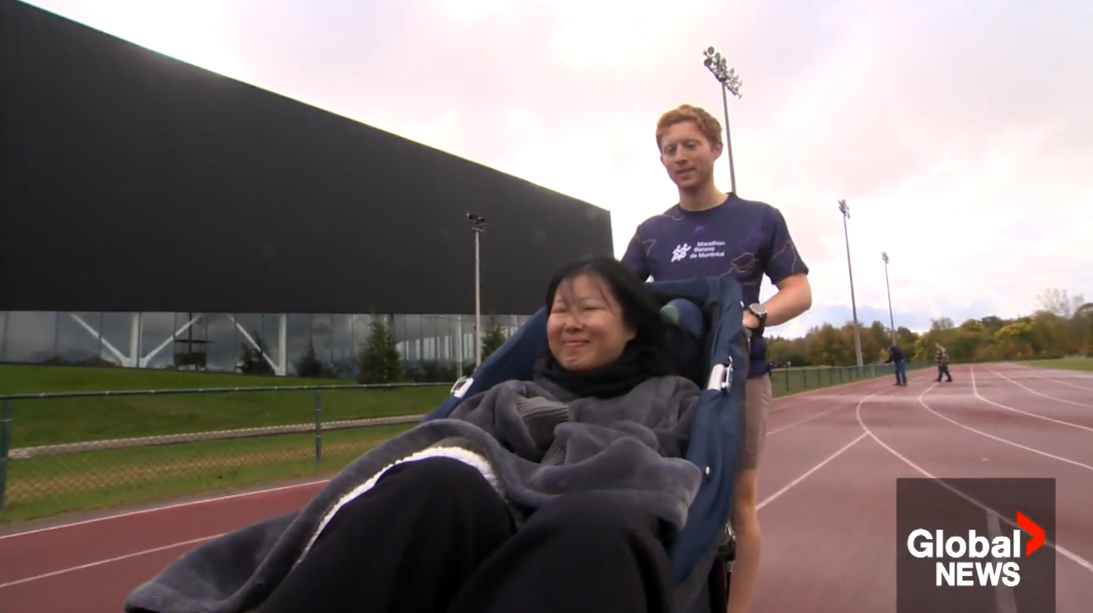
When an external shock destabilizes a complex biological or social system, the baseline trajectory collapses. For a couple confronting a terminal neurodegenerative diagnosis, the operational environment shifts from predictable optimization to immediate resource reallocation. The baseline narrative surrounding such events typically relies on emotional tropes and passive framing. A rigorous, data-driven deconstruction reveals that the response to severe systemic crises is governed by precise mechanical inputs, resource scarcity management, and systemic feedback loops.
Amyotrophic lateral sclerosis destroys motor neurons at a quantifiable rate, precipitating progressive muscle atrophy and respiratory decline. Within a household unit, this medical reality functions as a massive, asymmetric shock. The traditional analytical approach views this solely through a clinical lens. A strategic framework, however, evaluates the situation as a coupled optimization problem where two distinct entities must synchronize operations under conditions of rapidly compounding constraints.
The Mechanics of Coupled Load Distribution
In any dual-agent operational model, workload distribution dictates system survival. Under normal operating conditions, tasks are divided asynchronously to maximize throughput. A systemic crisis forces an immediate shift toward synchronous, high-redundancy processing.
When one node in the system experiences structural degradation, the secondary node must absorb the residual operational load while simultaneously managing metabolic and psychological fatigue. This creates a critical threshold known as the systemic failure limit. If the secondary node attempts to absorb one hundred percent of the load without strategic decoupling or external resource integration, systemic collapse occurs via burnout.
The Montreal marathon case study provides a clear vector for analyzing this load-balancing phenomenon. By anchoring physical preparation around a shared athletic objective, the couple established an externalizing mechanism for their stress. Exercise physiology demonstrates that sustained endurance training induces neuroendocrine adaptations, notably the upregulation of brain-derived neurotrophic factor and the systematic modulation of cortisol. More importantly, from a systems theory perspective, training for a marathon imposes a rigid scheduling constraint and a quantifiable feedback loop.
Every training session yields objective metrics: distance covered, time elapsed, and metabolic output. In an environment defined by an unquantifiable, degenerative disease, these metrics provide a rare island of determinism. The marathon acts as an externalized test bed for systemic endurance. It externalizes the internal struggle into a physical domain where variables can be measured, tracked, and mastered collaboratively.
Resource Allocation and the Cost Function of Degeneration
Managing a progressive degenerative condition requires continuous optimization of finite resources: energy, time, emotional bandwidth, and financial capital. The cost function of ALS is non-linear. As physical autonomy decreases linearly, the care burden increases exponentially due to the need for specialized equipment, structural home modifications, and continuous monitoring.
Total System Cost = (Care Complexity * Time) + (Energy Expenditure of Caregiver) - (Adaptive Infrastructure)
To maintain equilibrium, the system must aggressively minimize inefficiencies. In the observed dynamic, the decision to engage in a high-intensity public event like a marathon serves as a counter-intuitive resource optimization strategy. Rather than conserving energy through complete physical withdrawal—which accelerates psychological depression and physical deconditioning—the agents deploy remaining functional capacity into a high-visibility, high-cohesion project.
This approach exploits the principle of hormesis: exposure to a controlled, high-stress physical challenge stimulates systemic adaptation and psychological resilience. The physical toll of the marathon is bounded and temporary, whereas the disease is unbounded and permanent. By choosing a bounded struggle, the agents regain agency over their physical narrative.
The Information Asymmetry of Terminal Illness
A major barrier in systemic crisis management is information asymmetry. The medical establishment operates with specialized terminology and prognostic certainty that often alienates the patient and their support network. Bridging this gap requires rigorous data literacy and proactive information gathering.
The strategic response observed in this scenario avoids fatalistic resignation by converting prognostic data into tactical milestones. Instead of viewing the timeline through an amorphous lens of future decline, the focus narrows to short-term operational windows. What can be achieved today? What systemic redundancies must be established before the next functional loss occurs?
This tactical compartmentalization prevents paralysis. It mirrors high-stakes project management where long-term deliverables are secondary to immediate risk mitigation and milestone execution. The marathon functions as the ultimate short-term milestone—a fixed-date delivery mechanism that forces alignment across all operational parameters.
Systemic Vulnerabilities and Failure Modes
No analytical framework is complete without mapping its failure modes. Relying on shared physical exertion as a coping mechanism carries distinct structural risks.
The first limitation is physical overextension. If the healthy partner matches their training intensity to a baseline that exceeds safe physiological recovery limits, they risk injury, effectively collapsing the primary operational support node. Redundancy is destroyed if both nodes are compromised simultaneously.
The second vulnerability is emotional synchronization failure. High-stress environments often amplify underlying relational friction. If the psychological processing speeds of the two agents diverge—one seeking aggressive external engagement while the other requires internal processing—the system experiences internal drag, reducing overall efficiency.
Mitigating these vulnerabilities requires explicit operational boundaries. Roles must be defined not by traditional domestic expectations, but by real-time functional capacity. When physical mobility degrades past a specific threshold, the mechanics of participation must evolve. The transition from running side-by-side to pushing a specialized racing chair represents a necessary structural adaptation. The mechanism changes, but the vector remains aligned.
Strategic Execution and Forward Deployment
The trajectory of terminal neurodegenerative conditions leaves no room for passive adaptation. Systems that fail to anticipate degradation curves will inevitably be overwhelmed by them.
The primary takeaway from this operational analysis is the necessity of externalizing internal crises into measurable, structured challenges. By converting an unquantifiable medical prognosis into a structured athletic objective, the agents arrested the psychological erosion typical of chronic illness. They replaced helplessness with synchronized execution.
For practitioners, caregivers, and analysts observing similar crises, the prescription is clear. Do not wait for the system to fail under its own weight. Build rigid, measurable structures of shared purpose that outlast the baseline conditions. When the underlying architecture is failing, the only viable strategy is to engineer a new framework before the old one collapses entirely.


