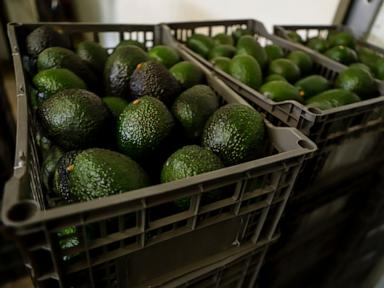
Cross-border agricultural supply chains operate on an assumption of institutional stability that rarely matches ground realities. When the United States halts avocado imports from Michoacán, the immediate public narrative focuses on local cartel friction or sudden diplomatic friction. Deconstructing the mechanics reveals a predictable economic feedback loop driven by regulatory dependencies, localized extortion vectors, and an asymmetrical reliance on a single geographic point of origin. Understanding why these stoppages recur requires examining the structural choke points built into international phytosanitary compliance.
The Regulatory Choke Point and Phytosanitary Dependency
The legal trade of avocados from Mexico to the United States depends entirely on physical verification by United States Department of Agriculture Animal and Plant Health Inspection Service personnel stationed directly inside packinghouses in Michoacán. This inspection protocol is non-negotiable. Without physical sign-off by USDA inspectors certifying that fruit shipments meet pest-exclusion standards, export authorizations freeze instantly.
This creates a high-risk operational vulnerability:
- Single-Point Verification: The entire multibillion-dollar export pipeline relies on the physical presence of foreign federal employees inside high-threat zones.
- Zero Inventory Buffer at Inspection: Packinghouses process fruit dynamically; a suspension halts outgoing logistics within hours, leaving harvested inventory stranded with limited shelf life.
- Jurisdictional Friction: Foreign regulatory mandates collide directly with municipal security vacuums, turning administrative protocol into a diplomatic hostage situation.
When security threats emerge against inspection personnel, the United States government exercises a mandatory duty of care to withdraw or suspend operations. The immediate consequence is not a tariff dispute or a quota adjustment, but an administrative cutoff. The supply chain breaks not because the fruit is diseased, but because the bureaucratic verification mechanism has been switched off.
The Microeconomics of Extortion and Regional Monopoly
Michoacán holds a near-monopoly on year-round export-grade Hass avocado production, driven by unique microclimates and volcanic soil profiles. However, this geographic concentration coincides with high territorial fragmentation among organized crime syndicates. As traditional drug trafficking routes face increased interdiction, criminal groups have diversified their revenue streams toward legal agricultural extraction.
The economic logic of agricultural extortion operates on inelastic demand. Avocado orchards generate high cash yields per hectare compared to staple crops. Criminal syndicates capture rent by imposing protection fees on packinghouses, transport operators, and landowners. When local law enforcement or federal forces execute high-profile arrests of cartel leadership, the immediate reaction of criminal networks is often disruptive retaliation or localized volatility.
The security alerts that trigger USDA suspensions are downstream symptoms of this structural protection racket. Security protocols dictate that any credible threat against foreign agrarian inspectors halts processing. Criminal organizations recognize that targeting or threatening the inspection apparatus exerts maximum leverage on local and federal authorities, creating a direct feedback loop between regional cartel suppression and international trade blockades.
Supply Chain Shock Propagation and Price Elasticity
The stoppage of inspections in Michoacán triggers an immediate price transmission mechanism across North American markets. Because the United States imports roughly ninety percent of its avocados from Mexico, domestic inventory buffers are shallow. Cold chain logistics and distribution centers operate on tight inventory turnover rates designed to minimize waste of a perishable commodity.
When the flow of raw material stops:
- Spot Market Volatility: Wholesale prices react within forty-eight hours, spiking as buyers compete for remaining inventory already inside the United States or sourced from alternative secondary regions like Jalisco or Peru.
- Margin Compression: Wholesalers and distributors absorb short-term supply deficits, while food service operators and grocery retailers face difficult choices between absorbing margin loss or passing inflationary pressure onto consumers.
- Behavioral Shift: End-consumers experience sudden retail price jumps, demonstrating how localized security failures in a single Mexican state translate directly into grocery inflation across American urban centers.
Alternative suppliers cannot instantly backfill a supply deficit of this magnitude. While states like Jalisco have gained authorization to export, their production volume and infrastructure scale cannot match Michoacán’s established output overnight. Secondary international suppliers face transit time constraints and seasonal limitations, ensuring that any prolonged administrative freeze results in a physical shortage.
Strategic Mitigation and Operational Realities
Mitigating this structural fragility requires systemic diversification and institutional decoupling. Industry associations and trade bodies have attempted to implement rigorous traceability systems and environmental compliance frameworks to stabilize the sector, yet these initiatives address ecological and legal metrics rather than foundational physical security.
To insulate supply chains from recurring administrative shutdowns, logistics planners must accelerate multi-region sourcing diversification. Relying on a concentrated production hub embedded within a high-security risk zone guarantees persistent tail-risk exposure. Long-term supply chain resilience demands capital allocation toward emerging production zones with stable security infrastructures, reducing systemic vulnerability to localized cartel leverage and administrative freezes.