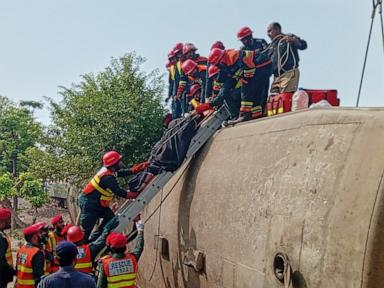
Mass transit network vulnerabilities stem from a compounding interaction between mechanical degradation, signal decay, and institutional oversight failures. When a passenger train derails, the resulting fatalities and injuries are rarely the consequence of a single isolated anomaly. Instead, catastrophic infrastructure failures represent the terminal outcome of unmitigated drift in operational safety margins. Analyzing these events requires examining the underlying systemic vectors that convert latent risks into acute disasters.
The Infrastructure Degradation Matrix
Track geometry and rolling stock maintenance operate on strict tolerances. Over time, heavy dynamic loads induce micro-fractures in rails, thermal expansion weakens fastening systems, and ballast degradation alters track elevation profiles.
- Track Foundation Fatigue: Subgrade settlement occurs unevenly under heavy axial loads, creating localized variances in gauge and cross-level.
- Material Fatigue Limits: Steel rail components accumulate cyclical stress. Without ultrasonic testing and timely intervention, internal fissures propagate past critical thresholds.
- Rolling Stock Maintenance Deficits: Wheelset wear, particularly flange thinning and bearing degradation, increases lateral forces against the railhead, elevating the probability of wheel climb during transit.
When maintenance schedules are deferred due to budgetary constraints or operational pressures, these variables compound. A marginal track defect combined with a worn wheelset creates an unstable dynamic equilibrium, where a standard operating velocity becomes unsafe.
Signaling and Traffic Control Bottlenecks
Manual or outdated signaling frameworks introduce high vulnerability to human error and mechanical misinterpretation. Modern rail safety relies on positive train control and automated speed restriction enforcement. In systems lacking these redundancies, operations depend entirely on procedural compliance.
The absence of real-time telemetry means operators navigate blind spots regarding track integrity ahead. When communication breakdowns occur between dispatchers and train crews, the operational margin drops to zero. Systemic latency in reporting known track anomalies guarantees that high-speed equipment will encounter degraded infrastructure without adequate deceleration windows.
The Operational Cost Function of Safety
Safety investment in rail networks functions as an inverse relationship against catastrophic loss, yet financial models often treat maintenance as a controllable variable cost rather than a fixed operational requirement.
Risk = (Probability of Failure) x (Consequence Severity)
To minimize risk, management must actively suppress the probability of failure since consequence severity in passenger transport is inherently high. When capital allocation prioritizes transit velocity and throughput volume over infrastructure renewal, the safety margin erodes. Deferred maintenance creates short-term fiscal efficiency while accumulating structural debt. Eventually, this debt is paid through catastrophic structural failure.
Mitigating Systemic Vulnerability
Preventing future derailments requires shifting from reactive repair models to predictive reliability engineering. Operators must implement continuous diagnostic monitoring of rail geometry using automated inspection cars equipped with laser optics and acoustic sensors. Furthermore, institutional incentives must decouple performance metrics from schedule adherence when safety thresholds are ambiguous.
The immediate operational priority must be the establishment of absolute stop authorities upon the first indication of track geometry deviation, removing discretion from operators working under pressure to maintain headway schedules. System resilience is achieved only when the cost of stopping operations is valued lower than the human and capital cost of catastrophic failure.