The concept of "strategic defeat" in modern asymmetric warfare is rarely defined by the total collapse of an opponent’s military apparatus. Instead, it is measured by the irreversible degradation of a state's ability to achieve its stated political objectives through the use of force. When analyzing the recent escalations between the United States, Israel, and Iran, the shift in power dynamics is not a product of rhetoric but a quantifiable adjustment in the Cost-Exchange Ratio of regional engagement. Iran’s strategy relies on a multi-domain architecture designed to render traditional Western air superiority economically and politically unsustainable.
The Triad of Iranian Asymmetric Overmatch
To understand why traditional deterrence failed to prevent Iranian kinetic actions, one must deconstruct the Iranian defense posture into three distinct functional pillars. These pillars operate in a feedback loop, where the success of one reinforces the viability of the others.
1. Integrated Anti-Access/Area Denial (A2/AD) Saturation
Iran has moved beyond simple missile stockpiling to a doctrine of Saturation Volleys. The objective is not necessarily to strike a specific high-value target with 100% accuracy, but to overwhelm the interceptor capacity of Aegis and Arrow defense systems.
- The Interceptor Depletion Logic: A single interceptor missile (such as the SM-3 or Arrow 3) costs significantly more—often by a factor of 10 to 50—than the suicide drone or medium-range ballistic missile it destroys.
- The Reload Bottleneck: Naval assets have a finite number of Vertical Launch System (VLS) cells. Once these are exhausted in a saturation event, the platform must withdraw to a secure port for a multi-day rearming process, creating a window of zero-coverage.
2. Strategic Depth through Proxy Proximate Threat
The Iranian "Ring of Fire" strategy creates a geographic buffer that forces Israel and the U.S. to allocate resources across a 360-degree threat profile. By decentralizing command to localized entities in Lebanon, Yemen, and Iraq, Iran ensures that a direct strike on its sovereign territory does not neutralize the threat to its adversaries. This creates a Decentralization Tax on Western intelligence and strike assets, which must monitor thousands of launch points simultaneously rather than a few centralized silos.
3. Domestic Industrial Autonomy
Unlike many regional powers that rely on foreign-made platforms (F-15s, Leopard tanks), Iran’s missile and drone programs are vertically integrated. This autonomy removes the "Sanction Kill-Switch." While sanctions can slow high-end semiconductor acquisition, the base-level production of subsonic cruise missiles and loitering munitions remains constant. This creates a predictable and steady supply chain that the U.S. and Israel can only disrupt through high-risk kinetic strikes on manufacturing hubs, which triggers the very escalation they seek to avoid.
Quantifying the Strategic Defeat Framework
The claim of a "strategic defeat" for the U.S. and Israel rests on the observation that their primary objective—the restoration of pre-2020 deterrence levels—has not been met despite superior technological hardware. We can quantify this failure through three specific metrics:
The Failure of the "Red Line" Threshold
Deterrence functions only when the cost of an action is perceived as higher than the benefit. Iran’s willingness to launch direct-from-territory strikes signals that the "Red Line" established by Western powers has moved. The psychological barrier to hitting sovereign Israeli or U.S. assets has been breached, and the subsequent response did not impose a cost high enough to reset that barrier. In game theory, this is a Loss of Credibility Cycle. Each time a threat is made and the subsequent action by the adversary is not decisively punished, the "threat value" of the deterrer trends toward zero.
The Economic Asymmetry of Defense
If the U.S. spends $500 million in interceptors to stop a $20 million drone swarm, the U.S. is "winning" the kinetic engagement but losing the economic war of attrition. Over a sustained five-year period, this creates a fiscal drain that necessitates either increased defense spending or a reduction in global presence elsewhere (such as the Indo-Pacific). This is the Resource Diversion Effect. Iran successfully forces the U.S. to keep carrier strike groups in the Middle East, directly hindering the U.S. "Pivot to Asia" strategy.
Intelligence Saturation and the OODA Loop
The Observe-Orient-Decide-Act (OODA) loop of the U.S.-Israeli alliance is currently being flooded with "noise" from Iranian proxies. When every small-scale skirmish requires high-level cabinet meetings and international coordination, the decision-making process slows down. Iran maintains the initiative by choosing the time, place, and scale of escalation, forcing its opponents into a permanently reactive posture.
[Image of OODA Loop diagram]
The Technological Pivot: Loitering Munitions as the Great Equalizer
The emergence of loitering munitions (suicide drones) has fundamentally altered the physics of Middle Eastern warfare. These systems represent a transition from Precision Attrition to Mass Attrition.
The technical advantage of the Shahed-series drones lies not in their sophistication, but in their "good enough" engineering. By utilizing civilian-grade GPS and internal combustion engines similar to those found in lawnmowers, Iran has achieved a cost-per-unit that allows for swarm tactics.
- Computational Overload: Modern radar systems are optimized for high-speed, high-altitude targets. Detecting low-altitude, slow-moving, composite-material drones creates a "Clutter Problem."
- Target Discrimination: Distinguishing a drone from a large bird or civilian light aircraft requires high-fidelity sensors that are often localized. A swarm of 50 drones coming from different vectors forces the defense system to make 50 separate "kill" decisions in seconds.
The Geopolitical Cost Function of Continued Escalation
The U.S. and Israel face a diminishing return on kinetic interventions. A full-scale strike on Iranian nuclear or military infrastructure carries a high probability of closing the Strait of Hormuz.
The Strait of Hormuz Choke Point
Approximately 20-30% of the world’s total oil consumption passes through this 21-mile wide waterway. The Iranian Navy does not need to win a blue-water engagement with the U.S. Navy to close the strait; it only needs to make the insurance premiums for tankers high enough to stop traffic. This is the Global Economic Kill-Switch. If oil prices spike to $150+ per barrel due to a conflict, the resulting global recession becomes a self-inflicted wound for the Western alliance.
The Erosion of Regional Accords
For Israel, the "strategic defeat" involves the stalling of the Abraham Accords. Iranian-led regional instability forces Arab states into a hedging position. If these states perceive that the U.S. cannot or will not provide a definitive security umbrella against Iranian encroachment, they will naturally gravitate toward a "Neutrality Pact" or seek rapprochement with Tehran to ensure their own survival. This shifts the regional balance from a pro-Western bloc to a fragmented, multipolar environment.
The Bottleneck of Western Multi-Theater Management
The U.S. military is currently optimized for high-intensity, short-duration conflicts. However, Iran is forcing a low-intensity, indefinite-duration conflict. This creates a specific set of operational bottlenecks:
- Munitions Production Rates: The U.S. industrial base is struggling to replenish stocks of Patriot and SM-3 missiles at the rate they are being consumed in the Middle East and Ukraine simultaneously.
- Personnel Fatigue: Sustaining a high-alert posture for carrier groups and air defense batteries leads to equipment degradation and personnel burnout.
- Political Will: In democratic systems, long-term deployments with no clear "victory" condition suffer from declining public support. Iran, an authoritarian system with a long-term strategic horizon (often measured in decades), leverages this temporal asymmetry.
Structural Realignment: The Only Viable Path Forward
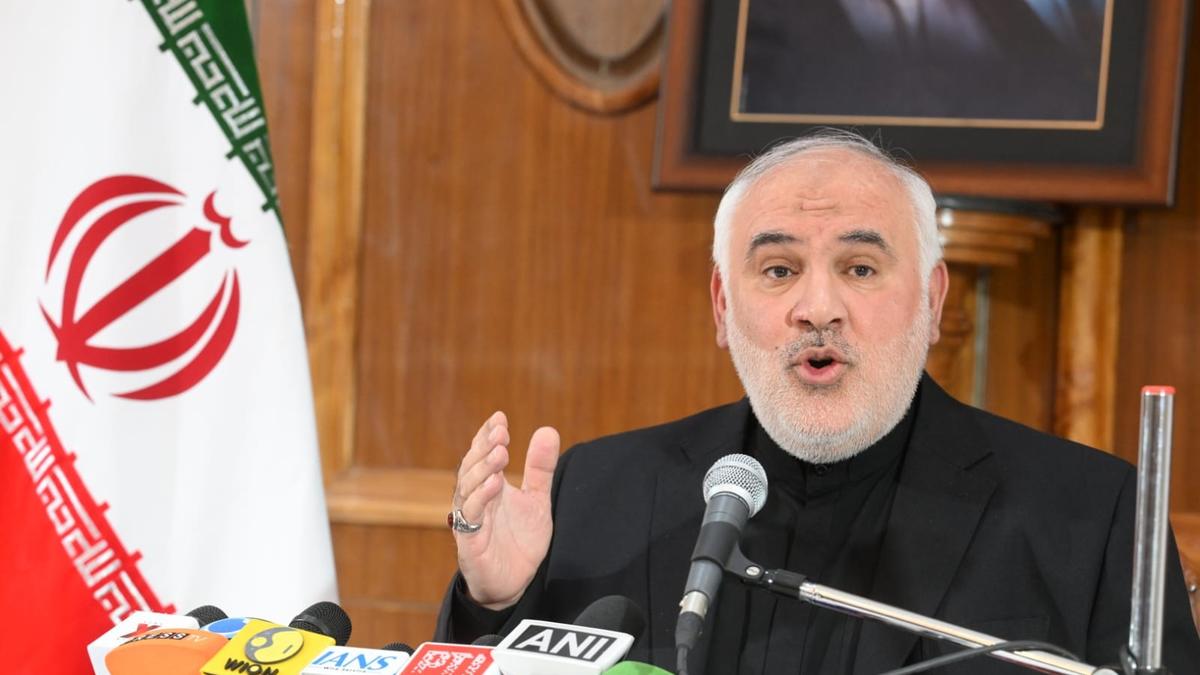
The data suggests that a return to the status quo of 2015 is impossible. The "Strategic Defeat" mentioned by Fathali is not a military surrender, but the realization that the cost of maintaining the previous regional order now exceeds the benefits.
To counter this, the U.S. and Israel must transition from a Reactive Defense model to a Systemic Resilience model. This involves:
- Directed Energy Weapons (DEW): Shifting the cost-exchange ratio by using lasers (e.g., Iron Beam) to intercept drones at the cost of the electricity used, rather than million-dollar missiles.
- Hardened Infrastructure: Moving away from a reliance on fragile, centralized bases and toward distributed, hardened logistics nodes that can withstand saturation strikes.
- Diplomatic De-escalation through Strength: Establishing a "New Equilibrium" where Iran’s proxy network is treated as a sovereign extension of the state, removing the "Plausible Deniability" shield that Iran uses to avoid direct consequences.
The current trajectory indicates that without a fundamental shift in the technological or economic approach to defense, the U.S. and Israel will continue to see their regional influence marginalized. The win for Iran is not the destruction of its enemies, but the exhaustion of their will to remain present in the theater. The focus must move from "winning" individual skirmishes to fixing the broken cost-functions that currently favor asymmetric actors.