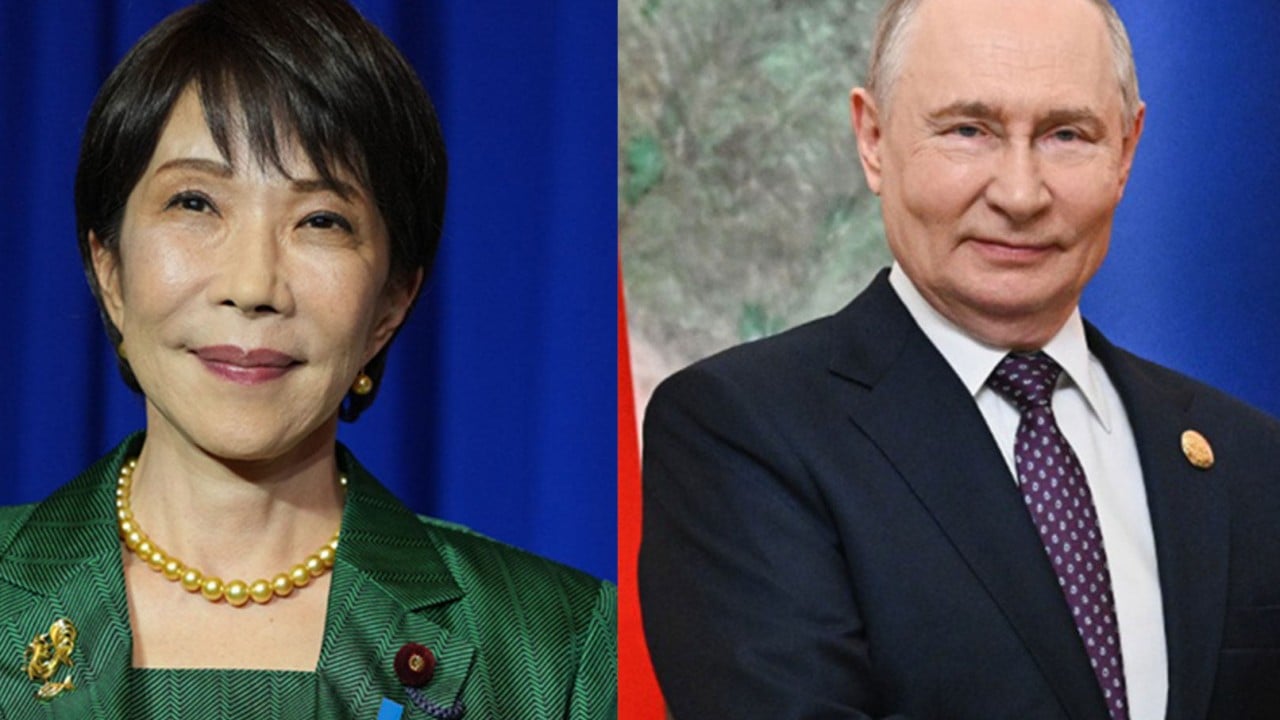
Bilateral diplomacy between a G7 security anchor and a heavily sanctioned Eurasian energy producer does not occur out of diplomatic habit. When Japanese Prime Minister Sanae Takaichi engages in direct, high-level dialogue with Russian President Vladimir Putin amid severe geopolitical friction, the event signals a deliberate, calculated divergence from standard multilateral alignment. Standard news coverage frames such encounters as anomalous diplomatic thaws or vague gestures toward peace. That framing misses the structural mechanics driving Tokyo and Moscow to the negotiating table. Both states operate under acute, asymmetric constraints—Japan faces structural energy vulnerabilities and dual-front security pressures, while Russia requires non-Western economic off-ramps and diplomatic legitimacy in East Asia. Understanding these talks requires stripping away diplomatic rhetoric and analyzing the underlying geopolitical cost functions, resource dependencies, and strategic hedging mechanisms governing both capitals.
The Structural Drivers of Asymmetric Engagement
To evaluate why Tokyo would absorb reputational friction with Washington and Brussels by engaging Moscow directly, analysts must separate symbolic diplomacy from material necessity. In international relations, states rarely violate alliance orthodoxy unless the domestic or regional cost of inaction exceeds the alliance penalty. For Japan, the decision to open a direct channel with the Kremlin rests on three intersecting structural pressures.
The Energy Security Constraint and LNG Dependency
Japan’s post-2011 energy mix created a rigid structural dependency on imported liquefied natural gas (LNG). Lacking domestic hydrocarbon reserves and facing slow nuclear reactor restart timelines, Japan relies on imported fossil fuels to stabilize its baseload power grid and sustain heavy manufacturing. While Tokyo joined G7 peers in imposing sweeping financial sanctions, export controls, and coal and oil import bans on Russia following the invasion of Ukraine, it maintained explicit carve-outs for Russian LNG projects—specifically Sakhalin-1 and Sakhalin-2.
The operational logic behind this carve-out is straightforward:
- Geographic Proximity: Sakhalin Island sits roughly 40 kilometers north of Hokkaido. LNG tankers from Sakhalin-2 reach Japanese receiving terminals in days rather than the weeks required for shipments from the U.S. Gulf Coast or Qatar.
- Contractual Lock-In: Japanese trading houses—including Mitsui & Co. and Mitsubishi Corporation—hold equity stakes in Sakhalin-2 alongside long-term off-take agreements priced favorably compared to volatile spot markets.
- Grid Stability: Russian LNG accounts for approximately 9 percent of Japan’s total gas imports. Removing that volume abruptly would force Japanese utilities onto the global spot market, triggering severe electricity price inflation, eroding industrial competitiveness, and straining the yen through a widening trade deficit.
When Russian state decrees threatened to transfer operating rights of Sakhalin energy assets to domestic Russian entities, Tokyo faced an asset-expropriation risk alongside a supply-shock risk. Direct high-level engagement serves as a risk-mitigation mechanism to secure operational continuity for Japanese equity holders and prevent arbitrary supply disruptions.
The Northern Territories and Maritime Buffer Imperative
Beyond hydrocarbons, Japan and Russia remain legally without a formal World War II peace treaty due to the unresolved sovereignty dispute over the Southern Kuril Islands, known in Japan as the Northern Territories (Etorofu, Kunashiri, Shikotan, and the Habomai islets). Following Tokyo’s adoption of Western sanctions, Moscow suspended peace treaty negotiations, terminated visa-free exchange programs for former Japanese island residents, and designated Japan an "unfriendly country."
From a pure realpolitik perspective, Takaichi’s hawkish national security profile creates a distinct domestic political dynamic. Historically, conservative Japanese leaders with strong defense credentials possess greater domestic political capital to negotiate with adversaries without appearing weak to their domestic base—a dynamic analogous to Richard Nixon’s opening to China. Engaging Putin allows Tokyo to test whether humanitarian access for former residents and fishing rights around the disputed islands can be decoupled from broader geopolitical sanctions.
Preventing a Monolithic Sino-Russian Military Bloc
The most critical strategic variable for Tokyo is not Russia in isolation, but the deepening military integration between Moscow and Beijing. Joint Sino-Russian naval patrols through the Tsugaru Strait, combined strategic bomber flights over the Sea of Japan, and Russian submarine deployments near Hokkaido force the Japan Self-Defense Forces (JSDF) to allocate finite intelligence, surveillance, and reconnaissance (ISR) assets across two simultaneous theaters.
If Russia becomes entirely dependent on China for economic survival and diplomatic backing, Moscow loses strategic autonomy in Northeast Asia. Under total dependency, the Kremlin is far more likely to accommodate Chinese military requests in the Sea of Okhotsk or transfer advanced submarine and missile propulsion technologies to the People's Liberation Army (PLA). By maintaining an independent diplomatic channel with Moscow, Tokyo attempts to introduce friction into the Sino-Russian alignment—signaling to the Kremlin that complete subservience to Beijing forecloses future economic normalization with the world’s fourth-largest economy.
Moscow’s Cost Function in Northeast Asia
Russia’s willingness to engage Tokyo is governed by an entirely different set of incentives. Under comprehensive Western sanctions, Moscow’s foreign policy has shifted from seeking integration with the West to fracturing Western unity and demonstrating diplomatic reach across Asia.
Breaking G7 Solidarity
For the Kremlin, every bilateral meeting with a G7 leader yields immediate propaganda and diplomatic dividends. It allows Moscow to project domestic strength, counter narratives of international isolation, and demonstrate that Western sanctions coalitions contain exploitable fissures. Even if Takaichi reiterates Japan’s support for Ukrainian sovereignty and condemns Russian aggression during the talks, the visual and diplomatic reality of a sitting Japanese prime minister engaging Putin directly weakens the perceived cohesion of the G7 front.
Diversifying Economic Leverage Away from Beijing
While Russia’s "Turn to the East" has prevented economic collapse, it has created an acute asymmetric dependency on China. Beijing now absorbs the majority of Russia’s discounted crude oil exports and supplies critical dual-use machine tools, microelectronics, and consumer goods. In bilateral negotiations over infrastructure—such as the stalled Power of Siberia 2 gas pipeline—Chinese negotiators have leveraged Moscow’s lack of alternative buyers to demand steep price discounts and favorable transit terms.
Re-engaging Japan, even within narrow parameters, provides Moscow with subtle negotiating leverage. Japanese capital, precision manufacturing, and maritime logistics remain vastly superior to Russian domestic alternatives. By keeping the door ajar for Japanese energy firms and signaling potential flexibility on regional fisheries or humanitarian access, Moscow reminds Beijing that Russia retains potential alternative partners in the Pacific Rim.
The Game-Theoretic Constraints of Bilateral Talks
Analyzing these talks through a game-theoretic lens reveals why expectations of a comprehensive diplomatic breakthrough are misplaced. Both leaders operate inside a constrained bargaining space where domestic and alliance red lines prevent major concessions.
- The Alliance Ceiling (Japan’s Constraint): Tokyo cannot lift core financial, semiconductor, or dual-use export sanctions without triggering severe retaliation from Washington. Japan’s entire deterrence architecture—particularly regarding Taiwan and the Senkaku Islands—relies on the U.S.-Japan Security Treaty and American extended nuclear deterrence. Any perceived backsliding on Russia sanctions would undermine Japan’s credibility in Washington when Tokyo requests stronger U.S. security guarantees against China.
- The Sovereignty Floor (Russia’s Constraint): Putin cannot offer meaningful territorial concessions on the Southern Kuril Islands. Following the 2020 constitutional amendments in Russia, alienating Russian territory is explicitly unconstitutional, and the islands house advanced coastal defense missile systems (Bastion and Bal complexes) that protect the Sea of Okhotsk—a critical bastion for Russia’s nuclear-armed ballistic missile submarines (SSBNs).
- The Information Asymmetry Problem: Both sides face high verification costs. Tokyo cannot trust Russian verbal assurances regarding energy contract stability when Kremlin decrees can alter corporate ownership overnight. Conversely, Moscow views Japanese commitments to long-term economic cooperation as contingent on future U.S. foreign policy shifts.
Because neither side can cross its primary red line, the negotiations are structurally restricted to transactional micro-agreements—narrow, reversible arrangements that yield immediate tactical benefits without altering the macro-geopolitical balance.
Operational Mechanics of Transactional Diplomacy
When high-level talks occur under strict structural constraints, outcomes cluster around low-visibility, high-utility operational agreements rather than grand treaties. Analysts monitoring the aftermath of the Takaichi-Putin dialogue should evaluate success not through joint communiqués, but through specific regulatory and commercial indicators.
Maritime and Fisheries Governance
The waters surrounding the Southern Kurils represent some of the richest fishing grounds in the North Pacific. Prior to the freeze in relations, bilateral agreements governed Japanese catch quotas for pollock, Pacific saury, and kelp within Russia’s claimed Exclusive Economic Zone (EEZ). Suspension of these frameworks harms coastal economies in Hokkaido—a key political constituency for Japan’s ruling Liberal Democratic Party (LDP)—and increases the risk of maritime incidents involving Russian border guard vessels seizing Japanese fishing boats. Restoring technical fishery consultations provides an immediate, low-cost win for both governments without requiring changes to sanctions regimes.
Humanitarian Access and Grave Visits
For decades, former Japanese residents of the Northern Territories—now largely in their eighties and nineties—visited ancestral graves on the islands under visa-free frameworks. Restarting these humanitarian visits carries zero security risk for Russia while allowing Takaichi to demonstrate tangible diplomatic results to domestic voters. From Moscow’s standpoint, granting humanitarian access costs nothing militarily while positioning the Kremlin as a reasonable negotiating partner on non-political issues.
Ring-Fenced Energy Payment Channels
With major Russian banks disconnected from the SWIFT financial messaging system, processing payments and insurance for Sakhalin LNG shipments requires complex legal and financial workarounds. High-level political backing ensures that Japanese ministries and Russian state entities maintain functional, sanctions-compliant payment corridors—often utilizing specific exempted financial institutions—so that physical gas deliveries continue uninterrupted even as broader trade contracts.
The Inherent Limitations of Hedging Strategies
While tactical engagement offers short-term risk mitigation, this strategy carries substantial structural vulnerabilities. No diplomatic maneuvering can resolve the fundamental contradictions between Japan’s alliance commitments and its geographic realities.
- Reputational Erosion Among European Partners: Over the past several years, Tokyo has worked aggressively to link Euro-Atlantic and Indo-Pacific security, arguing that tolerating aggression in Ukraine emboldens revisionist powers in East Asia. Engaging Putin directly complicates this narrative. European capitals, particularly in Central and Eastern Europe, view any normalization with Moscow as undermining collective deterrence, which could dampen European willingness to deploy naval assets or impose economic sanctions in a future Indo-Pacific crisis.
- Vulnerability to Russian Coercive Leverage: By signaling that Sakhalin LNG and Hokkaido fisheries are vital national interests requiring direct prime ministerial intervention, Tokyo inadvertently reveals its pain points. Moscow routinely weaponizes resource dependencies and humanitarian access—turning valves on and off to extract political concessions during moments of heightened tension. Institutionalizing this dialogue creates a recurring channel for Russian coercive diplomacy.
- Limited Impact on the Sino-Russian Partnership: While Tokyo hopes to pull Moscow away from Beijing, the structural drivers binding China and Russia—shared opposition to U.S. global primacy, a 4,200-kilometer land border, and complementary resource-industrial economies—far outweigh anything Japan can offer under current sanctions. Tactical talks with Tokyo will not alter Russian military deployments in the Pacific or halt Russian arms and technology transfers to China.
Strategic Execution for Institutional Stakeholders
For corporate risk officers, energy procurement teams, and geopolitical analysts operating in East Asia, the Takaichi-Putin talks establish a clear operational baseline: compartmentalized engagement will persist alongside structural confrontation. Stakeholders must avoid misinterpreting diplomatic contact as a precursor to sanctions relief.
- Maintain Strict Sanctions Compliance Firewalls: Enterprises operating in Japan must assume that export controls on semiconductors, precision machinery, aviation components, and financial services will tighten rather than loosen. High-level talks are designed to protect existing energy carve-outs, not to reopen commercial trade.
- Accelerate LNG Portfolio Diversification: Japanese utilities and trading houses should treat the protection of Sakhalin-2 volumes as a temporary bridge rather than a permanent solution. Capital allocation must prioritize long-term supply agreements from North America, Australia, and Southeast Asia, alongside accelerating domestic nuclear restarts and grid-scale battery storage, to eliminate Russian supply leverage before current off-take contracts expire in the late 2020s and early 2030s.
- Price In Recurring Maritime Friction: Logistics and maritime operators transiting the La Pérouse (Soya) Strait and the Sea of Okhotsk should anticipate continued Russian naval exercises and electronic warfare interference. Diplomatic dialogue at the executive level reduces the probability of accidental escalation, but it will not diminish Russian militarization of the Kuril island chain.
Tokyo’s engagement with Moscow is neither a diplomatic pivot nor a weakening of alliance resolve. It is an exercise in asymmetric risk management—using narrow, transactional diplomacy to insulate Japan’s energy grid and northern maritime border while the broader geopolitical confrontation between the G7 and the Sino-Russian alignment remains firmly locked in place.


